Seoul Left Out — What the US-Japan intel snub really means
South Korea's exclusion from a US-Japan intelligence meeting signals deepening alliance friction with cascading effects across Northeast Asia. The root: a leaked uranium disclosure that shattered Washington's trust in Seoul's information handling.
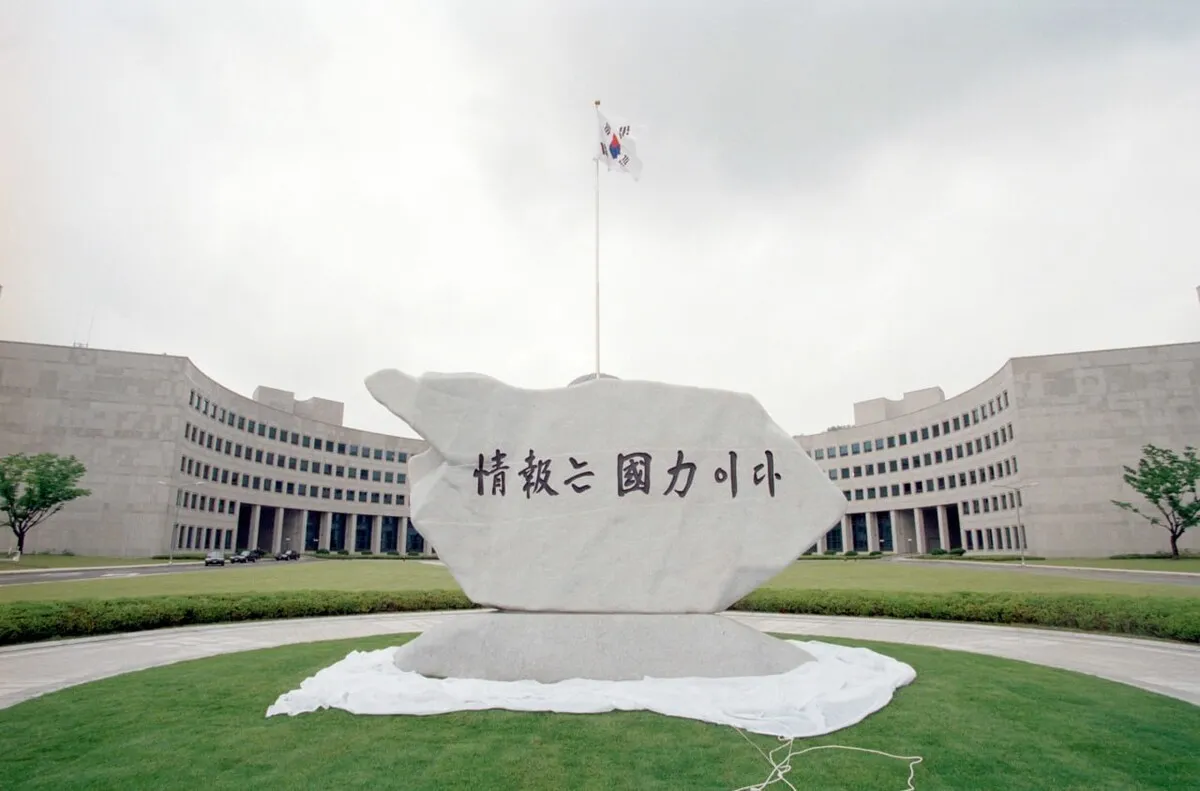
The snub that wasn’t announced
South Korea’s National Intelligence Service didn’t attend a trilateral meeting in Washington this June. The Fifth US-ROK-Japan Working Group Meeting on North Korea Cyber Threats went ahead as scheduled, convened under the framework established at the August 2023 Camp David summit. The NIS had attended every prior session. This time, Washington said no.
The NIS confirmed the exclusion in a statement on the 8th, calling it “a misunderstanding from several months ago that has already been resolved.” It then pivoted to a different grievance — the fact that its movements had been publicized in the press at all — and said it “feels responsibility” for that breach.
Translation: the door was closed, and the notice was left on the mat.
The trigger was a single sentence
The rot dates back to March 6, when Unification Minister Jeong Dong-young stood before the National Assembly’s Foreign Affairs and Unification Committee and named a specific location: Kongsong in North Korea’s Pyonganbuk-do province. He identified it as the site of an operational uranium enrichment facility.
Washington reacted sharply. US officials argued that Jeong had accessed classified satellite intelligence and disclosed it unilaterally. The minister denied relying on US sources, calling the information open-source — a claim President Lee Jae-myung echoed on X, pointing to prior academic papers and media reports.
Neither side moved.
The gap between them is not about facts. It is about process. From Washington’s perspective, a senior South Korean official cited something that looked unmistakably like classified material. From Seoul’s perspective, the same information was already public. What mattered was the channel through which it became known — and whether that channel was authorized.
That distinction is now the fault line.
Visa delays are not coincidental
The exclusion from the June meeting did not happen in isolation. Reports indicate that the US has also been delaying visa issuance for NIS personnel in recent months. Diplomatic sources described the pattern as a deliberate signal of discontent.
The timing is telling. The working group meeting occurred in June — roughly three months after Jeong’s remarks. That gap is consistent with a calibrated rather than impulsive response. Washington had time to assess, consult with Tokyo, and decide what leverage was available.
Visa delays and meeting exclusions are the administrative tools of diplomatic pressure. They are precise, deniable, and cumulative.
Two factions, one alliance
The episode has exposed a structural tension within South Korea’s foreign policy establishment. Jeong Dong-young and NIS Director Lee Jong-suk are commonly categorized as the “self-reliant” camp — officials who prioritize strategic autonomy and are more willing to act independently of Washington. The alternative faction favors deeper alignment with US led architectures.
Washington appears to be making a calculated move: pressuring the self-reliant camp precisely because its actions created this rupture. An unnamed government source acknowledged the reading, noting that the US seems to have grown distrustful of certain South Korean information channels since the Kongsong disclosure.
The consequence is that South Korea’s alliance management is now being stress-tested along domestic political fault lines. This is not unique to South Korea — allies routinely negotiate their positions internally. But the公开 nature of Jeong’s statement made the friction visible in a way that usually stays behind closed doors.
The trust deficit is real, and it is quantifiable
At a recent National Assembly defense committee session, Joint Chiefs of Staff Chairman Jin Young-seung confirmed that North Korea-related intelligence sharing with the US has been “partially restricted” but added that operational readiness remains unaffected. The qualifier “partially” does the heavy lifting. Whatever was restricted mattered enough to notice.
A ruling Democratic Party lawmaker told this publication that the working group exclusion fell squarely within the period and scope of information-sharing restrictions imposed after the Kongsong incident.
Meanwhile, US Ambassador Michelle Steel, who arrived in Seoul in early August, has yet to hold a formal meeting with Jeong Dong-young. In diplomatic practice, the absence of a bilateral encounter between an ambassador and a cabinet minister is itself a message.
What the US gains and loses
The immediate gain for Washington is leverage. By constraining information flow and excluding South Korea from trilateral forums, the US creates a cost for unilateral disclosures. The signal to other partners — Japan, Australia, the Philippines — is that classified channels carry responsibilities.
The loss is longer term and harder to measure. The Camp David framework was built on the premise that trilateral intelligence sharing would become routine, not exception-based. Every meeting South Korea skips erodes the institutional memory that makes such cooperation functional. NIS officers who were present at sessions one through four built relationships, shared interpretive frameworks, and developed informal communication channels. Those accumulate slowly and dissolve quickly.
There is also a signaling problem for North Korea. Pyongyang watches these exclusions carefully. If Seoul can be sidelined from conversations about its own security, the calculation changes about how much to invest in trilateral mechanisms versus bilateral hedging.
What Seoul should do
The most credible path forward requires acknowledging the breach without capitulating to the framing that all of Seoul’s intelligence is suspect. A targeted, verifiable protocol for classifying and sharing open-source versus classified material would address the core US concern without requiring South Korea to surrender autonomy.
The alternative — letting the restriction become permanent — would effectively downgrade South Korea from full partner to junior participant in its own regional security architecture. That outcome serves no one’s interests, including Washington’s.
The NIS’s own statement, while diplomatic, contained an implicit admission: the misunderstanding existed, and the exclusion was real. “Already resolved” is a polite phrase for something still unresolved in practice.
The broader lesson
Alliances are not broken by single incidents. They are eroded by the accumulation of small calibrations — delayed visas, skipped meetings, restricted access — each justified as proportional, each expanding the gap.
The Kongsong disclosure was a moment of carelessness or conviction, depending on your perspective. The months that followed reveal a partnership learning, painfully, what happens when trust is treated as renewable resource rather than a finite one.