South Koreas Wartime Command Debate Reveals Fractures
Seoul's ruling and opposition parties are clashing over when to take back wartime operational control from the US. The timing matters far more than the principle—and the rift signals deeper strain in the alliance.
The Clock Is Ticking on Seoul’s Greatest Strategic Question
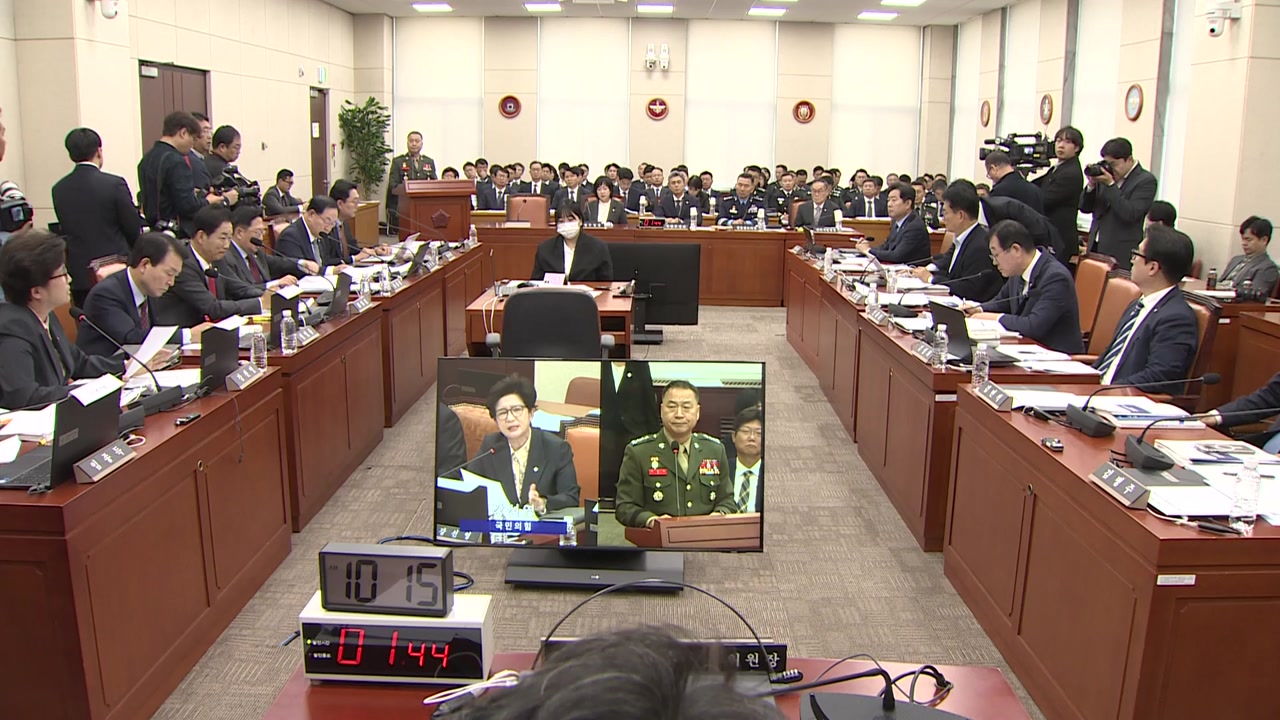
A routine parliamentary hearing on South Korea’s national defense has exposed something far bigger than bureaucratic procedure. At the National Assembly’s Defense Committee, lawmakers were dissecting the question of wartime operational control transfer — a debate that has festered for more than a decade and now carries implications that reach well beyond the Korean Peninsula.
The argument between the ruling Democratic Party and the opposition People Power Party is not really about whether South Korea should one day command its own forces in wartime. That moment is widely expected. The fight is about when — and what happens to the US alliance in the gap between now and then.
Who Wants What, and Why It Matters
Kim Byung-ju, who serves as coordinator for the ruling party on defense matters, delivered the sharpest formulation of the case for speed. He argued that if Washington refuses to agree on a concrete transfer timeline at the upcoming Korea-US Security Consultative Meeting in December, Seoul should simply declare the transfer on its own terms.
Park Sun-won made the same point in plainer language: the South Korean army cannot conduct a war it does not command. “We have to decide for ourselves and seize the initiative in war,” he said.
The opposition pushed back immediately. Han Ki-ho of the People Power Party invoked statements made by USFK Commander Lee Scott Brooks, who recently remarked that conditions have shifted since earlier timelines were set. Given that more than eleven years have passed, Han warned against pushing the transfer forward unilaterally. Im Jong-deuk pressed him further, noting that Brooks had expressed essentially the same position — and asking why the Korean commander was phrasing things differently.
That exchange may seem like legislative theater. It is not. It is a glimpse into a strategic fracture that English-language coverage of Korean politics rarely captures.
What Nobody Is Saying Out Loud
The transfer of wartime operational control has been a recurring agenda item since the Roh Moo-hyun administration first set a target date of 2012, then postponed it to 2015 under the Lee Myung-bak government, and again under Moon Jae-in, who reset expectations to 2020 and later accepted delays tied to North Korean capabilities. The Yoon Suk Yeol administration inherited a moving deadline that kept receding.
Brooks’ recent comments signal something new: the United States is recalibrating its calculus based on its own assessment of regional threats, force readiness, and burden-sharing. That recalibration has two components. First, North Korea’s nuclear and missile program has accelerated dramatically since any of those original deadlines were drawn up. Second, Washington’s broader strategic posture toward Asia is in flux, shaped by competition with China and domestic political debates about how much the United States should commit abroad.
For South Korean hawks, that environment makes delay harder to justify. If the United States is already pulling back, clinging to wartime control becomes a liability rather than a safeguard.
For South Korean realists, that same environment makes haste dangerous. Transferring control without meeting conditions — interoperability, command-and-control readiness, intelligence-sharing agreements — could leave Seoul responsible for a war it is not prepared to fight alone.
The Independent Declaration Option
Kim Byung-ju’s suggestion that South Korea issue an “independent declaration” if Washington cooperates too slowly is the most provocative proposal on the table. It amounts to a bluff — or a contingency plan, depending on your reading. Either way, it reframes the entire debate.
An independent declaration would bypass the usual bilateral consultations and place the timing decision firmly in Seoul’s hands. It would be a dramatic signal that South Korea views the alliance framework as insufficient to guarantee its own strategic interests. And it would force the United States into an awkward choice: accept a unilateral transfer, or publicly resist one.
The cost of resistance would be high. It would look like America refusing to let an ally defend itself. The cost of acceptance would also be high: it would mean the US military losing wartime authority over forces stationed on Korean soil, a precedent that could ripple through other allied relationships in the region.
Who Wins, Who Loses
If South Korea moves forward with a controlled, negotiated transfer, it gains strategic credibility and relieves long-standing dependency on US command structures. Defense planners across East Asia — particularly in Japan and Australia — would take note, reassessing their own security architectures around a more autonomous Seoul.
If Seoul declares independently, it wins short-term sovereignty optics but risks fracturing the alliance at exactly the moment both sides say they need it most. The United States would face intense pressure from its own military establishment to maintain influence. China would interpret the rupture as evidence of American retreat. North Korea would exploit whatever confusion follows.
If the transfer stalls further, the status quo prevails — but that is not a stable equilibrium. American commanders on the peninsula would continue holding wartime authority while Korean officers train for a war they may not lead. Every delay compounds the gap between institutional expectation and reality.
What Comes Next
The December Korusc is the immediate milestone. Whether Washington offers a concrete timeline or obfuscates will determine the next phase of this debate. If Seoul chooses independence, expect a cascade of diplomatic maneuvering — some private, some deliberately public.
But the deeper story is structural. The post-Cold War security architecture in Northeast Asia was built on the assumption that the United States would remain the primary security guarantor. That assumption is unraveling. South Korea’s fight over operational control is a symptom of a broader realignment that will touch every alliance from Tokyo to Manila.
The question is no longer whether Seoul will one day command its own forces. The question is whether the United States will still be standing beside it when that day arrives.