Boeing's 737 MAX Crisis Deepens As Major Airlines Reject New Planes
Southwest and United are refusing deliveries of new 737 MAX jets over a software glitch — a rare airline pushback that could delay the MAX 10 and deepen Boeing's credibility crisis.
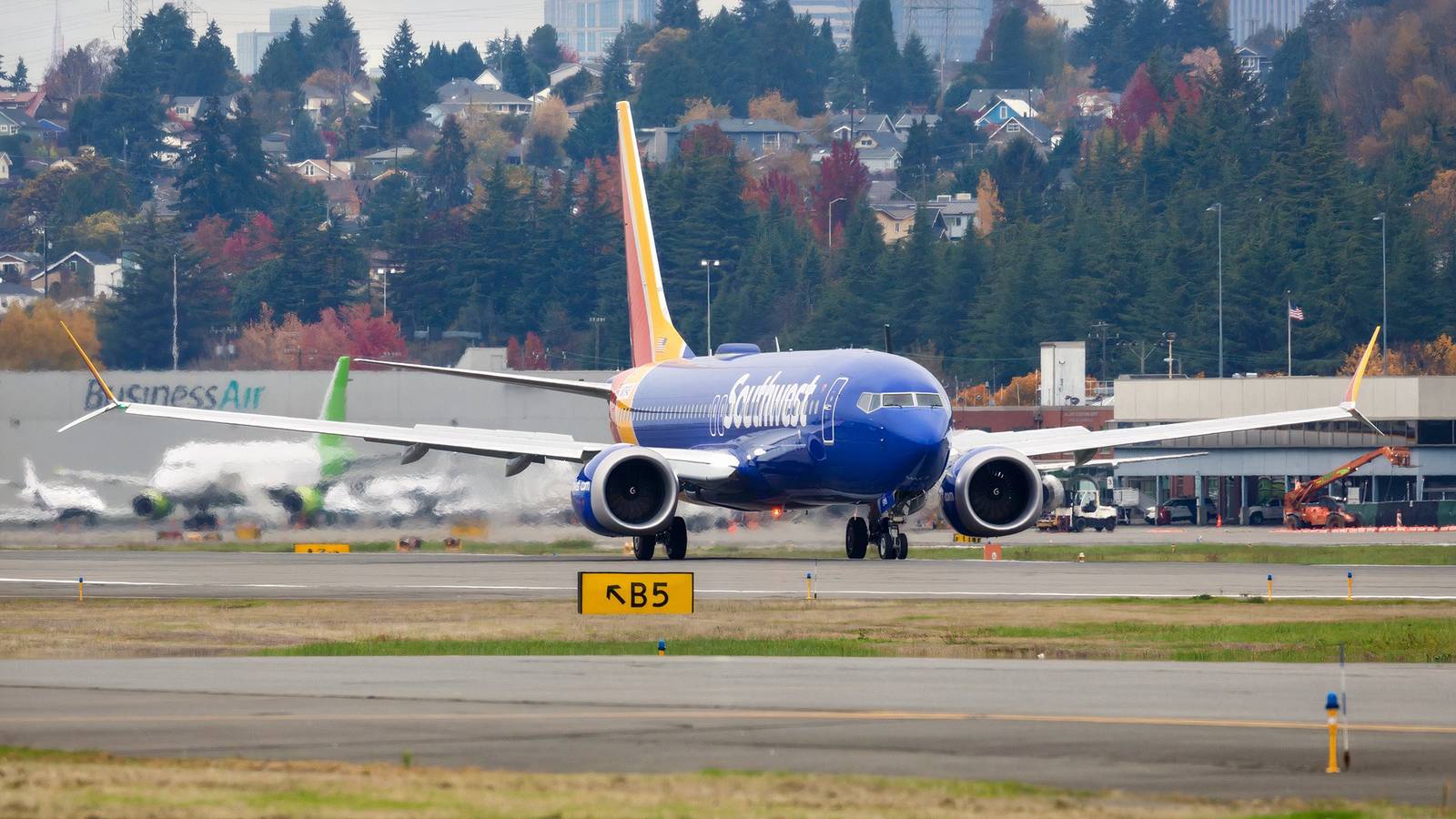
Airlines Are Pushing Back On Boeing For The First Time Since The Max Groundings
Southwest and United just told Boeing they will not accept new 737 MAX aircraft rolling off the production line if they carry the latest flight-management-computer software. The companies did not mince words. Neither airline currently operates a MAX equipped with the problematic versions — software U.14 and 14.1 — but both are drawing a line in the sand for future deliveries.
This matters far beyond a routine quality dispute. It is the first time major carriers have publicly refused a new MAX delivery over a software concern, marking a shift from frustration to action. After years of grounding crises, production halts, and regulatory scrutiny, airlines are no longer simply complaining about Boeing’s struggles — they are blocking them.
What Went Wrong
The issue centers on the flight-management computer, or FMC, and a specific scenario that can cause automated vertical navigation to disengage. When a pilot conducts a precision approach with the autopilot engaged, executes a missed approach or go-around, and then alters the pre-programmed flight plan, the system can drop out of vertical navigation mode and fall back to level change or vertical speed. That is not a catastrophic failure. The autopilot remains available, and Boeing insists crews are trained to handle the aircraft without VNAV. But it is an unexpected mode transition during one of the most demanding phases of flight — an approach where pilots need predictable automation behavior.
Boeing first became aware of the condition in November 2024 after an airline reported it. The manufacturer initially concluded in February 2025 that it was not a safety issue. Additional operator feedback prompted a formal safety review, and Boeing eventually passed its findings to the FAA. The agency has now convened a Corrective Action Review Board, or CARB, to evaluate the problem and Boeing’s proposed fix. The FAA said it will take immediate action if the review uncovers a safety concern.
Boeing says it expects a permanent software update by 2028 but is working to accelerate that timeline following operator pressure.
Why This Timing Hurts
The software problem lands at an awkward moment for Boeing. The company is waiting on FAA certification for the 737 MAX 10, its largest and most advanced variant, while also preparing to deliver the newly certified 737 MAX 7. Both programs are tied directly to the affected software versions.
The MAX 7 received FAA certification on August 3 with software version 14. Southwest — which accounts for nearly all MAX 7 orders — was expected to begin receiving the type later in 2026. It is unclear whether the aircraft can be delivered with earlier software or what modifications would be required. The MAX 10 used version 14.1 during certification testing, and Boeing completed its final planned certification flight in July. Alaska Airlines has 105 MAX 10s on order, with options for another 35, and was anticipating certification by the end of September before this software issue emerged.
The FAA has not confirmed whether the CARB review must be completed before the MAX 10 can receive certification. That uncertainty hangs over Boeing’s most important new product and adds pressure to an already strained schedule.
Who Wins And Who Loses
Southwest and United win leverage. By refusing deliveries, they force Boeing to address their concerns rather than treat them as passive recipients. The carriers are protecting their operational readiness and sending a message that the era of accepting flawed aircraft is over.
Alaska Airlines, however, is in a more vulnerable position. With 105 MAX 10s on order — and likely more options sitting unused — the airline needs certification to move forward. Any delay to the MAX 10 program stretches Alaska’s fleet modernization plans and keeps it dependent on older aircraft. The timing could also affect other carriers watching Boeing’s ability to deliver on promises.
Boeing loses credibility. The company already carries the weight of the 2019 MAX groundings, repeated production quality failures, and a long series of FAA investigations. A software glitch that triggers airline delivery refusals adds yet another stain. It suggests the manufacturer’s internal quality controls remain insufficient, even as it tries to ramp up production.
The FAA is caught in the middle. The agency must balance safety oversight with pressure to certify new aircraft types. If the CARB process drags on, Boeing’s certification timeline slips. If the FAA rushes to clear the issue, it risks appearing soft on safety — a dangerous perception given the MAX’s history.
What Happens Next
The immediate next step is the FAA’s CARB review. The board will examine Boeing’s safety findings and proposed solutions, then decide whether the issue requires a formal corrective action. That outcome will determine whether the MAX 10 certification is delayed, whether earlier software versions can be used for the MAX 7, and how Boeing manages its production pipeline.
For Southwest, the practical path is straightforward: accept MAX 7 aircraft with older software until the fix is ready. But that raises questions about whether Boeing can reconfigure its production line to install different software versions on different airframes. The manufacturer runs a single integrated production process, and splitting software configurations across variants adds complexity.
For United, the impact is less severe since the carrier does not operate the MAX 7. The refusal sets a precedent rather than creating an immediate scheduling problem. Other MAX operators may follow South’s lead, turning a delivery dispute into a broader industry demand for software fixes.
Boeing’s response will shape the trajectory. If the company treats this as a minor hiccup and continues pushing for 2028 software updates, it risks further alienating customers. If it accelerates the fix and commits to transparent communication, it can rebuild some trust. The company already stated it is working with airlines on procedures to restore automated vertical navigation, which suggests dialogue is underway.
A Credibility Crisis Or Another Bump
The 737 MAX has survived worse than a software glitch. The twin crashes in 2018 and 2019 grounded the entire fleet worldwide for nearly two years and shattered confidence in the program. Boeing has worked hard to rebuild that trust through certification reforms, production changes, and renewed FAA oversight.
This episode is not on that scale. The affected software is not installed on any aircraft currently in service. Boeing has confirmed pilots can operate safely without VNAV in the affected scenario. The FAA has not declared an emergency or issued an airworthiness directive.
But the symbolism is significant. Airlines refusing new deliveries is a signal that Boeing’s quality problems extend beyond manufacturing defects and into software validation — a category that feels more mundane but is equally critical to modern aviation safety. The MAX 10 certification delay, if it comes, will be the most tangible consequence. It pushes back Alaska’s fleet plans and extends Boeing’s revenue timeline for its largest MAX variant.
More broadly, the episode suggests Boeing’s internal review processes are still not catching issues early enough. The company identified the software condition months after operators reported it, then dismissed it before reversing course. That pattern — report, downplay, reconsider — is familiar from earlier MAX controversies and risks reinforcing the perception that Boeing still struggles with accountability and transparency.
Southwest and United have drawn a line. Boeing will now have to cross it to regain control of its delivery schedule and reassure an increasingly impatient customer base.