SpaceX's $100B Louisiana Bet Could Rewrite Space Economics
SpaceX is pouring $100 billion into a second Starbase in Louisiana, promising 10 launch pads and thousands of Starship flights per year. The move reshapes competitive dynamics, orbital infrastructure, and America's strategic posture in space.
The Bet Is $100 Billion and It Changes Everything
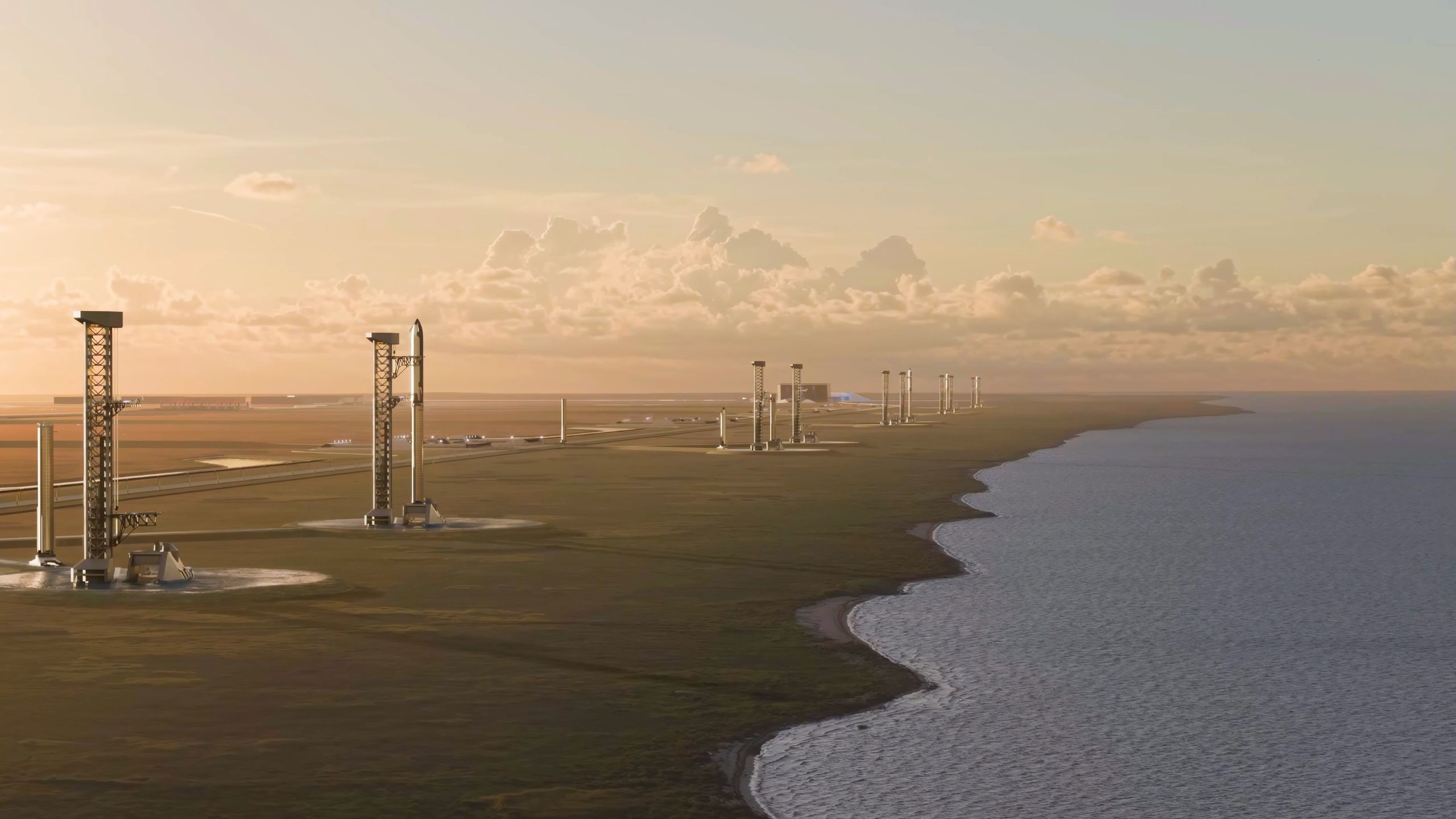
SpaceX just announced the single largest private investment in American space infrastructure in history — a sprawling $100 billion manufacturing and launch facility in Vermilion Parish, Louisiana, dubbed “Starbase Louisiana.” The company plans to build five complexes, each with two Starship launch towers, for a total of 10 pads, each with its own propellant farm. Construction begins in 2027. The first launch is targeted for 2029.
On paper, this is big. But the real story is what this facility represents: a deliberate, audacious shift in how SpaceX intends to operate at scale, and what that means for everyone else in the space industry.
Why Louisiana — And Why Now
The choice of location is not incidental. Louisiana sits on abundant natural gas — the feedstock for SpaceX’s methane-fueled Raptor engines. The company already produces its own propellant at Starbase Texas. Building an identical capability on the Gulf Coast means SpaceX no longer has to ship fuel across state lines for a fraction of its launches. It also means access to deep-water shipping, which Shotwell confirmed will be part of the facility, opening the door to importing heavy components and exporting finished hardware without relying entirely on rail or road.
The timing is equally strategic. SpaceX is rushing to qualify Starship for operational missions. The Artemis IV lunar landing is locked for 2028, and NASA is watching closely. Having a second dedicated Starship production and launch site de-risks the timeline — if something goes wrong at Boca Chica, Louisiana can absorb the backlog. It is also the only way SpaceX realistically reaches the launch cadence Elon Musk has publicly floated: 30 flights per day by 2030, or more than 10,000 Starship launches annually.
Starbase Texas simply cannot support that volume. Starbase Louisiana was designed from day one for exactly that purpose.
What This Means for the Competition
Blue Origin is building its own massive launch complex at Cape Canaveral, and Rocket Lab is expanding at Vandenberg and Virginia. Neither is anywhere close to matching the scale SpaceX is about to deploy. But the real threat to competitors is not just launch capacity — it is vertical integration.
SpaceX is not just building a launch site. It is building a self-sustaining ecosystem: propellant production, power generation, vehicle processing, deep-water port, and an airport. That is the kind of infrastructure that takes decades to assemble and billions to replicate. For any company hoping to compete on price per kilogram to orbit, the gap just widened dramatically.
Rocket Lab, which has built a reputation on reliable small-lift service, faces a different pressure. SpaceX’s Starlink strategy — having just flown its final Falcon 9 Starlink mission from Florida and moving remaining Falcon 9 launches to Vandenberg — signals the end of Falcon 9. When that rocket retires, thousands of Starlink satellites that would have launched on Falcon 9 will need a ride. SpaceX will take most of them on Starship. The question is what is left for everyone else.
The Orbital Debris Question
Here is where the announcement carries implications most readers will miss. Thousands of Starship launches per year means thousands of objects going into orbit, servicing, and coming back down. Starship itself is enormous — 120 meters tall, 9 meters in diameter when fully stacked. Even with full reusability, each launch and recovery cycle adds wear, generates debris risks, and requires careful tracking.
SpaceX has been relatively quiet about its orbital debris mitigation plans beyond low Earth orbit. Starship’s role in deploying next-generation Starlink satellites — far more numerous and diverse than the current constellation — adds another layer of complexity. The Federal Communications Commission now requires debris mitigation plans for large constellations, and SpaceX has already faced scrutiny over Starlink’s growth. A second launch site producing orders of magnitude more orbital traffic will invite even more regulatory attention, both domestically and internationally.
The Artemis refueling profile makes this even more acute. A single lunar lander mission may require up to a dozen Starship tanker launches to orbit around it. Multiply that by the number of Artemis missions planned and any subsequent lunar logistics campaigns, and the orbital population around Earth and the Moon grows substantially.
The AI and Orbital Infrastructure Angle
Perhaps the most understated element of the announcement is Gwynn Shotwell’s mention of SpaceX planning to launch its artificial intelligence network and “move supercomputing to space.” This is not a side project. It is a direct response to the exploding computational demands of AI, which are straining terrestrial data centers with power, cooling, and bandwidth constraints. An orbital AI infrastructure would offer nearly unlimited solar power, vacuum cooling, and direct laser or radio links to ground stations — advantages that could become decisive as AI models grow larger and more demanding.
Starbase Louisiana’s capacity to support thousands of launches annually is what makes this plausible. You cannot build an orbital data center with one or two launches per year. You need a cadence.
The Geopolitical Signal
Louisiana Governor Jeff Landry framed the project in sweeping historical terms, invoking the Louisiana Purchase and America’s westward expansion. The comparison is grandiose but not meaningless. Space is the new frontier of industrial and military competition, and whoever controls the infrastructure at the point of launch holds disproportionate leverage.
China is building its own space station, launching commercial satellites at scale, and pursuing lunar ambitions. Europe is tightening its regulatory grip on space activities. India is emerging as a cost-competitive launch provider. The United States needs dominant launch capacity to maintain its strategic position, and SpaceX is effectively volunteering to build it — on American soil, under American jurisdiction, with American funding mechanisms (through NASA contracts and commercial revenue).
The $100 billion figure is a private investment, not a government handout. But the strategic alignment is unmistakable. This facility will launch NASA’s Artemis landers. It will deploy Starlink satellites that serve as critical communications infrastructure. It may host AI systems that the Department of Defense watches closely. The line between commercial and strategic space assets is thinning by the year.
Who Wins, Who Loses
SpaceX wins by far — more capacity, lower costs per launch, de-risked timelines, and a second coast for operations. Louisiana wins through 3,000 direct jobs, thousands more indirect, and a transformed regional economy. NASA wins by securing the launch capacity it needs for Artemis without betting everything on a single site.
Traditional launch providers lose market share as SpaceX drives prices down. Starlink competitors face a formidable barrier. Regulators gain a new watchdog challenge as orbital traffic explodes. Local communities near Vermilion Parish will bear the environmental and social disruption of rapid industrialization, even with SpaceX’s commitments to coastal restoration.
What Happens Next
The road from announcement to first launch spans roughly two years of permitting, environmental review, and construction. SpaceX has already begun working with Louisiana wildlife and coastal agencies — a necessary step given the sensitivity of the Gulf Coast ecosystem. The company’s partnership on shoreline protection and marsh restoration is both genuine and politically essential; without local and state buy-in, the project stalls.
The real test will come after the first pad is operational. Can SpaceX sustain the cadence it promises? Can it integrate two coasts worth of Starship production, testing, and launch into a coherent workflow? And can it manage the regulatory, environmental, and geopolitical scrutiny that comes with becoming the dominant space infrastructure provider on the planet?
The answers will determine whether Starbase Louisiana is a transformative leap or an overreach. Given SpaceX’s track record, the odds favor transformation — but the scale of this bet is unlike anything the company has attempted before.