SpaceX Starship catch changes the math on reusability
SpaceX caught its Starship with mechanical chopstick arms for the first time — a milestone that reshapes launch cadence, lunar timeline risk, and what rivals are actually up against.
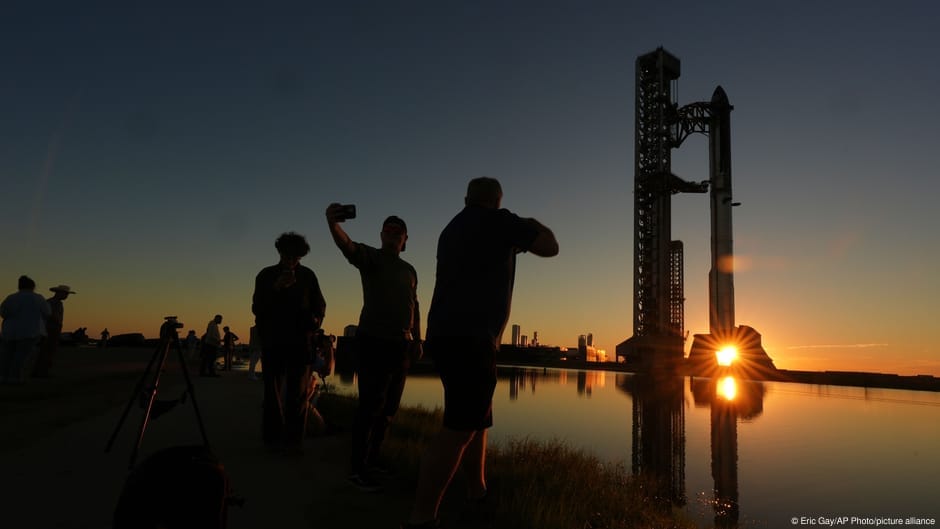
The chopsticks worked. Now the clock is louder.
SpaceX caught its Starship spacecraft on Saturday using the mechanical arms above Launch Pad 2 in Texas — the first time the company has recovered its flagship vessel mid-air rather than touching down on landing legs. The image from Dan Huot’s livestream, with him shouting ‘Baby, she’s back!’ as the ship slid between the arms, went instantly viral. But the real significance isn’t emotional; it’s structural.
This is the third key hardware demonstration after nearly a decade of development, and each one shifts the project’s trajectory more than the last. The superheavy-lift rocket system had already landed its Super Heavy booster three times before. It had demonstrated orbital flight. Now it can be caught and returned to the pad intact — which is exactly what full reusability demands if the cost equation works at all.
What changed in 22 hours
Flight 15 circled Earth fourteen times over more than twenty-two hours. That duration matters. Earlier flights were measured in minutes or a couple of orbits. Twenty-two hours gives you thermal cycling, systems checkouts under real orbital conditions, and time to deploy payload without rushing.
SpaceX released twenty-six Starlink satellites during this pass. The company has been quietly integrating dedicated payload fairings and deployment mechanisms into Starship itself, separate from the existing Dragon infrastructure. Every satellite dropped by Starship is another revenue stream that doesn’t require a Falcon 9 slot — and those slots aren’t infinite.
NASA called it ‘almost magic.’ Jared Isaacman’s comment was colorful but accurate for what just happened: a two-hundred-meter-tall rocket catching its own upper stage out of the sky, live, for the first time. The engineering margin required for that maneuver is narrow enough that any significant change in descent rate or lateral drift would have scrubbed the attempt entirely.
The booster problem remains
The lower stage didn’t make it home. Engines stopped firing too early, guidance detected incorrect positioning, and the Super Heavy booster executed its self-destruct over the Gulf of Mexico on Friday. Kate Tice confirmed the engine cutoff anomaly, and SpaceX’s investigation is still underway.
This is not new — boosters have exploded before. But on a vehicle this large, every failure carries a different weight. The booster is the expensive half of the reuse story. If you can’t reliably recover and reflit the first stage, the entire cost model unravels. Three previous successful catches of the Super Heavy booster prove the approach is viable; this flight proved it isn’t automatic.
SpaceX has recovered and refired Super Heavy on three earlier tests. The question now isn’t whether the design works — it’s whether it works consistently enough for the cadence Musk needs.
The timeline gets sharper
Here’s what most coverage misses: NASA is contracting Starship as the human landing system for Artemis. The agency has billions invested and cannot afford open-ended delays. The catch milestone puts pressure on the schedule in both directions — it validates progress, yes, but it also makes every subsequent delay easier to point at in congressional hearings and budget reviews.
Artemis astronauts were originally expected to land on the moon later this decade using Starship. The current public timeline has shifted multiple times already. Every successful test extends the plausible window for meaningful crewed operations; every booster malfunction shrinks it. This flight keeps the window alive but doesn’t guarantee closure.
Musk has stated repeatedly that Starship is essential for Mars ambitions. Whether that ambition depends on this vehicle or merely benefits from it is a distinction only the long view can resolve. What is clear right now is that without successful booster recovery on a regular basis, the economics don’t work for either destination.
Competitors who should worry — briefly
Blue Origin’s New Glenn hasn’t launched yet. ULA’s Vulcan is flying but isn’t built for this kind of reuse scale. China’s Long March 9 is still years away from orbital testing. SpaceIL and Intuitive Machines have lunar landers but no heavy-lift architecture.
The competitive moat Starship creates, if this cycle holds, is operational speed — how many flights per month a reusable system enables. A single-catch recovery per mission is good. Catching a recovery cadence of two per week changes everything about launch pricing. Nobody else in the world has a path toward even half that number on current designs.
That advantage compounds. Each successful flight generates data. Each flight brings hardware closer to the reflown state. Each reflown stage costs less. It’s a flywheel, and SpaceX is currently the only one spinning it fast enough to matter.
What happens next
The immediate next step is determining why the Super Heavy engines cut off early and fixing it before Flight 16. The longer-term step is figuring out whether catching Starship scales under different flight profiles — the current target was a relatively controlled return from a low-orbit demonstration run, not a trans-lunar injection return.
If the pattern holds, the company will accelerate launch frequency through late 2026. If it doesn’t, the catch milestone becomes a beautiful photo op with uncomfortable questions about whether orbital recovery can handle higher-energy trajectories.
Either way, the baseline has moved. Starship is no longer speculative hardware. It is flight-proven, recoverable, and increasingly routine. That matters far more than the applause.