Musk's Starlink Speed Cap Changes How Wars Get Fought
Elon Musk's unilateral decision to slow Starlink for Ukrainian forces shows how private satellite control can reshape battlefield outcomes overnight. The precedent echoes across East Asia.
The bandwidth throttle that became a weapons ban
Elon Musk did not pull a trigger in Ukraine last week. He adjusted a setting.
But according to the Wall Street Journal, citing unnamed US officials, the SpaceX founder capped the upload and download speeds that Ukrainian military hardware could maintain on Starlink — a move that rendered several categories of drones nearly useless on the front line. Offensive strike drones and interceptor drones alike lost their tether to real-time command.
The effect was immediate and asymmetric. Modern Ukrainian doctrine depends on coordinated drone swarms — cheap commercial platforms modified for reconnaissance and precision strikes, fed by satellite links that Starlink uniquely provides at scale. Cut the bandwidth, and you cut the wings.
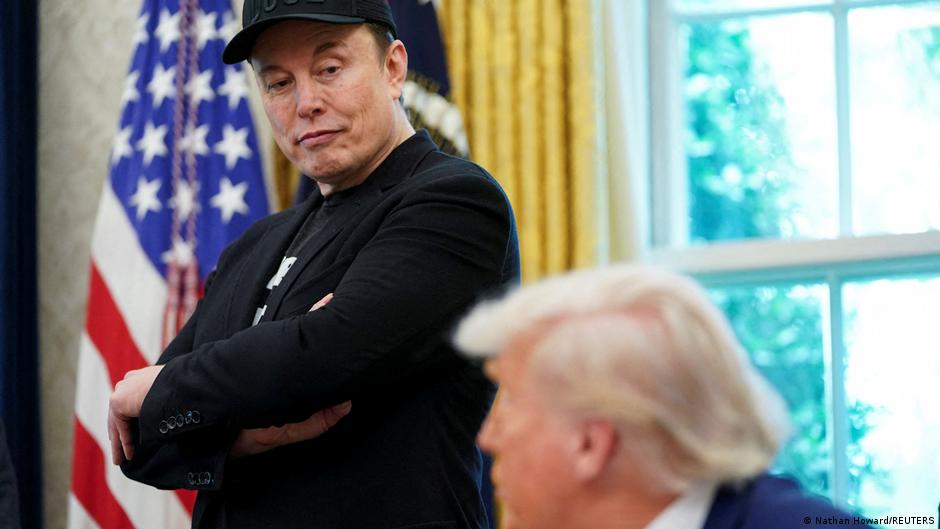
This is not speculation. Two sources told the Journal that Musk discussed the decision directly with President Donald Trump shortly after the slowdown became public. Some US officials reportedly believed Musk acted without specific presidential direction. Another source said he consulted senior administration officials, including Trump, before imposing the cap. Either version points to the same structural reality: a single private company now controls a critical line of military communications for a nation fighting for its survival.
Who wins, who loses, who blinks
Ukraine loses first. The speed restriction hits the most sensitive nodes of its operations — drones that require high-bandwidth uplinks for live video feeds and coordinated targeting. Low-bandwidth telemetry survives. Simple remote controls do not. The result is a selective degradation that feels less like a cutoff and more like dimming a light just enough to make reading impossible.
Russia gains proportionally. Not through any action of its own, but because the balance shifts when one side’s precision tools are deliberately blunted. Drone strikes on Russian diesel refineries — which both Trump and Musk have publicly criticized as drivers of elevated global energy prices — become harder to sustain at scale.
Musk and Trump both signal frustration with Ukraine’s refining strikes. Trump said he does not believe he or Musk is responsible for Ukraine losing Starlink access — a carefully worded deflection that places responsibility somewhere else without specifying where. Musk previously stated that any limits on speed or use were decided by the US military or the president. Both statements preserve plausible deniability while the bandwidth throttling continues.
The US military loses something subtler but arguably more important: the assumption that American-made communications infrastructure in a conflict zone operates under American institutional control. When the CEO can adjust parameters that directly affect kill-chain timing, the chain of command acquires an extra link that reports to no legislature and answers to no treaty.
The East Asian echo
This story will not stay European. Japan, South Korea, and Taiwan all rely on Starlink for civilian and quasi-military communications. Japan’s Self-Defense Forces have tested Starlink for remote island surveillance. South Korea uses it for disaster response and border monitoring. Taiwan — the most strategically exposed of the three — has quietly integrated Starlink into its emergency communications architecture as a supplement to domestic satellite capacity.
The question every defense ministry in the region is now asking is simpler and more unsettling than it sounds: if Musk can slow Starlink for Ukraine, what stops him from doing the same somewhere else?
There is no contractual answer that satisfies a general. There is no legal framework that binds a private company with no board oversight on critical infrastructure decisions. The precedent is already set.
For Taiwan specifically, the implication cuts in two directions. Starlink provides resilience — an alternative when Chinese cyber and satellite jamming degrade domestic networks. But that same resilience becomes a vulnerability the moment the provider decides the political cost of maintaining it exceeds the commercial benefit. A speed cap during a crisis is not the same as a full shutdown, but the operational effect can be identical.
Japan faces a different geometry. Its Starlink dependence is lower than Taiwan’s but growing, particularly for maritime domain awareness across the Ryukyu chain. A slowdown mechanism, even untested, exists in principle. The US-Japan security alliance assumes American institutional oversight of shared communications infrastructure. Musk’s unilateral throttle breaks that assumption without breaking any law.
South Korea sits somewhere in between — dependent enough for disaster response to matter, not so dependent that a cap would be catastrophic. But the psychological impact travels. When a close US ally watches a private CEO reshape a battlefield by adjusting bandwidth, the calculation of alliance reliability changes.
What happens next
Steve Witkoff, the US special envoy, is set to meet Vladimir Putin on Wednesday after what a US official described as constructive talks with Volodymyr Zelenskyy in Norway. Trump has publicly declared it time for Ukraine to end the war. The Starlink slowdown arrives in that context like a physical manifestation of American fatigue — not a formal policy shift, but a signal coded in megabits per second.
None of this requires a signed order. A CEO adjusts a rate limit. Drones go dark. The message lands.
The institutional response will come slowly, if it comes at all. Congress has discussed SpaceX regulation before. Nothing substantial emerged. The Pentagon has explored military-grade satellite alternatives. None have matched Starlink’s latency-cost-performance triangle. Until something does, the dependency remains — and with it, the precedent.
The next crisis will not wait for legislation. It will arrive with a bandwidth cap already in place, tested and waiting, because someone in a position to adjust a dial decided the price was worth it.
For Kyiv, the cost is measured in lost drone strikes and degraded air defense. For Tokyo, Seoul, and Taipei, the cost is measured in a new category of strategic risk — one that cannot be negotiated away, only prepared for. And preparation, in this case, means building redundancy that does not run through a single company’s control panel.
That is a harder thing to engineer than satellites. It is also the only thing that makes sense.