Starship's First Orbit Ends in Fire: What the Explosion Means Next
SpaceX's Starship reached orbit for the first time before an engine failure triggered a catastrophic explosion, a bittersweet milestone that reshapes near-term schedules for NASA, Starlink, and rival space programs.
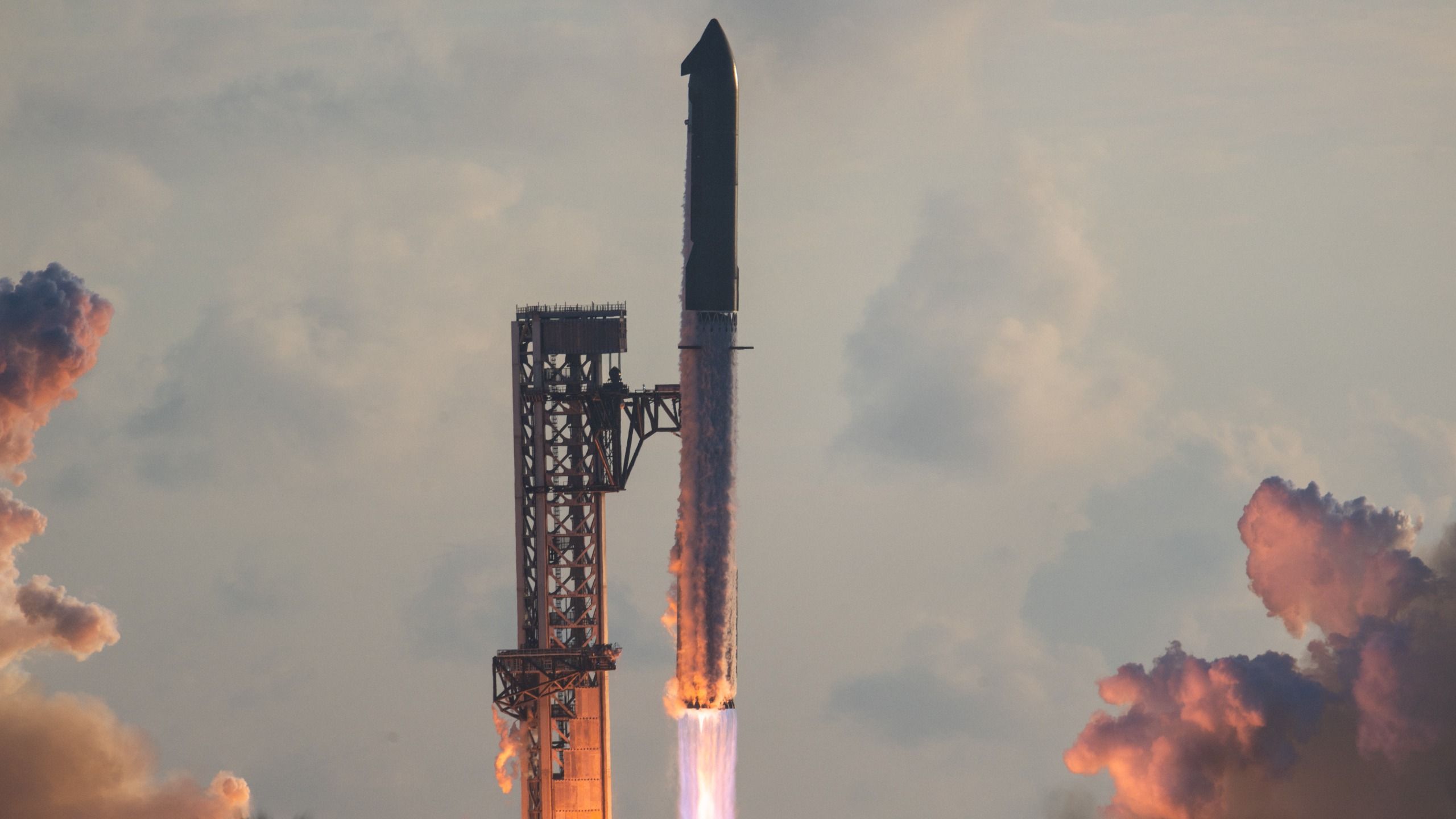
Orbit achieved. Then everything burned.
Starship’s fourth integrated flight test delivered a first: the vehicle reached space and completed an orbit. It did not, however, survive its own atmosphere.
SpaceX’s super‑heavy booster‑and‑ship stack lifted off from Starbase in Texas on Monday, September 28, at 8:49 a.m. ET. Within minutes an engine out event during ascent forced an early termination. Telemetry showed the upper stage spinning into an uncontrollable attitude before it broke apart over the Gulf of Mexico—a fireball captured by multiple on‑lookers and news outlets.
The achievement is real. The loss is also real. Together they define where the program stands today.
Why this flight matters more than the flame
Reaching orbit has been the target of every Starship test since the first hop in April 2023. Each prior attempt ended before that mark—either on the pad, during re‑entry, or in a deliberate disposal over the ocean. Flight 14 crossed the Kármán line and looped around the Earth. That is a systems‑level win: the Raptor engines, the avionics, the thermal‑protection tiles, and the guidance algorithms all performed well enough to send a 120‑meter‑tall rocket into space and back through the atmosphere.
The explosion, then, is not a failure of ambition. It is a failure of sequence.
SpaceX designs its rockets to tolerate engine losses. The Super Heavy booster can lose several Raptor engines on climb and still reach orbit; Starship’s own Raptor fleet can sustain a similar bleed on descent. The problem is timing. An engine cut out during the powered ascent phase, not during landing. At that point the vehicle is still accelerating, still carrying maximum fuel, still trying to establish a stable trajectory. A premature shutdown shifts the center of thrust, induces a roll, and can cascade into a structural overload.
What we saw was likely a single‑engine failure that grew into a control‑loop divergence. The stage probably continued burning on remaining engines while the flight computer attempted a corrective maneuver. The resulting aerodynamic loads exceeded the vehicle’s design limits, and the structure parted.
Who wins, who loses in the next twelve months
SpaceX wins data. Every flight adds telemetry on re‑entry heating, engine performance, and software patches. The company’s iterative build‑test‑break cycle thrives on this kind of information. Engineers now know where the weak points are—probably in the feed system for one Raptor, and in the control‑allocation logic that governs engine‑out compensation.
NASA loses time. The Artemis III moon landing, scheduled for late 2025, depends on Starship as the human landing system. A crash does not erase the contract, but it does add a month or two to the integration timeline. NASA has already budgeted for one or two more test flights before crew certification. This explosion consumes one of those slots and pushes the remaining work further out.
Blue Origin and other rivals gain a small window. Their lunar‑lander proposals and heavy‑lift vehicles face less immediate competition for government funding and commercial satellite launches. Not enough to close the gap, but enough to buy breathing room.
China’s state space program watches closely. Its own heavy‑lift rockets—Long March 9, now in development—aim to reach similar payloads by the early 2030s. A public failure of the most powerful rocket ever built reinforces the perception that rapid iteration is high‑risk. China will likely double down on conservative, flight‑proven designs, which means slower cadence but higher reliability in the near term.
Satellite operators hold their nerve. The mega‑constellation operators that have reserved Starship capacity for future launches—companies behind Starlink, Amazon’s Kuiper, and various European broadband plans—have built schedules around a 2025‑2026 cadence of orbital flights. A delay of three to six months is manageable; a delay of a year would force them to rethink launch contracts and possibly accept higher costs on medium‑lift vehicles.
The recovery path ahead
SpaceX has already announced Flight 15, scheduled for later this year. The company typically flies every 60 to 90 days during this development phase. The next test will likely carry a lighter payload, fewer active engines, and revised software patches targeting the specific failure mode. Analysts expect modifications to the Raptor feed line, changes to the thrust‑vector control logic, and possibly a redesign of the aft section where the explosion originated.
There is also a hardware question. Starship itself—the upper stage—has a history of structural failures during re‑entry. Flight 14’s explosion may have been preceded by a tile loss or a panel rupture that leaked hot gas into the tank structure. If so, SpaceX will inspect the wreckage, map the breach pattern, and reinforce the thermal shield for the next flight.
The biggest unknown is cadence. SpaceX can rebuild a Starship in roughly two weeks; rebuilding a Super Heavy booster takes longer, but the company has multiple vehicles in various stages of assembly. If the failure was confined to a single engine, the stack could fly again within a month. If the accident damaged the interstage or the forward skirt, a two‑month wait is more realistic.
The Mars timeline recalibrates
Elon Musk’s public Mars roadmap has always treated each flight as a step toward a full‑stack Mars mission. The original plan called for uncrewed cargo landings by 2026, crewed flights by 2029. Those dates assumed a steady march of successful orbital tests. One explosion does not break the plan, but it does bend it.
The most likely impact is a three‑to‑six‑month slip on the cargo‑delivery milestones. A crewed landing would still be years away, but the critical path now runs through a longer series of orbital test flights before the vehicle can be declared ready for human cargo. NASA’s Artemis schedule will shift accordingly, and the commercial Starlink‑Gen2 deployments that were planned for 2026 may slip into 2027.
That is not a death sentence. SpaceX has survived worse—remember the Starhopper tests, the Falcon 9 explosions, the Crew Dragon demo delays. The pattern is consistent: fly, fail, fix, fly again. The difference now is that the stakes are higher. A failure that destroys a $200 million vehicle is cheaper than a failure that kills astronauts.
What English‑language readers usually miss
The dominant narrative in US media is “first orbit, then boom.” The less obvious story is the global signal it sends.
For years, SpaceX has been the only private company to attempt orbital‑class reusability at this scale. The Chinese, Russian, and European programs are pursuing their own heavy‑lift vehicles, but none have reached orbit with a recoverable booster. Russia’s Energia derivative has stalled; Europe’s Ariane 6 is a mid‑lift solution; China’s Long March 9 is still on paper. Starship’s success—even partial—reinforces the US commercial‑space lead and makes it harder for other nations to compete on cost per kilogram.
The explosion tempers that advantage, but only temporarily. Data from Flight 14 will improve the next version. The learning curve is steep, and SpaceX is still on it. The world watches because the outcome determines whether the next decade of spaceflight is dominated by a single company or shared among several.
The numbers that matter
- Launch date: September 28, 2025, 8:49 a.m. ET.
- First orbit: achieved, then lost.
- Explosion time: approximately 11 minutes after liftoff, over the Gulf of Mexico.
- Estimated cost of loss: $200‑300 million per vehicle (combined booster and ship).
- Next scheduled flight: Flight 15, later this year.
- NASA Artemis III delay: likely 2‑4 months, possibly longer if hardware inspection reveals deeper issues.
- Starlink Gen2 deployment impact: potential 3‑6 month slip, depending on launch‑vehicle availability.
The bottom line
Starship’s first orbit was a milestone. Its destruction was a lesson. Together they mark the point where the program moves from proof‑of‑concept to proof‑of‑resilience. The next twelve months will test whether SpaceX can turn a violent end into a faster beginning.
If the company hits its cadence, the 2026‑2027 launch window remains intact. If it stumbles, the entire commercial‑space architecture—including lunar landings, deep‑space cargo, and broadband‑from‑orbit—shifts by a year or more. The explosion is loud, but the silence that follows will tell us more.