Starship Flight 14 Proves Orbit Is Just The First Mile
SpaceX is about to attempt its first orbital Starship launch. What happens next — whether it works or fails — will reshape how satellites get deployed, how defense logistics work in space, and whether orbital manufacturing ever becomes economically viable.
The 25-Minute Wall
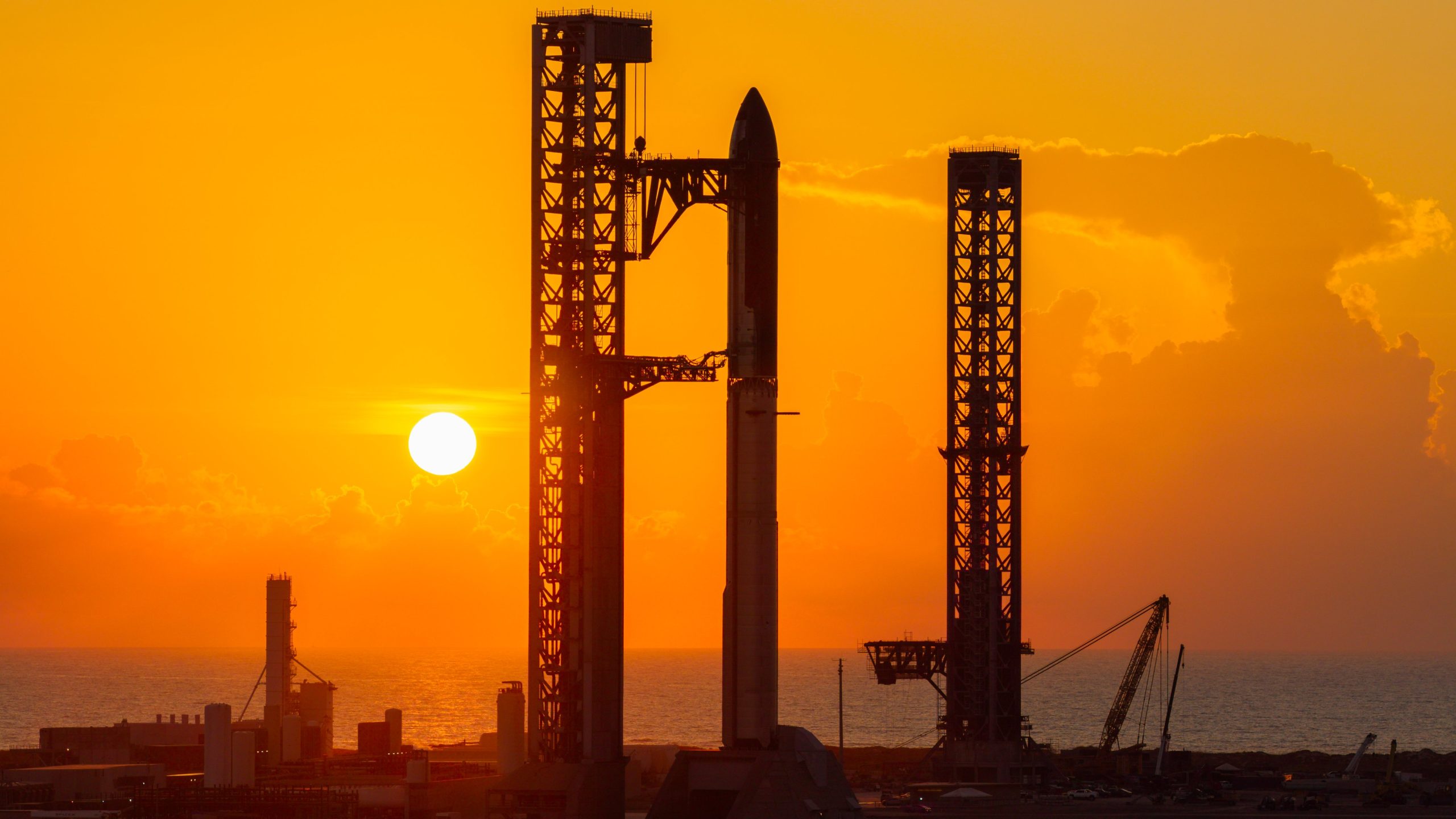
SpaceX cleared its final rehearsal Thursday afternoon, and Starship is now pointing at orbit for the first time. Flight 14 is scheduled for Monday, September 28, with a 75-minute window opening at 7:15 a.m. Central Time at Starbase, Texas.
This is not a suborbital hop. It is the first attempt to put a full stack into sustained Earth orbit — a transition that sounds like a binary switch but actually requires a sequence of new accomplishments. Ship 41 will fire its engines roughly 25 minutes after liftoff to achieve orbital insertion. The plan calls for six complete revolutions at about 275 kilometers altitude over nearly 10 hours.
But the real test comes later. SpaceX will not attempt that insertion burn unless flight controllers confirm the hardware needed for a return burn is available. The ship must reignite a single Raptor engine in space to slow down for reentry. Without that, orbital insertion is suicide. The flight plan already builds in health checks that could shorten the mission to two or five orbits if something looks uncertain mid-flight.
This is the architecture-level novelty. Every previous Starship flight followed a trajectory that brought the vehicle back to Earth within an hour. Flight 14 is the first attempt to make the vehicle live in orbit long enough to prove it can come home.
The Hardware Has Moved On
Ship 41 carries meaningful changes from its predecessors. Extra fasteners secure tiles in the most vulnerable areas of the heat shield. Gap seals address a problem observed on earlier flights where superheated plasma slipped behind tiles. Curved tiles reduce heating between panel edges. Two tiles recovered from Ship 40 will fly again — the first reuse of any Starship heat-shield component.
Booster 21 has new engine filtering and relight software after ice clogged three center engines on the previous booster, reducing its landing burn to eight of thirteen engines instead of the planned thirteen. That failure mode is now baked into the design loop.
Recovery zones have shifted. Ship 41 targets a splashdown in the Pacific west of Chile, a departure from the Indian Ocean landings that characterized earlier flights. Booster 21 aims for the Gulf. Neither vehicle will be caught by the tower — Elon Musk has said a catch is likely only in a few months, which means Flight 14 is still firmly in the expendable-recovery phase even as the goal is full reusability.
Satellites That Stay Up
Flight 14 carries 26 Starlink V3 satellites destined to remain in orbit and join the constellation within weeks. That is the operational distinction from Flight 13, which carried 20 V3 satellites that came back down because the mission never achieved orbit.
Those 26 satellites add roughly 26 terabits per second of network capacity. SpaceX says that is about ten times what a single Falcon 9 launch of older V2 Mini satellites provides. Three of them carry cameras that will photograph Starship’s heat shield during orbit to check for tile damage before reentry — in-flight quality assurance that could change how heat-shield maintenance works across the fleet.
The economics here are already forcing industry recalibration. A single Starship deployment of V3 satellites delivers more capacity than a decade of Falcon 9 launches in that category. Any operator relying on incremental launch pricing built around medium-lift vehicles is suddenly looking at a step change in cost-per-bit that their contracts do not reflect.
The Google Parallel
While Starship approaches orbit, Google is using a different SpaceX vehicle to test a different dream. Next week’s Transporter-18 rideshare will carry Project Suncatcher’s MVP satellite — the first in-orbit test of Google’s Tensor Processing Units. Four TPUs will run Gemini models in 15-minute bursts, constrained by a solar array that supplies only about one kilowatt and radiators that must shed heat between compute cycles.
Google originally planned two custom satellites in 2027. It moved the timeline forward. The company also holds roughly a 6% stake in SpaceX — a financial link that makes the rideshare arrangement feel less like a vendor transaction and more like an internal allocation.
SpaceX’s own orbital compute vision is orders of magnitude larger. The AI1 satellite, derived from Starlink V3 hardware, targets 150 kilowatts of peak compute — roughly 150 times what MVP draws. Musk has stated his ambition that compute in space will eventually account for 100% of all compute. A Gigasat factory in Bastrop, Texas, is being built to produce these structures at an annualized rate targeting one gigawatt of space compute by the end of 2027.
Google’s research estimates that launch prices need to fall below about $200 per kilogram before orbital data centers can compete with ground facilities on energy cost — a threshold the company expects around the mid-2030s. Google treats Suncatcher as a research project, not a product, for the foreseeable future. But its first hardware test rides on the rocket whose orbital capability Flight 14 is about to validate.
Who Wins, Who Loses
The winner of Flight 14 succeeding is anyone who has been pricing satellite deployment on current launch economics. A fully operational Starship fleet turns per-kilogram costs into a fraction of what they are today. Incumbent launch providers — Arianespace, ULA, H-IIA operators — face a capability gap that cannot be closed by incremental improvements. Their customers will not wait.
The defense industry is the other clear beneficiary. Starship’s volume and orbit-reach capability makes it the most plausible vehicle for rapid satellite deployment in a conflict scenario, for servicing assets in orbit, or for launching defense-specific structures that require large surfaces or high power. The Pentagon has watched this timeline closely.
Losers are less dramatic but real. Operators of medium-lift launch vehicles who priced their contracts assuming Starship remained years away will face margin compression. Ground-station networks built for current satellite counts may face disruption if Starship deployments accelerate faster than expected. The companies waiting for SpaceX to fail so they can capture market share have miscalculated the pace.
What Happens Next
If Flight 14 achieves orbit and returns the ship, SpaceX will have crossed the threshold that separates orbital launch capability from orbital launch reliability. The next question is not whether Starship can reach orbit but whether it can do so consistently enough to underwrite the business models being built around it.
If the insertion burn succeeds but the return burn fails, the mission will still represent a partial success — proof of orbital insertion without proof of reusability. If the insertion burn itself fails, the accumulated learning will still shape future attempts.
Either outcome shifts the baseline for everyone else in the space industry. The orbital architecture Starship proposes — large structures, rapid deployment, reusable orbital vehicles — is no longer theoretical. Flight 14 makes it a date on the calendar.
The launch window opens Monday at 7:15 a.m. CT. The next chapter of space access begins then.