Starship's Orbital Leap Changes Everything
SpaceX's upcoming September 22 launch is the company's first orbital attempt with Starship. Success here validates a reusable super-heavy rocket and reshapes the economics of space access worldwide.
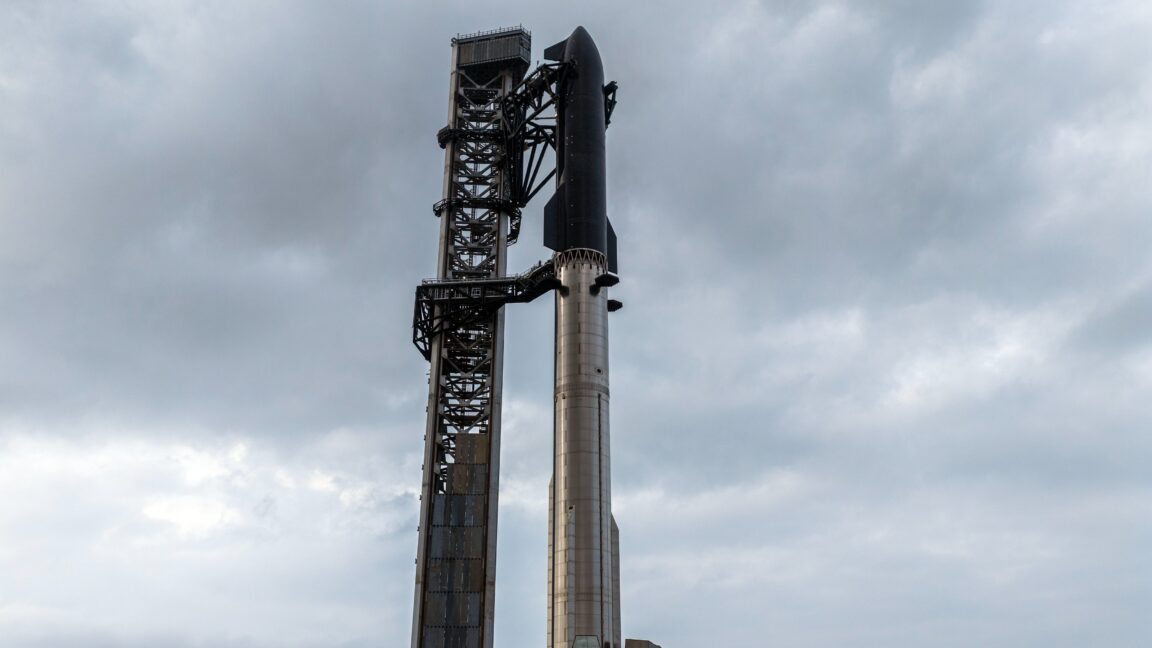
The real bet is above the clouds
SpaceX set a clock — 7:15 a.m. Central Time on September 22, give or take a 75-minute window — and hung a sunrise over Brownsville on the display. That’s not theatrical fluff. It’s a signal that the company now sees this launch as a public unveiling, not a quiet engineering dry run. The first time Starship attempts to reach orbit carries weight precisely because every previous test flight has lived in the gray zone between “interesting” and “operational.” This is the moment the gray zone disappears.
Pending regulatory approval, SpaceX said it intends to fly its 14th Starship mission with the explicit goal of circularizing orbit. The upper stage will carry 26 of the larger V3 Starlink satellites and target roughly six revolutions around Earth before deorbiting after about 10 hours at an altitude near 275 kilometers. Six orbits is a meaningful duration for checkout. It is long enough to prove thermal cycling, long-enough avionics stability, and propellant management across multiple burns. It is not long enough to hide serious problems behind the weather.
Reaching orbit would mark the most consequential milestone in a program that started on April 20, 2023, and has since progressed in what can only be described as fits and starts. Each flight has delivered partial data. The fourth test, on July 24, looked promising until the end. The Super Heavy first stage performed nominally during ascent and executed a successful boostback burn. Then the three center engines exhibited ice clogging during the terminal phase of the burn, which forced an early cutoff. The booster attempted a landing burn with eight of thirteen planned engines reigniting before hitting the Gulf in a hard splashdown. Spaceflight engineers call that kind of anomaly a learning opportunity. Investors call it a schedule risk. Both reactions are correct.
What changed between flights
The fix for the next attempt is not theoretical. SpaceX says the upcoming Super Heavy booster carries hardware modifications to improve filtering to the engines and software changes designed to enhance relight reliability. Ice clogging is not mysterious. In a methane-rich upper stage environment, localized cold spots can form, and particulate contamination or ice formation in fuel lines can choke engine performance. Better filtering addresses the particulate path. Software improvements to relight reliability address the ignition path after a shutdown or abnormal condition. Together, they target the exact failure mode observed on July 24.
That these changes are being made mid-campaign reveals something important about how SpaceX approaches development. Rather than ground-testing every variant to completion before flight, the company flies, learns, iterates, and flies again. This is a high-velocity loop. The downside is that each loop can expose the world to embarrassment when things go wrong publicly. The upside is that failures accumulate insight rather than delay timelines indefinitely. If this approach succeeds at orbit, the model itself becomes defensible.
The business case, written in orbital mechanics
Starship is not merely a rocket. It is an economic proposition. The entire value thesis rests on full and rapid reusability at a size no other operational vehicle matches. A fully reusable Super Heavy booster plus a reusable upper stage means cost-per-kilogram to orbit should decline dramatically as flight rate increases. That decline is what transforms satellite mega-constellations, cargo resupply, and crewed missions from expensive bespoke projects into routine logistics.
The V3 Starlink satellites on board are a live demonstration of that thesis. Twenty-six large satellites carried on a single orbital attempt is a payload manifest that signals intent, not hesitation. Starlink depends on cheap mass access to low Earth orbit to sustain its rollout plan. Starship is the vehicle designed to execute it. Proving orbital capability validates the cost model that underpins the revenue model.
NASA’s Artemis program is the other side of the same coin. The agency has bet its lunar-return schedule on Starship as the human landing system. Any delay in Starship certification cascades directly into Artemis timeline uncertainty. Reaching orbit and demonstrating controlled re-entry and landing attempts rebuild confidence in that pipeline. Failing to reach orbit throws the lunar program into a waiting pattern that no one involved wants to see.
Who wins if Starship orbits
The immediate winner is SpaceX. An orbital mission turns a test article into an operational vehicle in the eyes of regulators, customers, and competitors. It unlocks contractual pathways that have been technically possible but procedurally stalled. NASA gains a clearer path toward crewed lander certification. Satellite operators gain a credible heavy-lift option for routes where launch cadence matters more than margin. The U.S. space ecosystem gains a domestic super-heavy lift vehicle at a time when other programs remain in planning or early development phases.
The potential losers are less dramatic but real. Competing launch providers that have priced their services on exclusive heavy-lift capacity face a new benchmark. Rocket companies still chasing orbital success with smaller vehicles find their market segmented into lighter payloads where reusability advantages matter less. Insurance and financial markets, which have been pricing SpaceX risk with a wide discount relative to traditional providers, will recalibrate once a clean orbital achievement occurs.
The optics and the stakes
A sunrise launch over the Gulf coast is visually striking. It is also strategically convenient. Daylight recovery operations for the Super Heavy booster simplify search, capture, and refurbishment. Morning local time aligns with favorable weather probabilities in the region. The imagery reinforces a narrative that SpaceX is moving from lab to launchpad in a way that photographs alone communicate. In an industry where perception shapes procurement, that narrative is an asset.
But narratives do not circularize orbits. Hardware does. The vehicle carries 26 satellites, yes. It also carries the accumulated lessons of thirteen prior flights. The most recent flight taught SpaceX about ice clogging under specific thermal and burn conditions. This flight tests whether those lessons translated into fixes. Success is binary: orbit or no orbit. Anything less is a partial pass that extends the learning curve without closing it.
What happens next
If Starship reaches orbit, the question shifts from “can it get there?” to “can it come back?” The landing burn remains the harder half of the problem. Even with improved relight reliability, the booster must reignite engines through atmospheric re-entry, descend under powered flight, and land intact. Each additional flight tightens that loop. The 14th mission is the gateway.
If it fails to orbit, the setback is less catastrophic than it sounds. SpaceX has absorbed developmental losses before. The program is resilient by design. But each loss resets commercial expectations and gives pause to partners who have aligned their schedules to Starship milestones. NASA, satellites operators, and Defense Department customers all build roadmaps around orbital availability. Delay hurts those roadmaps more than it hurts SpaceX’s balance sheet, because the company has already priced in the possibility of incremental failure.
Either outcome advances the campaign. Only one outcome advances the business model. That is why the September 22 window matters more than the sunrise framing suggests. The sky is not the limit. Orbit is.