Starship's orbital test is the moment for single-stage-to-orbit economics — and competitors are nervous
SpaceX's Flight 14 is the first real test of a fully orbital Starship — and a stress test for the entire commercial launch industry. If it works, the economics of space shift dramatically.
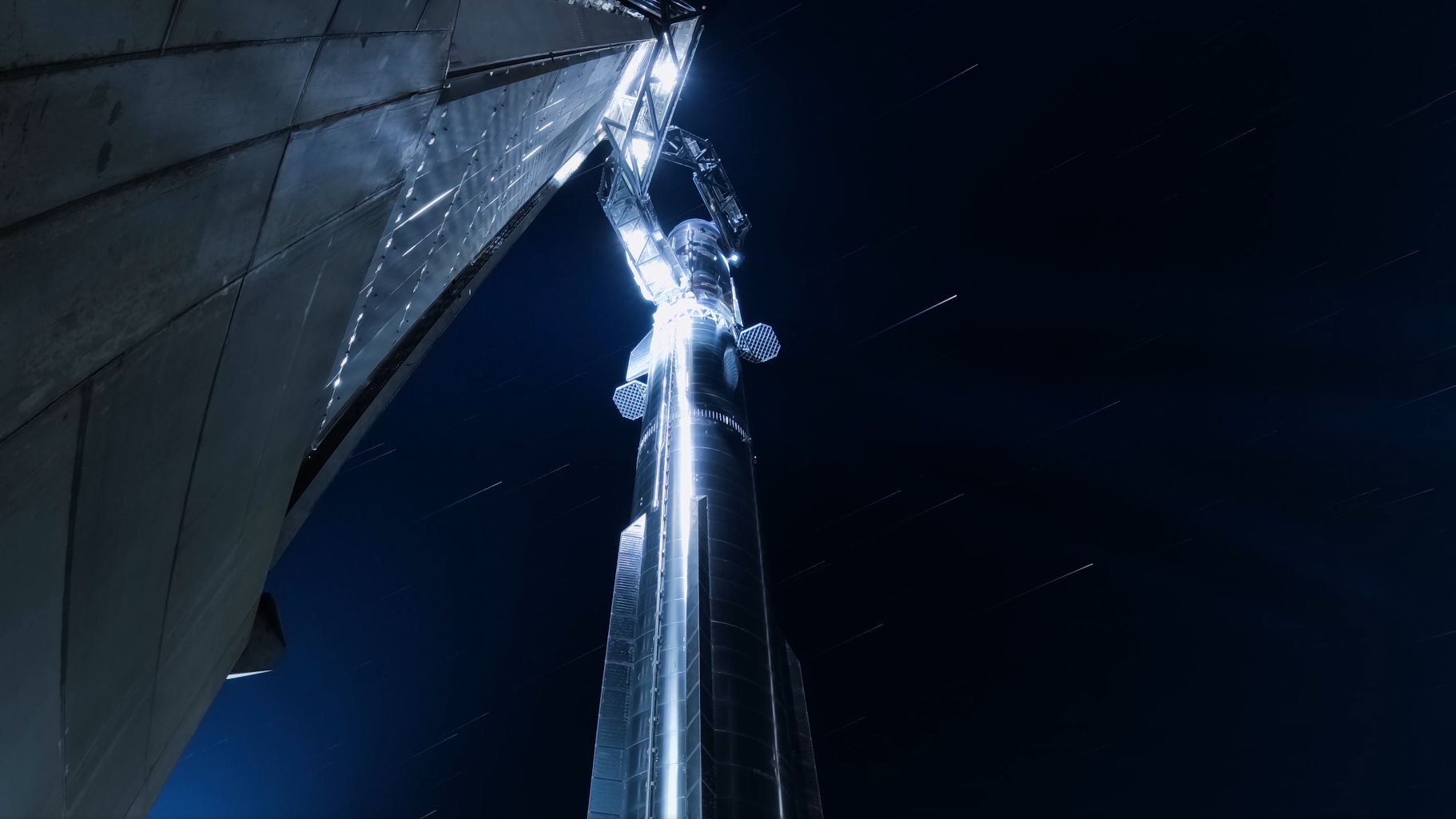
The first orbital test isn’t just a launch — it’s a bet on physics winning over accounting
SpaceX is preparing for Flight 14 on September 28, the first time its Starship vehicle will attempt to reach orbit with the full stack: Booster 21 as the Super Heavy first stage, Ship 41 as the upper stage. A wet dress rehearsal follows on September 24. If that check-out goes cleanly, regulatory clearance from the FAA is the only remaining gate.
But the real question hanging over Pad 2 at Starbase isn’t whether a rocket can fly. It’s whether a single-stage-to-orbit vehicle can do it at a cost that makes the economics of launch look like child’s play compared to anything currently flying.
This is the moment the Starship program has been building toward for a decade. And it’s the moment every other player in commercial space is watching with varying degrees of interest and concern.
What’s actually on the pad
The hardware arriving at the pad tells the story. Booster 21 is the 21st Super Heavy first stage — meaning SpaceX has already flown, tested, and iterated on twenty iterations of the world’s most powerful rocket booster. Ship 41 is the 41st upper stage. That count matters more than you might think. It signals that SpaceX has been refining this vehicle in public, publicly, over thousands of flights and test articles, accumulating data that no competitor can match at this scale.
The payload is telling too: 26 Starlink Version 3 satellites. SpaceX carried smaller batches of V3 on previous suborbital flights, but those missions never reached orbit. The satellites burned up on reentry. This time, if Flight 14 succeeds, those 26 satellites will be the first of what Musk envisions as more than 100,000 V3s — larger, more powerful, designed to replace the entire existing Starlink constellation.
There’s a second layer to that payload plan. Musk has spoken about deploying over a million AI data center satellites in low Earth orbit alongside the V3s, pending regulatory approval. Whether that happens or not, the intent is clear: Starship isn’t just a launch vehicle. It’s a logistics system for a planetary-scale communications architecture.
Why single-stage-to-orbit still sounds crazy
To outside observers, the idea of a single stage reaching orbit remains almost heretical. Every historical rocket has been two stages or more. The logic is brutal: you need enormous thrust to escape gravity, and carrying all that fuel in one structure means you’re carrying dead weight for most of the flight. Staging sheds that dead weight.
But SpaceX’s argument has always been different. It runs on three claims: methane is a better fuel for reusability than kerosene; full-stage reusability means you don’t need to optimize for one-time performance; and if you can land the booster vertically and fly it again, the economics flip entirely.
The Merlin and Raptor engines running on liquid methane and liquid oxygen have been tested for years. The hot-fire tests at Starbase have produced some of the most powerful engine firings ever recorded. The question is whether that translates to orbit.
Flight 14 will tell us something, but not the whole answer. SpaceX has designed the first 13 flights to be suborbital by construction — the trajectory, the fuel loads, the timeline all point that way. Flight 14’s orbital attempt is expected to last roughly 10 hours from liftoff to Pacific splashdown, a vast difference from the hour-long suborbital hops before it.
Who’s sweating right now
Blue Origin’s New Glenn is the most direct competitor, and it hasn’t flown yet. Jeff Bezos’s company has been quieter about timelines than SpaceX, which is either strategic patience or something else. New Glenn promises a reusable first stage and a 70-meter payload fairing, but it remains on paper while SpaceX is stacking hardware for orbital attempts. The gap between announcement and launch is where reputations get made and lost.
China’s commercial sector is the other big watch point. LandSpace’s Zhuque-3 and iSpace’s Hongyun-3 are in development, but both are years away from orbit-class flights with reusability. The Chinese state-run Long March fleet is massive but not reusable. If Starship achieves operational orbit-and-return capability, it creates a cost advantage that Chinese commercial launch providers would struggle to match for years — if they ever can.
Rocket Lab is small by comparison, focused on the micro-launch segment where Starship isn’t playing. ULA’s Vulcan has flown but operates on traditional expendable-or-near-expendable economics. None of these companies face the same existential pressure as New Glenn, but they all face the same market reality: if Starship works, the price per kilogram to orbit drops in a way that redistributes the entire commercial launch industry.
The NASA angle nobody’s ignoring
NASA’s dependence on Starship for the Artemis program adds urgency that goes beyond commercial launch markets. The agency has contracted Starship as the lunar lander for Artemis III, targeted for mid-2027, and Artemis IV in 2028 with crew certification. NASA needs an orbital spacecraft capable of docking with Orion — and it needs it soon.
Failure on Flight 14 wouldn’t end the Artemis contract. SpaceX has demonstrated resilience through repeated suborbital tests. But each failure extends the timeline, and every month delay pushes deeper into political risk. The 2028 Artemis IV deadline is not flexible in Washington. Congress watches these dates the way voters watch government promises.
What clearing orbit actually unlocks
Reaching orbit is the first gate. The next ones are harder. Orbital refueling — transferring cryogenic propellant between a tanker Ship and a mission Ship in orbit — is essential for any mission beyond low Earth orbit. The physics of storing liquid hydrogen and liquid oxygen in space for days or weeks is unsolved at scale. SpaceX has tested some of these operations in suborbital contexts, but orbital-duration propellant management remains a theoretical problem until proven.
If Flight 14 reaches orbit, deploys its Starlink V3s, and returns safely, SpaceX clears the first major hurdle. The V3 deployment alone would be significant — 26 satellites in their intended orbit, not burned up in the atmosphere. It would demonstrate that Starship can serve as a delivery vehicle for a megaconstellation, which is the business model behind the whole enterprise.
What happens next regardless of the result
Win or lose, the Starship program has already changed the space industry. The rate of iteration at Starbase — new boosters and ships every few weeks, public test flights accumulating data faster than any competitor’s entire development program — has raised the bar for what development velocity looks like in orbital mechanics.
Competitors are responding. New Glenn’s timeline keeps shifting, which is the natural reaction of an organization trying to match a pace it didn’t create. China is investing more heavily in reusable launch development. The European Ariane program faces the same structural question: can legacy launch economics survive against a vehicle designed from day one for full reusability?
Flight 14 is the first real answer SpaceX has offered to those questions in orbit. The 75-minute launch window opens at 8:15 a.m. EDT on September 28. The wet dress rehearsal on September 24 will give the first clear signal of whether that window is realistic.
The physics are on SpaceX’s side if the engines perform. The economics are what make this dangerous for everyone else.