The Strait Reopened: What Hormuz Mine-Clearing Means for Global Energy and US-Iran Power Plays
The US military's successful clearance of Iranian mines in the Strait of Hormuz marks a critical shift in the Iran conflict calculus—with direct consequences for global shipping, energy markets, and Washington's strategic posture.
The Hourglass Tightens and Releases
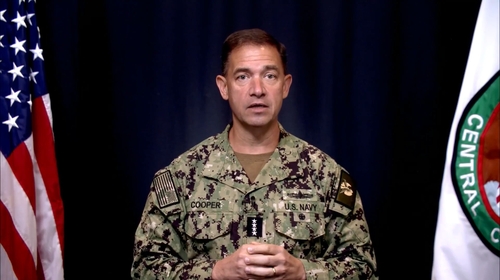
Brad Cooper, commander of US Central Command, stood before a camera on August 28 and declared victory in the Strait of Hormuz—not with missiles or bombs, but with the quiet, precise work of mine clearance. The announcement, posted on X, described the removal of Iranian-laid naval mines from one of the world’s most critical maritime chokepoints as a “major milestone.” The language was measured, but the implication was anything but.
For months, Iran had weaponized geography. The Strait of Hormuz—21 nautical miles at its narrowest, a waterway through which roughly 20% of global oil consumption passes—became a theater of asymmetric warfare. Mines floating in international shipping lanes, threats to tankers, the slow suffocation of global energy flows. This was not open combat, but it was not peace either. It was the gray zone where modern conflicts increasingly live, and where the line between coercion and catastrophe grows thin every day.
Cooper’s video showed maps of the pre-war Traffic Separation Scheme (TSS), those meticulously charted lanes designed by the International Maritime Organization to prevent collisions between the massive cargo ships that crowd this strait daily. The northern route hugged Iranian waters; the southern route skated along Oman’s coast. Between them lay a 3-kilometer buffer—a no-man’s-land of sorts, designed to keep vessels from accidentally drifting into disputed territorial waters.
Iran had disrupted this delicate geometry. By placing mines in the TSS lanes, Tehran wasn’t just threatening individual ships—it was challenging the very architecture of global maritime law. The strait, despite its narrowness, has never been considered high seas. Both Iran and Oman claim 12-nautical-mile territorial zones under the 1974 agreement that divided the strait along an equidistant line. No vessel can cross without entering someone’s sovereign waters. This legal ambiguity, exploited for decades, now carried the weight of immediate economic violence.
The Cost of Choking the Throat
The numbers tell the story. Before the mine-laying campaign, approximately 21 million barrels of crude flowed through Hormuz daily—roughly one-fifth of global oil consumption. When Iran began deploying mines, tanker insurance premiums spiked, shipping routes were disrupted, and futures markets priced in the threat of prolonged closure. The Psychological Toll on energy markets cannot be overstated: uncertainty about supply, however distant the actual disruption, creates immediate volatility.
Consider what Hormuz represents beyond volume. It is not merely a pipeline through water—it is the single most important energy chokepoint on Earth. Close it effectively, and the world feels it within weeks. Close it permanently, and the global economy enters uncharted territory. Iran understood this calculus when it chose mines over missiles, threats over strikes. Mines are deniable. They can be laid by proxy forces, by IRGC Navy units operating in the shadows, by vessels that simply “lost” their cargo. Attribution becomes political, not technical. Response becomes diplomatic, not military.
But mines also cross a threshold. They do not discriminate between military and commercial targets. They threaten not just navies but civilian tankers, container ships, cruise liners. They violate the 1907 Hague Convention, to which both Iran and the US are signatories. They represent a deliberate escalation from coercion to chaos.
Cooper’s Clockwork
The US response, as described by Cooper, was neither rushed nor theatrical. His video emphasized precision: Navy SEALs, Navy Special Warfare operators, joint air power from the Army, Air Force, and Marines. “Secretive and precise,” he called the operation. “Extremely arduous and dangerous.” The language suggests a campaign conducted over weeks or months, not days—a sustained effort rather than a show of force.
This matters because it signals something about Washington’s current posture. The Trump administration has vacillated between maximum pressure and backchannel negotiations with Iran. Direct talks remain off the table; indirect through Oman or Qatar persist. Mine clearance operates in that same gray zone—it is military action without declaration, coercive without being escalatory. It tells Tehran: We see what you’re doing. We can stop it. But we are not starting a war.
Cooper’s framing reinforces this. “Internationally recognized transit routes are now completely free from the threat of Iranian mines,” he stated. Not “we have defeated Iran,” not “the threat is eliminated.” The language is specific, limited, careful. It claims victory without announcing war.
What Comes Next
The immediate impact will be felt in oil markets. Brent and WTI futures should drop—the risk premium embedded in prices for months was precisely this: fear of Hormuz closure. With the lanes cleared, that premium shrinks. But markets are forward-looking, and forward-looking at what? The mines were removed; the capability remains. Iran has demonstrated it can lay them. It has also demonstrated it can threaten them again.
The real question is political, not technical. Will Tehran accept this as de-escalation, or will it view the clearance as humiliation? The IRGC built its reputation on asymmetric warfare—blockading shipping, harassing tankers, threatening sovereignty. To have those capabilities neutralized by a foreign power is a blow to the narrative of resistance that has defined the regime’s domestic and regional standing.
Yet there is also the possibility of miscalculation. Clearing mines is dangerous work. Second explosions, undetected devices, retaliatory attacks on clearance vessels—all present risks. The US operation succeeded; success does not guarantee future safety. One incident, one casualty, could flip the narrative from milestone to tragedy.
The Bigger Geometry
Beyond the immediate headlines lies a longer arc. The Strait of Hormuz has always been a bargaining chip, not just a waterway. Iran has threatened to close it before—most notably during the 2019 tanker attacks, the 2020 Kufic refinery strike, the 2021 Abqaiq aftermath. Each time, the response was calibrated: sanctions, naval deployments, diplomatic pressure. Each time, the threat receded without resolution.
This time is different because the response was operational, not rhetorical. The US did not threaten to clear the strait; it cleared it. The difference matters. Coercion requires credibility, and credibility requires action. By completing the mine clearance, Washington established that it can remove Iranian advantages without accepting Iranian coercion. That changes the calculus for future confrontations—not just in Hormuz, but across the Gulf, across the region.
But it also raises harder questions. What is the endgame? Mine clearance creates space for diplomacy, but diplomacy requires parties willing to negotiate. Iran has shown it can disrupt; it has not shown it wants to stop. The US has shown it can respond; it has not shown it wants escalation. Between those positions lies the dangerous middle ground where conflicts fester.
The Hourglass Flows
Hormuz is not won or lost in a single operation. It is managed, bargained over, threatened, and occasionally reopened. The mine clearance represents a moment of clarity in a long blur—proof that the US can act unilaterally when deterrence fails, that it can project power into contested waters, that it can restore flow without restoring peace.
What flows next is not just oil. It is signal. To Iran: your asymmetric advantages are penetrable. To allies: American commitments remain credible. To markets: volatility has limits. To the world: the throat of global energy still opens, even when someone tries to close it.
The milestone is real. The victory is temporary. The game continues.