The Supreme Court Could Decide If Armed Agents Can Patrol Polls
Two lawsuits challenge the Trump administration's repeated suggestions that armed federal officers could appear at polling places. The cases force a reckoning with Civil War–era statutes and the Voting Rights Act — and whoever wins at the Supreme Court reshapes American elections.
The Threat That Works Without Being Carried Out
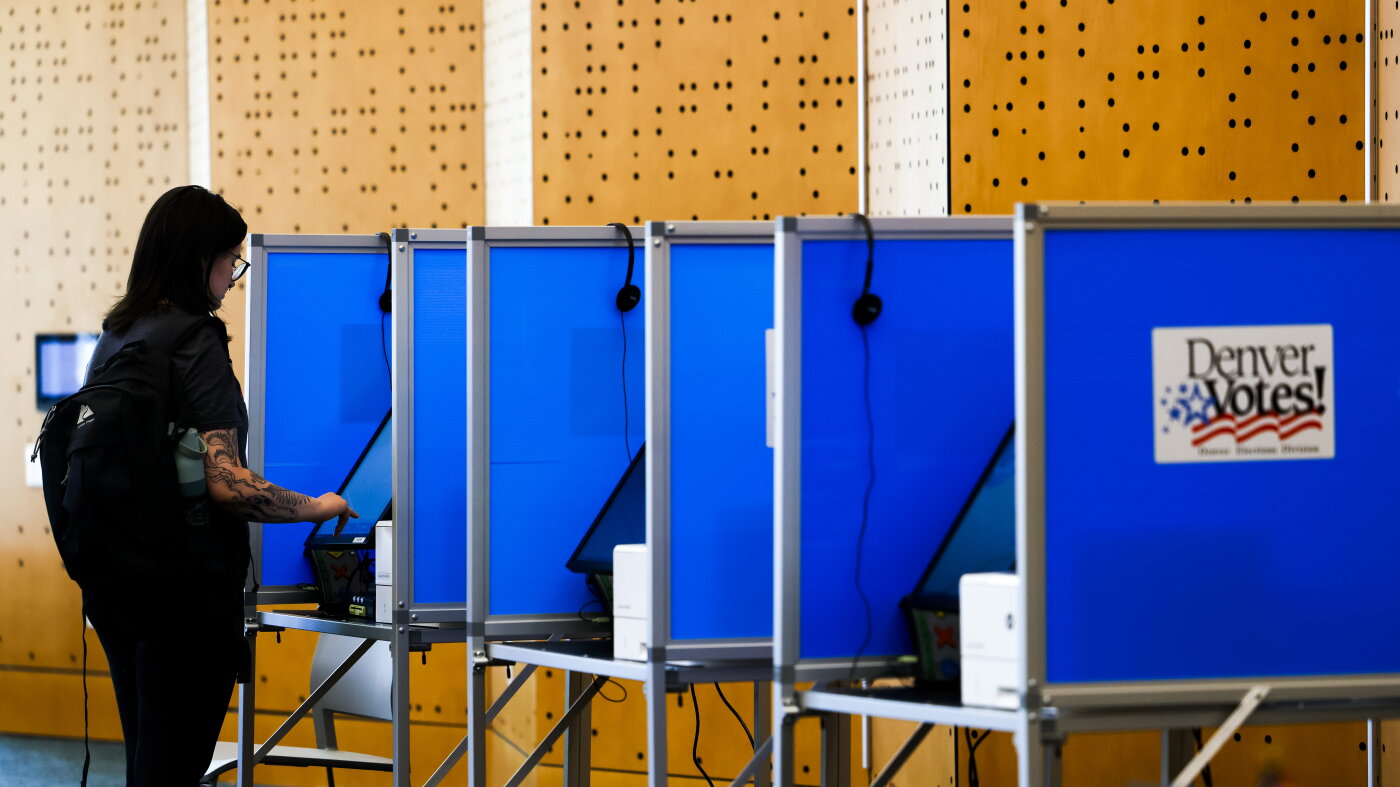
Paul López, Denver’s clerk and recorder, hears the same question at every public meeting this cycle: “What can we do if federal agents are at the polls?” He does not need to field it because armed Immigration and Customs Enforcement officers have actually shown up at a voting site. He needs to field it because the Trump administration has said, on multiple occasions, that it might.
That distinction matters more than most legal commentary is admitting. The administration’s strategy so far has been to keep federal agents hovering at the edge of legality—issuing statements that could mean almost anything—and let the chill do the work. Roughly 40 percent of voters now believe ICE agents will be present at their polling place, according to a University of California San Diego poll released this week. Voters of color said they were significantly more likely than white voters to fear that casting a ballot could expose them to immigration questioning, even when they are U.S. citizens. No arrest has been made at a poll. None has needed to be.
The Two Lawsuits, Layered on Top of Each Other
A coalition including Democracy Forward and a network of civil rights organizations filed a federal lawsuit Friday in Washington, D.C., arguing that the administration’s own statements about polling-place enforcement violate Section 11(b) of the 1965 Voting Rights Act, which prohibits intimidation, coercion, or persuasion of any person to vote or not vote. The complaint frames the DHS “Unlawful Voter Initiative”—a surge of resources aimed at finding noncitizens on state rolls—as a mechanism that will inevitably sweep up U.S. citizens through flawed data, with disproportionate impact on Black, Latino, and Asian communities.
A separate suit, filed last week and joined by election officials including López, rests on an older statute: 18 U.S.C. § 592, a Civil War–era law that makes it a federal crime for any officer or agent of the United States to appoint themselves as a poll watcher or to interfere with voting unless specifically authorized by law. That law has been on the books since 1870, enforced intermittently, and largely forgotten until this cycle. The plaintiffs are asking the court to treat it as a backstop—a legal floor that exists precisely because Congress once believed elections required physical protection from state and federal power alike.
The two suits target different conduct. One attacks the administrative campaign itself. The other attacks the visible presence of armed agents. Together, they form a one-two punch that forces the courts to decide not just whether a statute was violated this cycle, but whether the statute means anything going forward.
What the Administration Actually Said
The record is deliberately loose, which is the point. In May, President Trump told reporters he would do “anything necessary” to ensure “honest” elections. This month, DHS Secretary Markwayne Mullin said ICE could serve warrants at polling places. Border czar Tom Homan told Fox News that agents would not be “sweeping polling places,” then earlier in the year suggested the concern itself was overblown. FBI Director Kash Patel, testifying before Congress this week, declined to rule out FBI presence at polls while saying agents would “follow the law.” DHS has stated that it is “not planning operations targeting polling locations” but left open the possibility of enforcement action if an “active public safety threat” materialized—a condition that is self-defining and impossible to pre-approve.
The White House responded to the new lawsuit by insisting the president has not discussed plans for ICE at polling places, which is technically true and practically irrelevant. The doctrine of “we haven’t decided, but we reserve the right” is a well-worn tactic in election law. It shifts the burden onto voters and election officials to prove harm before it happens, which is why the suits are seeking injunctive relief rather than waiting for a violation to occur.
The Data Problem at the Center of the Enforcement Push
Underpinning both lawsuits is a factual dispute that the courts will have to wade into. DHS says it is hunting noncitizen voters. Prior audits and investigations have found noncitizen voting to be extremely rare—so rare that several states, including Colorado, have purged rolls of eligible citizens by mistake rather than caught a single instance of intentional noncitizen voting. A whistleblower report released this week alleged that DHS’s Unlawful Voter Initiative is moving at breakneck speed and relying on unreliable data, producing false flags against U.S. citizens. DHS called the allegations “disgusting” and said its work is “diligent and professional.”
This is not a side issue. If the court finds that the enforcement campaign is built on materially flawed data and is therefore likely to cause unconstitutional detentions at or near polling places, the injunction in the Voting Rights Act suit becomes much easier to grant. If the court defers to DHS’s characterization of the threat, the remedy shrinks to whatever the agency voluntarily decides to stop doing.
Who Wins, Who Loses, and What Changes
If the plaintiffs prevail, the immediate result is an injunction barring armed federal officers from polling places and likely an order slowing or halting the DHS initiative. The longer-term result is a Supreme Court precedent that either reinforces or hollows out Section 592 and Section 11(b) of the Voting Rights Act. Either way, the next administration will know exactly where the boundary lies—and whether it is worth testing.
If the administration prevails, the consequence is not just the absence of an injunction. It is the normalization of a posture in which armed federal officers can physically appear at polling places without clear statutory authority, and in which election officials must react to violations after they occur rather than preventing them. That shift would alter the psychology of Election Day for millions of voters, particularly in communities that already distrust federal authority. Turnout effects from intimidation do not require a single arrest to register. The mere possibility is the mechanism.
López told reporters that if federal officers show up, “it’s not going to be a good day for any ICE agent or any other federal agent or anybody trying to intimidate anybody at the polls.” He is referring to state-level consequences—possible arrest under Colorado law, certainly, and the political fallout of enforcing a federal policy that local officials consider illegitimate. But the real resolution will come from the federal courts, and ultimately from the Supreme Court, which has shown in recent terms a willingness to narrow voting-protection statutes and expand executive authority in immigration enforcement. Both doctrinal streams are moving in directions that cut against the plaintiffs.
What to Watch Next
The DC district court will rule first on the new lawsuit. A decision is unlikely before the fall election cycle reaches its final weeks, which means the practical impact may depend more on the threat of an injunction than on the injunction itself. If the district court grants preliminary relief, the administration will appeal to the D.C. Circuit and likely seek Supreme Court review on an expedited basis. If the district court denies it, the plaintiffs will face the same appellate path, and the election will have proceeded under a legal gray zone that neither side fully resolved.
The older suit, filed by election officials, may travel a different procedural route and could reach a circuit that is less sympathetic to federal enforcement claims—or more, depending on geography. That divergence is intentional. Plaintiffs are casting a wide legal net because they know the substantive question—whether a democracy can function when armed federal agents are permitted to loom at the edges of polling places—will eventually land in one courtroom.
The Supreme Court’s answer will define the line between permissible federal law enforcement and unlawful election intimidation. Until it does, election officials like López will keep holding meetings where voters ask the same question over and over: What can we do if they show up?