Swift Teles cope's Rescue Failure Signals a New Space Reality
NASA's $30 million attempt to save the Swift Observatory from re-entry has failed, exposing the growing crisis of aging space infrastructure and the limits of orbital servicing technology.
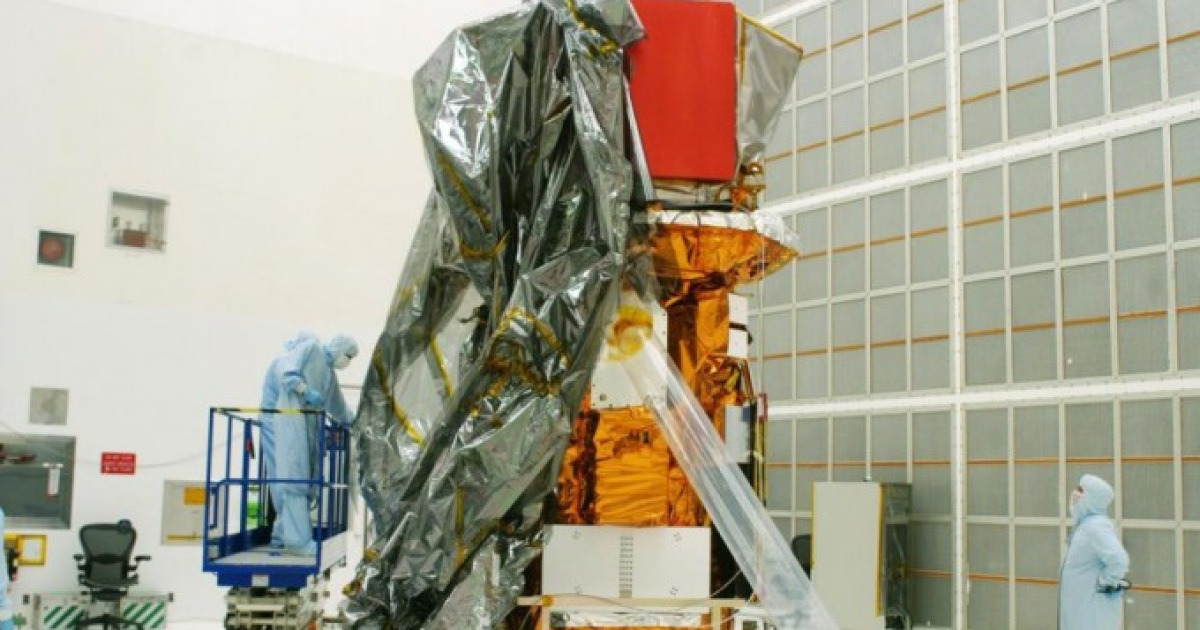
The Rescue That Wasn’t
NASA confirmed on August 19 that its attempt to save the Swift Observatory has been abandoned. The Link spacecraft, launched just last month by Catalyst Space Technologies, lost attitude control shortly after orbit insertion when its maneuvering thrusters partially failed. Engineers tried compensating with the main electric propulsion engine—writing new software to repurpose it as a reaction control system—but the substitution proved inadequate. By the time they stabilized the craft, too much fuel had been consumed. There simply wasn’t enough propellant left to match Swift’s velocity, grapple the 2004-era observatory, and boost it out of its decaying 370-kilometer orbit.
Swift, which NASA designed for a two-year mission in 2004, has been detecting gamma-ray bursts for over two decades. It will spend roughly one final month in a degraded orbit before re-entering Earth’s atmosphere, most of it burning up as frictional heat. Some debris may reach the surface, though NASA estimates the risk to people as low.
Jared Isaacman, NASA’s administrator, framed it as a reasonable risk taken: “We didn’t get the result we wanted, but it was worth trying.” The lesson he emphasized was forward-looking—the data from Link’s proximity operations over the next two to four weeks will feed into future missions. But the subtext is harder to face: the technology to rescue aging space assets does not yet exist at scale.
The Problem Nobody in Washington Is Naming
This is not an isolated failure. It is a signal.
Swift is one of many large scientific instruments now in advanced retirement. The Hubble Space Telescope, also falling through the atmosphere inch by inch since its last servicing mission in 2009, shares Swift’s fate. The International Space Station—built to last two decades and extended repeatedly—is approaching the same structural ceiling. Thousands of defunct satellites from every nation litter low-Earth orbit, growing denser by the year.
The fundamental assumption that enabled the Link mission—that a rescue ship could rendezvous with a dying asset, grapple it, and raise its orbit—is theoretically sound. It has been demonstrated in limited form by missions like OSAM-1’s predecessor technologies and Northrop Grumman’s Mission Extension Vehicle. But those demonstrations operated in controlled conditions with healthy target vehicles. Swift was already in an uncooperative, descending orbit. Link itself suffered a failure mode no one fully anticipated. The combination exposed a gap between proof-of-concept and operational capability that NASA and its commercial partners have not closed.
Who Wins, Who Loses
The immediate loser is gamma-ray burst astronomy. Swift’s one-month observation window—after which the instrument ceases entirely—removes the most agile multi-wavelength follow-up facility in orbit. No replacement is on the launch pad.
Catalyst Space Technologies loses credibility and likely funding. The company secured $30 million from NASA for a mission that ended with Link testing proximity operations instead of performing them on a live target. That is not a commercial trajectory.
NASA loses a chance to prove that on-orbit servicing can be more than an engineering exercise. Every successful demonstration builds institutional appetite for the technology. Every failure raises the cost of the next attempt. The agency is now positioned to argue that servicing remains unproven at the scale required—useful ammunition for budget requests, but not a comforting position.
The bigger loser is the orbital environment itself. Each unsaved satellite is one more object subject to uncontrolled re-entry. Each re-entry that fragments increases the probability of debris cascading into orbits shared by working assets. Swift’s mass is modest, but the principle scales poorly: a fleet of aging instruments with no lifecycle plan is a slow-motion collision risk.
What This Means for Hubble—and Everything Else
Hubble receives far more public attention than Swift, but the physics are identical. Both are in decaying low-Earth orbit. Neither has a servicing spacecraft in readiness. The difference is that Hubble’s failure would carry more cultural weight; Swift’s carries more scientific urgency, because gamma-ray burst monitoring has no backup system in orbit today.
The pattern extends beyond telescopes. Communications satellites, weather instruments, military platforms—all are aging in the same orbital regime. Launch cadence has outpaced deorbit planning. The commercial space economy is built on satellites designed for five to seven years, not twenty. When they fail, they become dead weight. The Link mission was supposed to prove that dead weight could be revived. It did not.
The Uncomfortable arithmetic
Building a rescue spacecraft costs tens of millions. Launching it costs tens of millions more. Operating it successfully requires a level of autonomy and precision that Link’s thruster failure revealed NASA has not yet mastered. Meanwhile, the number of aging objects in orbit grows every month.
The math does not favor a rescue-everything strategy. It favors a triage strategy: identify which assets are too valuable to lose, develop targeted servicing solutions for those, and accept that the rest will re-enter.
Swift is not one of those assets. It is valuable, but its loss is incremental rather than catastrophic. Hubble may be closer to the line—its science return is irreplaceable, and its orbital decay is well mapped. But a Hubble rescue faces the same engineering wall that stopped Link.
What Happens Next
The most useful outcome of the Swift mission may be the Link data itself. Two to four weeks of proximity operations will generate a dataset on how a small spacecraft can navigate near a non-cooperative, tumbling target in low orbit. That dataset will either accelerate the next generation of servicing missions or convince NASA to redirect resources toward other approaches—perhaps simpler deorbit tethers, or perhaps a completely different class of rescue architecture.
Isaacman’s “reasonable risk” framing suggests the latter path is still open. But the cost of getting there keeps rising, and the window of salvageable assets keeps shrinking. The era of building space infrastructure without a plan for its end is closing. Swift’s final month of observation is a reminder that the end is already here for some things—whether we rescue them or not.