LG Chem Bets Big on AI-Driven Drug Discovery in Pharma Pivot
LG Chem is repositioning itself as an AI-powered pharma player, launching its first AI bio conference with U.S. venture capital firm Flagship Pivotal. The move signals a shift from traditional chemical manufacturing to precision oncology and personalized mRNA vaccines driven entirely by artificial intelligence.
From Chemical Supplier to AI Pharma Player
LG Chem’s recent pivot into AI-driven drug discovery represents one of the most significant corporate transformations in East Asian biotech this year. The conglomerate, traditionally known for petrochemicals and plastics, is now betting that artificial intelligence can bridge the gap between material science and precision medicine — a transition that would redefine how legacy industrial companies compete in the pharmaceutical sector.
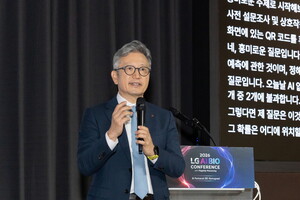
The announcement came during the first-ever LG AI Bio Conference held at LG Science Park in Seoul’s Gangseo District. The event brought together 140 executives and researchers from AI and biotech companies worldwide, signaling LG Chem’s intent to position itself as a serious player in the global pharmaceutical race. What made the gathering notable was not just the attendance but the geographic diversity: representatives from Boston, San Francisco, Tokyo, and London all attended, underscoring the国际化 nature of the bet LG Chem is making.
The Right Drug, The Right Patient
Son Ji-woong, president of LG Chem’s Life Sciences Business Division, drew a sharp distinction between traditional drug discovery and what he called the new paradigm. “AI is evolving from a tool into the core engine that determines competitiveness in drug development,” he said during his keynote address. The implication was clear: companies treating AI as merely an acceleration layer will fall behind those rebuilding their entire discovery pipeline around it.
The distinction matters. Traditional pharmaceutical companies focus primarily on identifying promising molecular candidates — the “right drug.” LG Chem’s strategy extends further, using AI to match those candidates with patients most likely to respond. This “right patient” approach could dramatically improve clinical trial success rates while reducing the enormous costs that typically accompany late-stage drug development failures. Industry data suggests that patient stratification errors account for roughly 40 percent of Phase III trial failures, a problem AI-driven biomarker matching could address.
Precision Oncology as the Battleground
LG Chem has chosen precision oncology as its initial focus area. The company plans to deploy AI models that can predict individual neoantigens — unique protein markers found on a patient’s cancer cells — to develop personalized mRNA cancer vaccines. This is technically ambitious work. Tumor biology varies enormously between patients, even within the same cancer type. Identifying which neoantigens will trigger meaningful immune responses requires sophisticated computational models trained on vast datasets of genetic and immunological information.
LG Chem disclosed that it has built and is refining AI models specifically for this purpose. The company expects to enter preclinical trials next year, with full clinical development beginning in 2029. That timeline positions LG Chem to compete directly with established players in the personalized cancer vaccine space, including Moderna and BioNTech, which have already demonstrated the feasibility of mRNA-based cancer therapies. But it also means LG Chem is committing capital to a timeline that stretches beyond the typical five-year horizon for pharmaceutical investors — a signal of how seriously the company views this transition.
A Strategic Alliance With American Capital
The conference partnership with Flagship Pivotal is no coincidence. The Boston-based venture capital firm manages the Human Genome Project-initiated portfolio, one of the most ambitious efforts to use AI and machine learning to discover new medicines at scale. Andre Andonian, Flagship Pivotal’s Asia-Pacific chairman, framed the collaboration as a meeting of shared conviction: that AI can accelerate scientific discovery and translate promising research into treatments for patients worldwide.
For LG Chem, the alliance provides access to Flagship’s extensive network of AI-native biotech companies and proprietary datasets — resources that would take decades to build independently. The timing is strategic. American AI-biotech firms have been struggling to scale their discoveries into clinical candidates at the pace investors expect. A Korean industrial giant with manufacturing infrastructure, capital resources, and government support could provide exactly the operational backbone these companies need. Conversely, Flagship’s portfolio companies gain access to LG Chem’s existing relationships with Korean hospitals and regulatory pathways, which could accelerate clinical development in one of the world’s most digitally integrated healthcare markets.
The Autonomous Lab Concept Gains Traction
Ryan Leng from Laila Science introduced another concept that could reshape how drug discovery companies operate. His presentation described “autonomous laboratories” — AI agents that design molecules, synthesize compounds, run experiments, and learn from results in continuous feedback loops without human intervention. This vision, while still theoretical at scale, represents the logical endpoint of AI integration in pharmaceutical R&D. If realized, autonomous labs could compress timelines that currently take years into weeks or months.
Insilico Medicine presented a more concrete example of AI-driven drug discovery reaching clinical stages. Their presentation highlighted a candidate molecule generated entirely through generative AI that has progressed through preclinical development. The case study validates LG Chem’s strategic direction while underscoring the speed at which the field is advancing. Companies that deploy autonomous lab technology first could gain enormous cost advantages over competitors still relying on traditional research workflows — a competitive moat that compounds as more data feeds the systems.
What This Means for Global Biotech
LG Chem’s pivot sends a clear signal: the lines between chemical manufacturing, technology companies, and pharmaceutical firms are dissolving. Legacy chemical companies with deep engineering expertise and access to capital can now compete in drug discovery if they embrace AI as a core capability rather than an experimental add-on. For smaller biotech firms, the landscape just changed. The advantage of proprietary data and computational tools is narrowing as larger corporations invest heavily in AI infrastructure. Startups will need to find differentiation through novel target areas or faster execution rather than relying on technological moats alone.
Korean conglomerates have historically excelled at scaling manufacturing and optimizing supply chains. Applying those strengths to pharmaceutical development through AI could produce companies that combine the innovation speed of Silicon Valley with the operational discipline of Korean industrial giants. The real test will come in the next three to five years. If LG Chem’s personalized mRNA cancer vaccine program reaches clinical proof-of-concept, it will demonstrate that a non-traditional player can build credible capabilities in AI-driven drug discovery — potentially unlocking a new category of industrial-biotech converters. If it stumbles, the broader industry will recalibrate its expectations about how quickly legacy companies can transition into biotech, and the current wave of AI-pharma investment may face a corrective reassessment. Either outcome will shape how global pharmaceutical competition evolves in the AI era.