Takaiuchi's China Rebuff Signals Japan's Policy Pivot
Japan's prime minister rejected Beijing's quiet request to echo Abe's conciliatory tone, choosing instead a harder line on Taiwan and economic coercion. The move reshapes Tokyo's China strategy and tests Seoul's diplomatic balancing act.
The Refusal That Matters
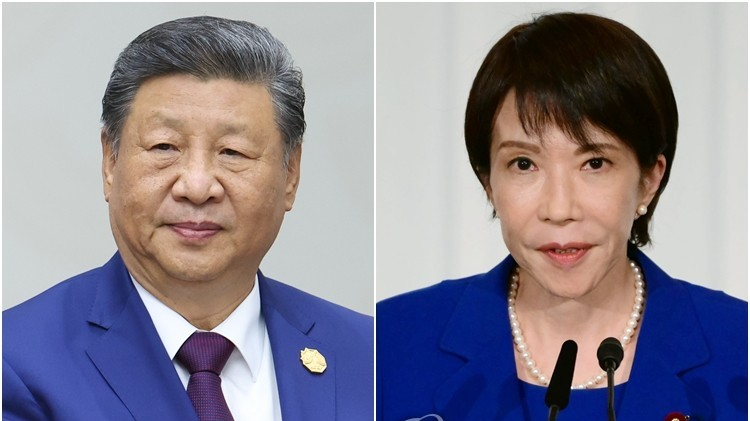
China wanted Japan’s new prime minister to do something specific: replicate the conciliatory tone of Shinzo Abe’s 2014 parliamentary speech and open a backchannel to thaw relations. Sanae Takaiuchi said no. Instead, she delivered a speech that affirmed strategic reciprocity with Beijing while simultaneously criticizing China’s rare earth export controls and human rights record. The contrast was deliberate and pointed.
The rejection, reported by the Mainichi Shimbun on July 7, is a small diplomatic gesture with outsized consequences. It marks the first clear signal that Tokyo will not be drawn back into the kind of relationship management that defined the Abe era — one where economic interdependence was treated as a brake on political friction. Beijing’s attempt to reach through to Takaiuchi, using Abe’s own playbook as leverage, has been firmly rebuffed.
What Beijing Was Asking For
The context is straightforward but telling. In November 2024, Takaiuchi made remarks suggesting Japan could intervene in a Taiwan contingency — a line that drew immediate and fierce condemnation from Beijing and froze relations for nearly a year. China, for all its rhetorical posturing, has pragmatic interests in Japan. Trade flows, supply chain ties, and the broader need to avoid a two-front diplomatic strain with Washington and Tokyo kept Beijing interested in reconciliation. Hence the quiet proposal: return to the Abe framework.
Abe’s 2014 speech was a masterclass in deliberate ambiguity. He emphasized stable friendship with China, called for an early summit with Xi Jinping, and pointedly avoided the sensitive issues — the Senkaku/Diaoyu Islands dispute, his Yasukuni visit — that had driven relations into freefall two years earlier. The strategy worked. Two months later, Xi and Abe met in Beijing. Relations stabilized, if barely.
China’s request to Takaiuchi was an explicit invitation to that same script. Instead, she chose a different template entirely.
The Speech That Spoke Volumes
Takaiuchi’s actual address stopped short of outright hostility but departed sharply from the Abe model. She affirmed a commitment to building on Japan’s long-standing relationship with China and pursuing a strategic reciprocal relationship. That language was careful, even measured. But then she layered on criticism of China’s export restrictions on critical minerals — a direct reference to Beijing’s leverage over rare earths and semiconductor supply chains — and raised human rights concerns. She framed these not as abstract complaints but as demands for what she called “responsible behavior.”
Chinese officials, according to Mainichi’s reporting, responded privately by telling Japanese counterparts that Takaiuchi “does not seem to have the intention to improve relations with China.” The phrasing may be informal, but the sentiment is unmistakable: Beijing expected compliance with a familiar script and received something else entirely.
Why This Shift Matters
The deeper story here is not about one speech but about the direction of Japan’s China policy under Takaiuchi. Abe’s approach was born of necessity — his Liberal Democratic Party faced electoral pressure, and his personal relationship with Xi was seen as essential to stabilizing a volatile relationship. But Abe’s conciliation also had costs. Critics argued it rewarded Chinese aggression on territorial disputes and left structural problems unaddressed.
Takaiuchi’s harder line reflects a generational and ideological shift within Japan’s conservative establishment. She comes from a more nationalist strand of the LDP, with closer ties to veteran hawks than to the务实, deal-making pragmatism that characterized much of Abe’s later years. Her government is likely to treat economic coercion not as a background condition to be managed but as a strategic challenge to be confronted. The rare earth reference in her speech was not accidental.
This realignment matters beyond the bilateral relationship. China has long counted on keeping Japan diplomatically isolated or at least distracted from regional security cooperation with Washington and Seoul. A Japan willing to criticize Beijing publicly and refuse quiet overtures reduces Beijing’s margin for maneuver.
The Trilateral Test
For South Korea, the implications are immediate and uncomfortable. Tokyo and Seoul have been working — haltingly — to rebuild trilateral coordination with the United States, centered on North Korea, Taiwan, and broader regional stability. China has consistently exploited the historical and territorial disagreements between Seoul and Tokyo to weaken that triangle. Beijing’s preferred outcome is a divided East Asia, where Japan and South Korea cannot align against Chinese pressure.
Takaiuchi’s refusal removes one lever from Beijing’s toolkit. If China cannot coax Japan back into a bilateral relaxation cycle, it loses the ability to suggest that Seoul, too, should ease its stance on China-sensitive issues. The trilateral framework gains credibility when Tokyo signals that Beijing cannot dictate terms unilaterally.
But the test is not yet over. South Korea’s president, Yoon Suk Yeol, faces his own domestic pressures and a more complex balance with China. Seoul has been cautious about explicitly linking its security posture to Taiwan developments, wary of provoking Beijing. Takaiuchi’s tougher line may create space for Seoul to move closer to Tokyo and Washington — or it may deepen the rift if China responds with renewed economic pressure on both countries simultaneously.
What Comes Next
The next several months will be telling. China is unlikely to escalate dramatically, but it will not forget the rebuff either. Expect quieter diplomatic gestures, increased economic signaling, and continued efforts to keep Japan and South Korea from fully synchronizing their security policies. Japan, in turn, will likely push harder for trilateral defense coordination exercises and greater alignment on Taiwan contingency planning.
The Abe precedent — that dialogue and economic ties could stabilize relations even amid unresolved disputes — is now officially off the table in Tokyo. Whether that hardening produces tangible security gains for Japan and its partners, or merely deepens a standoff with limited options for de-escalation, remains to be seen. One thing is clear: the era of Beijing setting the terms for Tokyo’s China policy is over, and the region will feel the shift.