TECNO's Bezel-Less Phone Signals a Fracture in the Premium Race
A Chinese mid-range brand just showed a 0mm bezel concept at IFA — years before Apple delivers its own. What this reveals about Android's hardware ambitions and the narrowing gap with iOS.
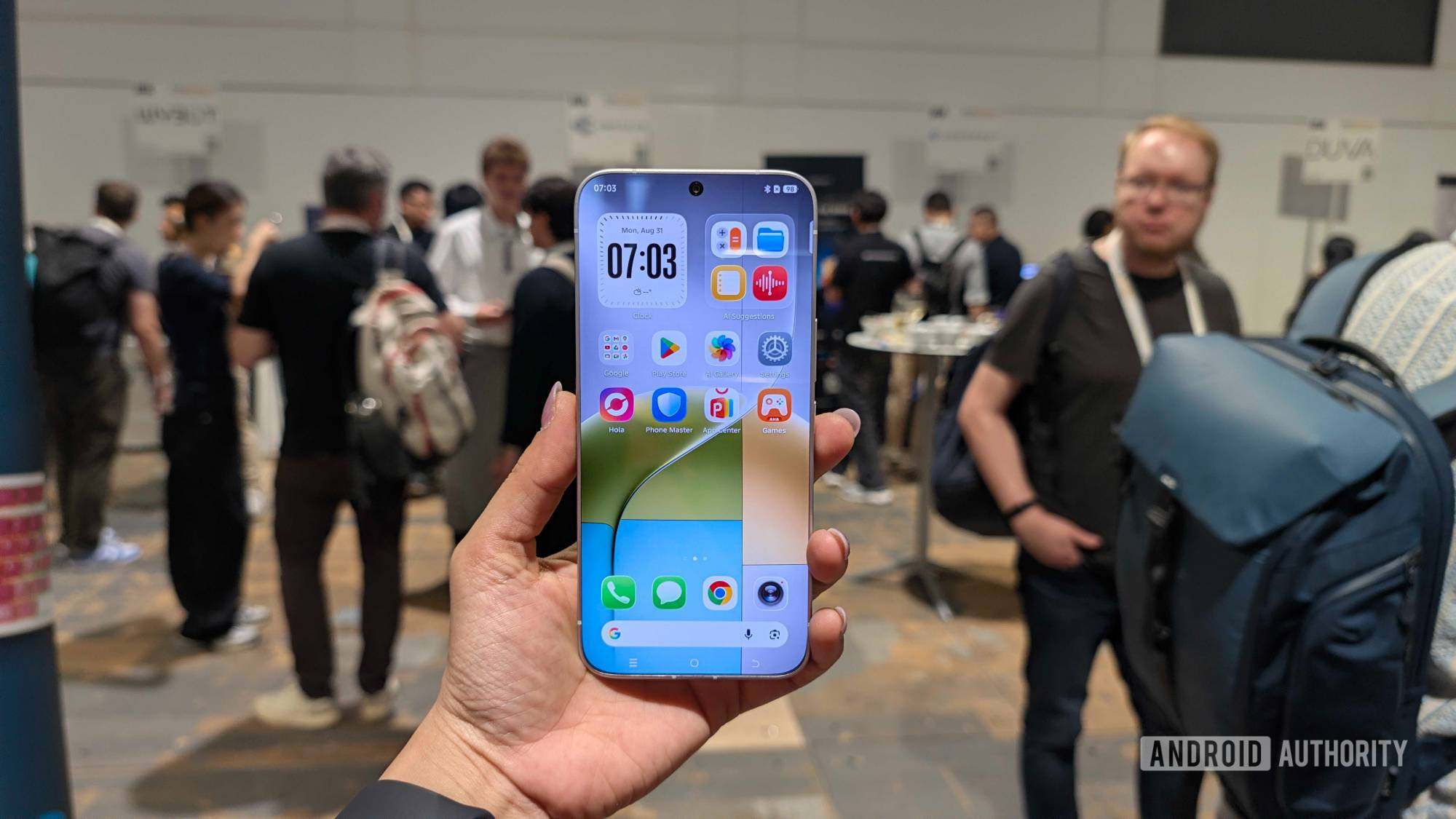
A Concept That Shouldn’t Excite You
It shouldn’t.
TECNO’s 0mm bezel concept at IFA 2026 is exactly what it says: a concept. The company itself called it out at the press briefing, showing it alongside a cluster of other prototypes that will likely never reach retail shelves. It runs on a Dimensity 7300e — a mid-range chipset from MediaTek, not a flagship silicon statement. It ships Android 16 out of the box, which is standard procedure now, not a differentiator. It has a 6,000mAh battery, which is impressive only because it managed to fit inside a chassis this thin, not because that capacity is remarkable in a market where 2026 already treats triple-digit battery life as table stakes.
But the concept matters precisely because it forces you to stop looking at the specs and start looking at the strategy.
What the Phone Actually Is
TECNO achieved its bezel-less face through an unusual assembly method that rethinks the relationship between display and chassis. A dual-layer cover glass forms the structure — the lower layer extends underneath the frame rather than terminating at its edge. The display module is inserted from the rear instead of the more common front-loading approach. A custom adhesive then bonds the extended glass to the frame, creating a seamless transition that eliminates the dark border most phones carry around their screens.
The normally hidden inactive area — the engineering concessions that always produced a visible black border, the space needed for flex cables, the margin required for display driver integration — now sits underneath the frame where no one can see them. That’s the trick. Not new display technology. Just smarter placement of old problems.
The result is a 6.7-inch 144Hz display that appears to bleed into the phone’s body. Step back and it reads as a single pane of glass, clean and almost unsettling in its simplicity. Lean in and you’ll catch the faintest trace of black at the edges — TECNO’s own engineers admitted the illusion isn’t perfect, that a 0.3-millimeter border remains visible under certain lighting conditions. The company’s description of the effect as an “infinity pool” is accurate enough, though it undersells how jarring the result looks next to the bezels still framing every other phone on the floor.
The phone is light — 178 grams for a device this large — and thin for what it contains at 7.4 millimeters. The rear panel features a subtle 3D flower pattern in white, a design choice that’s either tasteful or deeply unnecessary depending on your tolerance for decorative glass. There’s a configurable physical One-Tap Button running on top of Android 16, part of TECNO’s broader AI push that mirrors similar hardware shortcuts Google and Samsung have experimented with. None of this is the story.
The Real Story Is Timing
Apple is reportedly preparing to launch its own zero-bezel device sometime next year, according to multiple supply chain reports that have circulated since early 2026. Samsung has been dancing around the same design for generations, shaving millimeters off bezels quarter after quarter and calling each reduction a generational leap. But TECNO — a brand whose name most American and European consumers would still struggle to pronounce correctly, despite being owned by Transsion Holdings, which ships more phones into Africa than any competitor in that market — just went first on a form factor that the industry has chased since the Galaxy S6’s curved glass era.
That nobody outside of Chinese tech coverage noticed is its own data point. The concept received sparse Western media attention, buried under the heavier announcements from Samsung and Google at the same show. But that marginalization is precisely what makes the moment structurally significant.
For years, the narrative has been clean and comforting: Apple leads on design innovation, Android follows with incremental improvements that accumulate into generational shifts. Samsung occasionally breaks the script with foldables and rollables, but those moments feel like exceptions that prove the rule — dramatic departures from the slab phone paradigm rather than refinements of it. TECNO’s concept disrupts that framing entirely. A brand that competes on price and volume in emerging markets is demonstrating hardware design ambition that Samsung and Xiaomi have not matched with production devices. The engineering knowledge was always there. It just belonged to someone the industry didn’t expect to be holding it.
Why It Won’t Change How You Use Your Phone
Let’s be honest about what a thinner bezel actually does. It removes a visual interruption you’ve stopped noticing years ago. The black border around your screen became background noise somewhere around 2019. It doesn’t make the screen bigger — TECNO’s own internal testing, which the company shared with select press, showed no meaningful gain in usable display area compared to a phone with a two-millimeter bezel. The active pixel area is identical. What changes is the impression of it.
It doesn’t improve brightness. It doesn’t affect refresh rate, color accuracy, or any metric that materially shapes daily experience. What it does is make the phone feel futuristic. That feeling matters more than you’d expect from something as superficial as design, because it shapes how people perceive the entire ecosystem surrounding the device. When Apple launches its bezel-less phone — and it will, given the confidence of its supply chain commitments — consumers will compare every other phone against it. Not every Samsung. Not every Pixel. Every other phone. And TECNO has already proven the engineering is possible, which changes the conversation before Apple even ships its first unit.
The Bigger Pattern
This isn’t TECNO’s first concept stunt. The company has already shown a rollable phone at MWC 2026, a tri-fold prototype that drew confused applause, and an ultra-thin modular device whose individual components were more interesting than their sum. Each of these concepts serves the same function: it places TECNO’s name in the conversation about where smartphone design is heading, regardless of whether any of those ideas ever reach production volumes or retail prices.
The strategy is transparent and effective. While Samsung and Google are busy iterating on camera bumps — each generation slightly less prominent, never quite gone — and processor benchmarks that measure microseconds rather than experiences, TECNO is demonstrating form factors that reframe what a smartphone can look like. None of these concepts are production-ready. Their battery safety certifications are incomplete, their yield rates unverified, their cost structures hypothetical. None of that matters less for the positioning.
Transsion, TECNO’s parent company, has spent the last decade building distribution networks across markets that Western brands treat as secondary. Africa. Southeast Asia. Latin America. In each of those regions, brand perception moves faster than brand presence, and being seen at the right shows with the right prototypes builds that perception cheaply. A concept phone at IFA costs a fraction of a marketing campaign across twenty emerging markets.
The Supply Chain Signal
There’s a second-order effect worth tracking. TECNO’s dual-layer glass approach doesn’t require new display panel suppliers or exotic materials. It uses the same LCD and OLED panels that Samsung Display and BOE already produce at scale. The innovation is in the assembly, not the components. That means the concept is cheaper to engineer than a foldable and faster to productionize than a rollable. If TECNO decides to ship a consumer version — and the company hasn’t ruled it out — it could reach market within eighteen months at a price point that would embarrass brands charging twice as much for similar design language.
Meanwhile, Apple’s zero-bezel path appears to rely on a different engineering route involving advanced display integration and potentially new supplier relationships. That makes TECNO’s approach strategically interesting beyond its design merit. It proves there are multiple roads to the same destination, and the one TECNO took is the cheaper one.
What This Means Going Forward
The zero-bezel race is no longer just about Apple and Samsung. It now includes brands that have spent the last decade being told they were competing on cost, not ambition. TECNO’s concept proves that the engineering knowledge exists outside the traditional premium cluster — that the gap between a $200 phone and a $1,200 phone is narrowing in ways that matter for how devices look and feel, even if it doesn’t yet narrow the gap in how they perform.
Apple will launch its bezel-less phone. The supply chain reports are specific enough that we should treat it as inevitable rather than speculative. Samsung will follow, probably with a slightly more refined version that carries the Galaxy badge premium. Chinese brands will arrive in between, each claiming first on some variation of the design. But the conversation has already shifted. The question is no longer whether Android can match Apple’s design language — it’s whether Apple still gets to define the language first, and whether that authority matters as much as it used to when the first mover isn’t the most expensive mover.
For TECNO, that’s the real win. The phone itself may never reach your hands. The Dimensity 7300e will stay in mid-range devices where it belongs. The infinity pool display will remain a概念 on a trade show floor. But the idea that a mid-range Chinese brand showed this first — that the company shaping phones for markets Western brands have largely written off just demonstrated a design move that the industry’s most powerful players are still working toward — that one already landed. It landed in boardrooms in Cupertino and San Jose and Seoul. It landed in the minds of consumers who will now look at their current phones and notice something they’d never noticed before: the black border, the frame, the constraint. And once you notice it, you can’t unnotice it. That’s the fracture. Not in the phone. In the narrative.