Tesla's Invisible Door Handles Cost Lives in China
Tesla is recalling nearly 3 million vehicles in China over door handles that disappear after a crash, leaving trapped occupants and first responders unable to find an escape route. The recall exposes a design philosophy that may not survive its largest market.
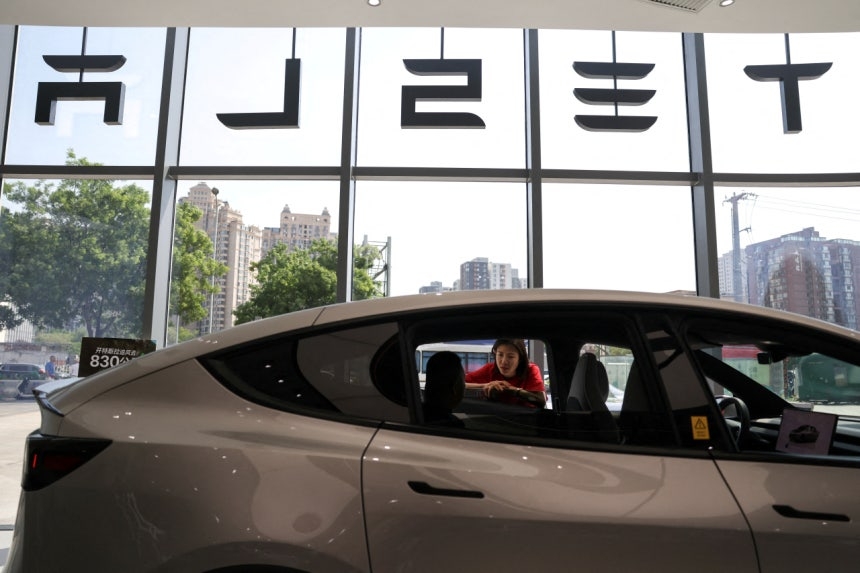
The door handle Tesla wanted you to forget about is now killing people.
Tesla’s flush door handles were supposed to be a sleek feature, a signature of minimalist design that set its cars apart from the cluttered handles of conventional vehicles. In China, where Tesla sells more cars than anywhere else outside the United States, that design choice has become a matter of life and death — and the company is now responding to one of the largest automotive recalls in its history.
On September 25, Tesla begins recalling approximately 2.98 million vehicles across China. The affected fleet includes Model 3 and Model Y sedans and crossovers, along with older Model S and Model X units. China’s State Administration for Market Regulation, known as SAMR, confirmed the move, which represents the single largest EV recall by a major brand in the world and the biggest Tesla has ever undertaken in China.
The problem is bluntly described in Chinese. “If a fire breaks out, are we supposed to burn to death?” was the headline reaction from Chinese media, capturing the frustration of owners who realized that after a severe crash, the emergency mechanical door release inside a Tesla can be nearly impossible to locate. When the electrical system fails — as it often does in serious collisions — the power-retractable door handles stay retracted, flush against the body. The backup mechanical release, tucked away in a compartment that requires some knowledge to find, becomes equally inaccessible if the surrounding panels are damaged or deformed. Rescue workers facing a mangled Tesla in the dark after an accident face the same problem.
Chinese authorities were explicit about the consequence. “After a severe collision and electrical system failure, the interior emergency mechanical door release may be difficult to identify,” SAMR stated. “This can impede occupant escape or rescuer access.”
The human cost is already visible. At least 15 deaths have been linked to the issue in China, according to Pulse reporting. Whether each death can be definitively attributed to delayed escape through a non-functional door handle is a question for investigators, but the pattern is clear enough to trigger regulatory action.
What Tesla is doing about it
Tesla’s remedies are modest. The company will affix warning labels to the recalled vehicles, marking the location of the emergency handle. It will also push a wireless software update that triggers automatic window lowering upon collision detection — a feature designed to give rescuers a way in when the doors refuse to open.
These are incremental fixes to a fundamental design tension. Flush door handles reduce drag, improve range, and look modern. But they create a single point of failure: when electronics die, the entire door system dies with them. Traditional handles — protruding levers that can be pulled even in darkness, even by someone who has never sat in the car before — do not share this vulnerability.
Tesla is not alone in facing scrutiny. SAMR’s recall authority has cast a wider net: eleven automakers, including Tesla, have collectively recalled over 4 million vehicles in China over the same emergency door-release issue. The message from regulators is unambiguous. China is tightening safety oversight of EV-specific designs, and the era of regulatory tolerance for innovation-driven risk is ending.
Why China matters for Tesla’s global reputation
China is Tesla’s most important growth market by volume. The Shanghai Gigafactory produces Model 3 and Model Y vehicles for both domestic sale and export to dozens of countries. A recall of this scale in China is not a regional embarrassment — it is a signal that travels.
The recall arrives at a moment when Tesla’s safety narrative is already fragile. The company built its brand partly on the promise that its vehicles are among the safest on the road, backed by aggressive autonomous-driving technology and a posture of transparency around crash data. High-profile accidents involving Tesla’s Autopilot system have complicated that story, and now the door-handle issue adds a physical-design dimension to the criticism.
What distinguishes this recall from past Tesla controversies is that the danger is not a software glitch or a sensor failure. It is a decision made in a design review, years ago, to prioritize aerodynamics and aesthetics over fail-safe accessibility. The company chose to eliminate a visible, tactile interface that drivers and rescuers rely on in emergencies. That is harder to patch with an over-the-air update.
The broader implication for EV design
The flush-door-handle debate is not unique to Tesla. Many EV manufacturers have adopted similar designs, citing aerodynamic efficiency and a clean visual language. But China’s regulatory response suggests a divergence may be forming between markets. If Chinese authorities mandate visible emergency releases or require redundant mechanical override systems that function independently of the electrical architecture, Tesla and its competitors will face a new compliance standard in the world’s largest EV market.
Other regions may follow. The European Union’s General Safety Regulation already requires certain emergency release provisions, and the National Highway Traffic Safety Administration in the United States has opened investigations into EV door-operability after crashes. A recall of this magnitude in China increases pressure on regulators elsewhere to ask the same questions.
The financial exposure is significant. Retracting 2.98 million vehicles for labels and a software update is far less costly than a physical redesign, but the reputational damage cuts deeper. Chinese consumers, long enthusiastic about Tesla’s technology and brand prestige, are now questioning whether the company prioritizes design innovation over basic safety. Social media reactions in China have been sharp, with some owners calling the recall too little, too late.
Who wins, who loses
Chinese regulators win. SAMR has demonstrated that it can compel action from the most powerful foreign automaker operating in China, sending a signal to all twelve recipients of the broader recall that design choices will face scrutiny. Chinese automakers, many of whom never adopted flush handles in the first place, face slightly less competitive pressure on the safety front — at least in China’s market.
Tesla loses. The brand’s safety credibility takes another hit, and the company must now explain to customers worldwide why a vehicle sold in the United States and Europe carries the same potentially lethal design flaw. Some of those vehicles may face their own recalls, though U.S. and European regulators have not yet announced parallel action.
Consumers win only in the narrow sense that the fix will eventually reach their cars. But the delay between the first deaths and the recall — years of sales, years of ownership, years of reliance on a system that was not built to fail safely — is a gap no amount of warning labels can erase.
The recall also exposes a deeper asymmetry in how Tesla operates across markets. The company treats software as its primary product and hardware as secondary infrastructure. When a problem emerges, the instinct is to solve it digitally. But a door handle that cannot be found in the dark is not a software problem. It is a physical one, and the solution requires acknowledging that some design choices have consequences that code alone cannot undo.
Tesla built its image on the idea that it was redefining the automobile. This recall is a reminder that redefinition carries risk — and that the customers who pay the price are the ones inside the car when the electricity fails.