How Flying Optimus Robots Change Everything
Japanese analysts see a Tesla-SpaceX merger unlocking flight-capable Optimus robots — a pivot that could redefine physical AI competition faster than Wall Street expects.
The Japanese read on the Tesla-SpaceX merger is not what you think
American outlets covering the speculation around a Tesla-SpaceX union are mostly trading in valuation ranges and political proximity — Trump-era dealmaking, Musk’s influence, the usual fare. Diamond Online, writing from Tokyo, landed on a different question: what product, exactly, would a merger birth?
Their answer may be sharper than the headlines getting cross-posted into English.
The compression-air technology that underpins everything
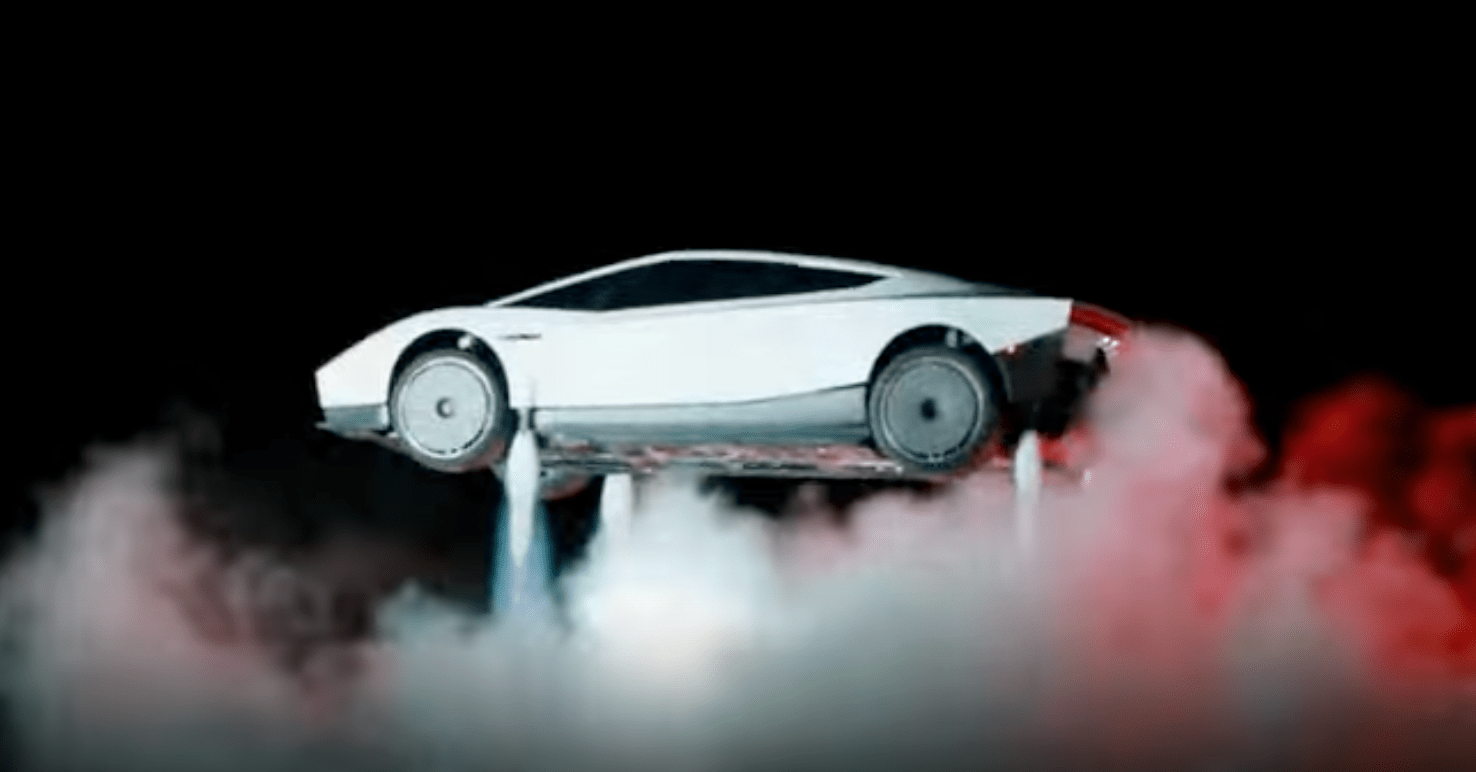
Diamond zeroes in on a specific technical capability being discussed: a system that can lift roughly two tons, hold it several meters off the ground with directional control, and do so repeatedly using compressed air. SpaceX’s starship operations have already demonstrated precise aerial handling of massive payloads. Tesla’s Cybertruck platform and battery architecture offer the power-distribution backbone. The compression-air mechanism — reusable, not single-use like chemical thrusters — closes the engineering loop.
The article’s logic is concrete: if you can levitate and steer two tons, you can levitate and steer two hundred kilograms with ease.
The crane replacement fantasy (and why it fails)
The first obvious application Diamond explores is construction logistics. Swap out tower cranes for aerial carrying units powered by this compression-air system. Deliver a grand piano to a fifteenth-floor apartment without rigging. Haul materials up a scaffold face.
It sounds elegant until you confront reality. Cranes have been refined over a century. They handle extreme loads at extreme heights. For anything above drone-reachable altitude, you’d still need scaffolding, rigging, or a conventional lift. The compressed-air concept shines at short range, low altitude — precisely where cranes already dominate and drones are beginning to encroach.
Diamond concedes this. The crane argument collapses under its own weight.
The pivot that changes the calculus
Then comes the paragraph that reframes the entire premise: “Isn’t there one Tesla product where aerial lift creates genuine breakthrough utility?”
The answer is Optimus, Tesla’s bipedal humanoid robot.
A two-ton lift system can easily float a robot weighing roughly seventy kilograms — comparable to human mass. Attach that capability to Optimus, and you have a machine that can navigate vertical infrastructure without stairs, elevators, or ramps. It can reach second-story windows, hang from ceilings, perch on machinery, traverse construction sites that no wheeled or tracked robot can negotiate efficiently.
This is not incremental improvement. It is a category shift.
Why the timing matters
China is ahead in physical AI. Companies like Unitree, Fourier Intelligence, and several state-backed research groups have produced walking, running, and jumping humanoids that operate at commercial readiness levels. The next frontier — dexterous fingers, fine motor control — is actively being solved. By the time those hands arrive, the field will be crowded.
Tesla’s Optimus has been positioned as a competitive entry in that market. Flight capability, if realizable from a combined Tesla-SpaceX architecture, would immediately separate it from every rival still bound to the ground.
Factories, warehouses, restaurants, construction sites — all environments where vertical movement is a constant bottleneck — would see their economics recalculated overnight. A flying robot doesn’t wait for an elevator. It doesn’t navigate doorways. It arrives from above.
Who wins, who loses
The winners are clear: Tesla, if execution holds. SpaceX, if the integration delivers on its engineering promise. Anyone currently selling vertical-lift solutions for industrial robotics — a niche but growing market — faces immediate obsolescence.
The losers are the Chinese physical-AI companies racing toward dexterous-hand solutions without an aerial dimension. Their advantage in walking and running becomes irrelevant if the next competitive axis is three-dimensional mobility.
Wall Street, meanwhile, is still pricing Tesla as an automaker with a robotics option and SpaceX as a launch company with political gravity. The diamond piece suggests both frames are too narrow.
What happens next
If the merger proceeds — and Diamond notes the Trump-era political tailwinds make it more plausible than standard US coverage admits — the compressed-air flight system could be demonstrated on Optimus within eighteen to twenty-four months. That timeline would force every competitor to pivot or perish.
If it doesn’t proceed, the technology remains siloed: SpaceX starship payload handling stays in orbit logistics, Tesla’s lifting innovations stay ground-bound. Optimus remains a walking robot in a field of walking robots.
The Japanese analysis is valuable precisely because it skips the macro speculation and drills into a product-level implication that American wires haven’t yet absorbed. The market hasn’t priced in a flying Optimus. It may not have much time to catch up.
Second-order effects nobody is discussing
Beyond the obvious applications, flight-capable Optimus robots would reshape insurance models for construction and industrial work. Traditional liability frameworks assume ground-based equipment with predictable failure modes. Aerial robots introduce new variables — mid-air mechanical failures, precision landing requirements, collision avoidance systems — that don’t fit existing coverage templates. Insurers will need to develop entirely new risk assessment models, potentially creating a barrier to entry for smaller competitors unable to absorb regulatory compliance costs.
Labor dynamics would shift as well. Jobs currently requiring elevated platforms, scaffolding crews, or cherry pickers could be partially automated, but the transition period would create friction. Workers displaced from traditional lifting roles would need retraining for robot oversight positions, while new roles emerge around aerial maintenance and collision monitoring. The displacement would be geographic-specific — concentrated in industrial zones and construction corridors — rather than industry-wide, making policy responses more complex than blanket automation narratives suggest.
The geopolitical angle
America’s lead in orbital logistics through SpaceX, combined with Tesla’s ground-robotics ambitions, creates a unique positioning against Chinese competitors who excel at terrestrial automation but lack equivalent aerospace capabilities. If this merger materializes, it represents not just a corporate deal but a strategic alignment of two critical technology stacks — one dominating high-altitude logistics, the other controlling ground-level automation. The implications extend beyond market share into national security considerations, particularly around critical infrastructure protection and emergency response capabilities where aerial mobility could save lives.
The counter-argument from European and Chinese analysts would likely focus on the integration challenges: merging two distinctly different engineering cultures, supply chain disruptions during transition periods, and regulatory hurdles around aerial robotics in populated areas. But Diamond’s point stands — the mere prospect forces competitors to reconsider their roadmaps, potentially accelerating R&D spending across the physical AI sector even if the merger never completes.