The Real Story Behind Apple's Cook-to-Turner Handoff
Tim Cook's exit from the Apple CEO chair looks like routine succession on the surface. The details — especially his decision to stay on as chairman — reveal a company navigating its most dangerous transition since Steve Jobs died.
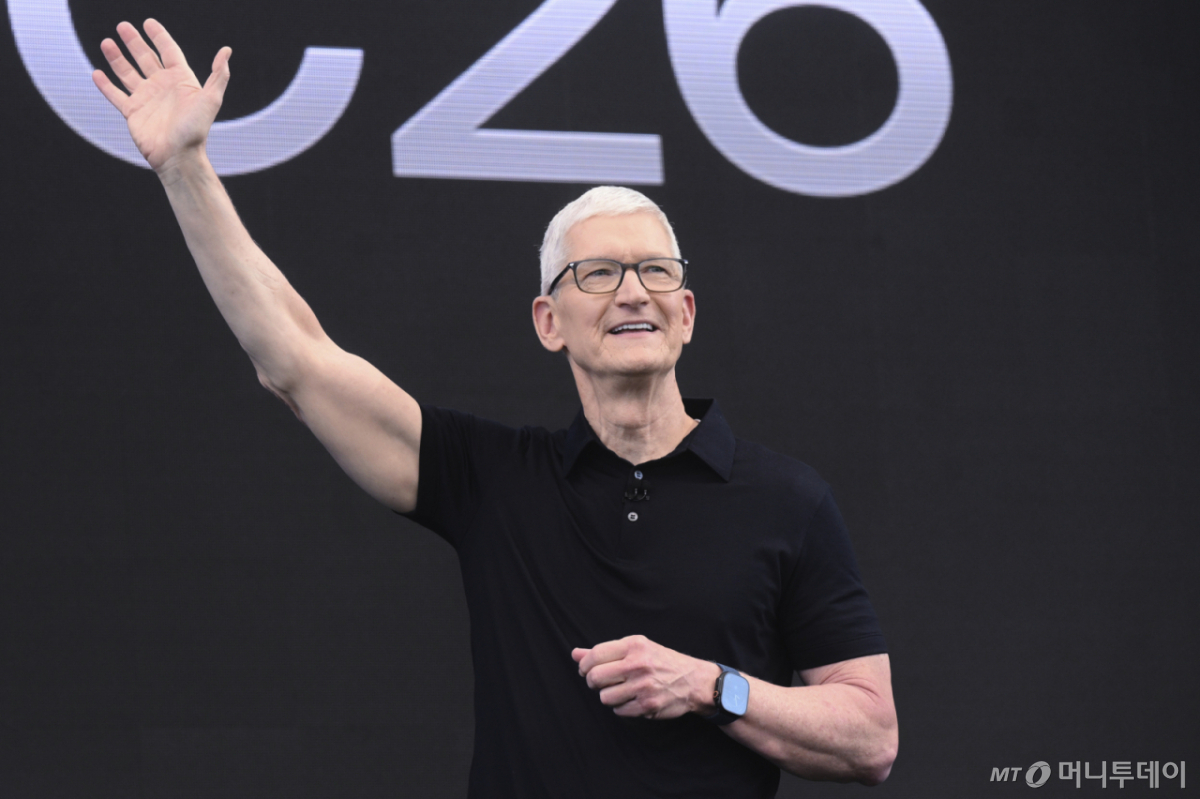
The handoff that isn’t a handoff
Tim Cook’s farewell email to Apple employees reads like the thing you’d expect from a CEO who genuinely loved his job — measured, grateful, quietly proud of the institutional he built over fifteen years. But read the fine print carefully and there’s a detail most outlets are either missing or deliberately soft-pedaling: Cook isn’t leaving Apple. He’s staying on as chairman of the board, effective immediately.
That distinction matters more than the headline. A chairman who built the company from the ground up over a decade and a half, who still controls the diplomatic portfolio — shuttling between Washington and Beijing, as Apple has privately described his ongoing remit — is not a figurehead. It’s a parallel power structure masquerading as continuity.
Consider the precedent this violates. This isn’t Steve Jobs handing the torch to John Sculley in 1983 and walking away from the building entirely. Jobs left. The board, the executives, the culture all felt that absence violently. Cook is restructuring the seats of power so he still occupies two of them, and the company’s governance architecture has never had to contend with a founder-adjacent figure holding both the ceremonial gavel and the operational backchannel simultaneously.
The numbers nobody disputes
What Cook inherited in October 2011 was a company reeling from Jobs’ death, uncertain about its next act, with the core product line looking increasingly derivative against Samsung’s aggressive hardware push. What he is leaving behind — formally, at least — is the most valuable company on Earth. A $4 trillion valuation that makes even its own internal growth metrics look almost surreal.
Annual profit surged more than fourfold during his tenure, crossing $110 billion. Revenue approached $400 billion annually. The Apple Watch and AirPods became cultural fixtures, not just product launches — the former redefining wearables, the latter creating a market category Apple would come to dominate entirely. Beats acquired for $3 billion found genuine footing. Apple TV+ survived its rocky launch. The services business — once an afterthought tucked into quarterly briefings — now generates tens of billions annually and provides a revenue floor that makes Apple’s hardware cyclicality look manageable.
But those numbers hide a quieter, more urgent question that Wall Street analysts are already circling: What does Apple become when the operational mind that turned it into a supply-chain fortress is no longer calling the daily shots? The margin discipline, the vendor relationships, the brutally efficient inventory turns — those are Cook signatures. They don’t transfer automatically to whoever sits in the CEO chair.
Who is John Turner?
Turner has been Apple’s CEO since September 1, 2026, though detailed public profiles remain curiously scarce. The few biographical fragments available suggest he rose through Apple’s product development ranks — not operations, not finance — and was chosen partly because, in Cook’s own quoted phrasing, “few people understand what it takes to build products that change the world” as deeply as he does.
That phrasing is loaded and significant. Cook’s entire legacy is operational excellence: margins, logistics, channel management, the disciplined execution that made Apple the most profitable company per employee on the planet by a margin that other tech giants cannot replicate. Turner’s appointment signals a deliberate, publicly stated pivot back toward product vision as the primary driver of corporate direction. Whether that pivot is strategically sound or merely aspirational depends entirely on execution.
The timing is precarious. Apple is entering an era where AI capabilities are becoming the defining competitive battleground in consumer technology, and the company’s recent products have been refinements rather than revolutions. The Vision Pro, for all its technical ambition, has stumbled in the marketplace. The iPhone, Apple’s cash engine, continues to rely on incremental upgrades that sophisticated consumers are increasingly questioning. That gap between market expectation and product delivery is where Turner’s first and most consequential test lies — and it’s a test that no amount of operational polish can necessarily win.
The diplomatic angle Cook can’t abandon
Cook’s new role as Apple’s “diplomat” — engaging with government officials in the United States, China, India, and the European Union — is the clearest structural signal that his departure is staged, not complete. Apple’s relationship with China isn’t just about Foxconn manufacturing; it’s about regulatory access, market survival, and navigating an increasingly fractured tech landscape between Washington and Beijing. The company’s China revenue alone — roughly $50 to $60 billion annually at recent estimates — makes Cook’s continued personal involvement in those relationships a strategic necessity the board would be foolish to ignore.
The chairman who still controls that relationship has more leverage than the CEO who manages daily operations. In conventional corporate governance terms, this arrangement is unusual, perhaps even concerning. In Apple’s terms — a company where the CEO has historically been both visionary and operational master, where the board defers more often than it pushes back — it’s almost familiar. The real question is whether this configuration protects Apple or creates a succession trap.
The second-order effects
What the mainstream coverage hasn’t fully explored are the cascading implications of this hybrid leadership model. Apple’s institutional memory is now split across two offices with overlapping authority. Middle management, already struggling to parse competing directives during Cook’s final years as sole CEO, faces an even more complicated environment. Product teams that previously received unified strategic direction now have to navigate whether a decision came from the CEO’s office or the chairman’s desk — and in Apple’s culture, those carry very different weight.
Investors are also recalibrating. The $4 trillion valuation assumes continuity, not just in product pipeline but in leadership consistency. If Cook’s chairman role becomes a de facto veto point on major strategic decisions — and there is no governance structure that prevents this — then Turner’s ability to steer Apple toward a new direction is structurally constrained. Conversely, if Cook genuinely retires from operational influence, the board has created a situation where a 74-year-old chairman retains informal authority that no formal org chart can capture.
There’s also the question of what this signals to Apple’s talent pipeline. High-performing executives at the company have spent years preparing for a Cook departure they expected to be clean. The hybrid model disrupts those career calculations and may accelerate attrition among the very people Apple needs to sustain its next growth phase.
What happens next
The immediate question investors will ask is whether Apple’s stock — already priced for perfection at $4 trillion — can absorb a leadership transition that is, by any honest reading, incomplete without repricing. The longer-term question is whether Cook’s hybrid role creates friction or continuity for Turner over the coming quarters.
If Cook stays out of daily operations but retains influence through the boardroom and the diplomatic track, the transition should be smooth. If he treats the chairman seat as a veto point on product direction, AI strategy, or capital allocation, the company faces the kind of internal tangle Apple hasn’t experienced since before Jobs returned in 1997 — except this time, there is no Jobs-level authority figure to break the deadlock.
The farewell letter emphasizes gratitude and trust. Those are real sentiments, and they should not be dismissed. But Apple’s history — from Sculley to Markkula, from Jobs’ departure to his return, from Ive’s gradual sidelining to Cook’s careful consolidation — suggests its leadership dynamics are always more complicated than the press release version. The real story here isn’t that Tim Cook is stepping down. It’s that Apple is about to find out whether a company can thrive when its strongest leader refuses to fully leave.