How Tim Curry Made It Safe to Be Weird for Generations
Tim Curry's death at 80 has brought a flood of tributes, but the real story is how one actor's fearless performance style helped reshape queer culture, fandom rituals, and the very idea of who gets to be the villain — and win.
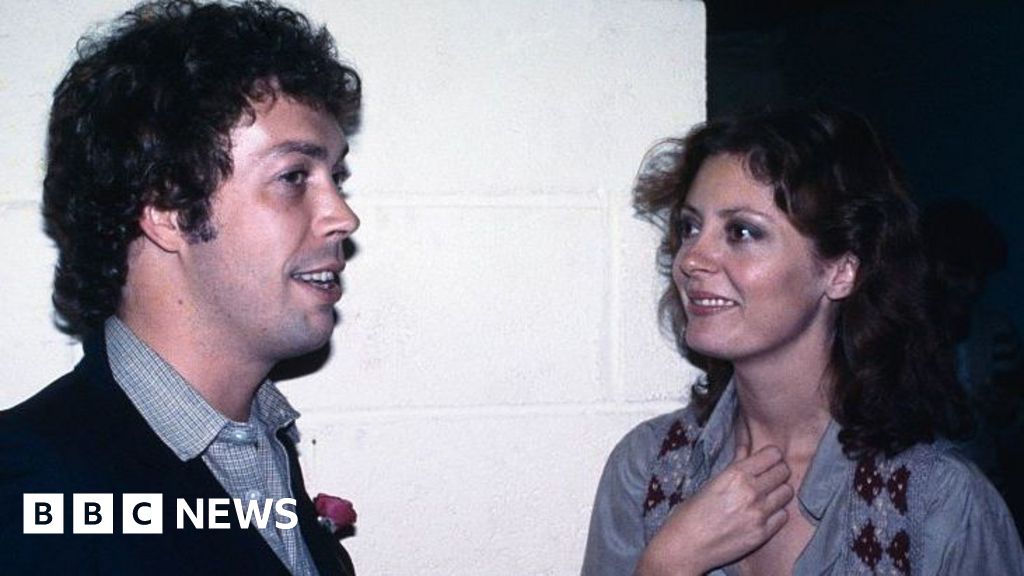
The Performance That Outlived Its Performer
Tim Curry did not die just as Dr. Frank-N-Furter. He died as something far more durable: an archetype. The cross-dressing, corseted, boot-wearing creation he brought to life in 1975 — first on stage, then on screen — has become a permanent fixture in the vocabulary of queer performance, a template that every camp icon since has quietly borrowed from.
The tributes rolling in from Susan Sarandon, Carol Burnett, Luke Evans, and Richard O’Brien are warm and genuinely moving. But they mostly treat Curry as a beloved character actor, a funny man who happened to be in a lot of movies. That reading is not wrong. It is just incomplete.
The real story of Tim Curry is not the breadth of his filmography — though it was impressive, ranging from Clue and Home Alone 2 to It and The Hunt for Red October. The real story is how one performer’s willingness to be unapologetically strange helped build a cultural infrastructure that still holds together alternative communities half a century later.
How Rocky Horror Built a World
When The Rocky Horror Picture Show opened in 1975, it found its audience among people who had no anywhere else to go. Young queer people. Outsiders. Kids who felt too weird for their small towns and too broken for mainstream Hollywood. The film did not just entertain them — it gave them a ritual.
Curry’s Frank-N-Furter was the high priest of that ritual. Not because the character was particularly deep or psychologically complex, but because Curry played him with such unguarded joy that everyone in the audience could see themselves reflected in that openness. The corset. The boots. The eyebrow raises. The line, “Don’t dream it, be it” — which Richard O’Brien wrote as mere cheeky bravado and Curry delivered as a genuine invitation.
Before Rocky Horror, queer performance in mainstream media was largely coded in shadows. Hitchcockian villains. Tragic figures. Suggestive glances that might get you pulled from the film. Curry’s Frank-N-Furter was different. He was center frame. He was the one the camera loved. He was the person the entire narrative orbited. That shift — from suggestion to spectacle — changed what queer performers could aim for.
The Fandom Engine
Rocky Horror’s live screenings became something cinema had never seen: a participatory audience that treated a 1975 British B-movie like a decades-long Thanksgiving tradition. People bring props. They shout lines. They dress up. They show up every Friday night, sometimes for twenty years running.
Curry was the gravitational center of that culture. Every generation of Rocky Horror fans has their own Frank-N-Furter, but they all measure against Curry’s version. Luke Evans, who played the role on Broadway, wrote recently that Curry inspired him to be braver. Nell Campbell, his co-star, described his death as losing the head of family. Those are not the words people use about a supporting player in a comedy ensemble.
This is the part that gets lost in the obituary coverage: Curry’s name became synonymous with a whole subculture. He was not just in Rocky Horror. He was its living symbol. And symbols, once cemented, outlive their creators.
What the Tributes Actually Reveal
Reading through the reactions, a pattern emerges. The people who worked with Curry consistently describe the same qualities: fearlessness, warmth, professionalism, an almost supernatural ability to elevate everyone around him. Rob Schneider said Curry made him better just by standing nearby. Christopher Lloyd called him a magician of artistry. Carol Burnett noted that nobody played lovable villains like him.
These are specific observations about a specific kind of performer. Curry had a particular talent for making the grotesque charming, the menacing funny, the strange inviting. That is a skill set that maps directly onto queer performance traditions — taking the marginal and making it magnetic. It is no accident that the people who gravitated toward his work tended to be the outsiders themselves.
The Cultural Afterlife
Consider what Curry’s cultural footprint looks like in 2026. More than fifty years after Rocky Horror premiered, there are still live screenings happening every weekend across the world. Drag performers cite him as an influence. Fashion designers reference the boots, the corsets, the theatrical androgyny. Young actors still study his performance as a masterclass in physical commitment.
He also left a less obvious legacy: the permission slip. Before Curry, being this flamboyant on screen required some justification — you had to be the comic relief, the villain, the punchline. Frank-N-Furter was all of those things and none of them. He was the hero of his own story. That distinction matters more than it gets credit for.
The stroke that left Curry in a wheelchair in 2012 could have been the end of his public life. Instead, it became another layer of his mythos — a performer who kept showing up even when his body betrayed him. Every tribute that mentioned his grace under physical decline was really acknowledging something deeper: that Curry’s commitment to presence, to performance, to connection, never wavered.
What Comes Next
There will be Rocky Horror revivals. There always are. Each one will invoke Curry’s name, sometimes explicitly, sometimes as an unconscious benchmark. New performers will discover him and trace their own lineage back through him to someone else.
The immediate grief will fade — as it does with any cultural figure’s passing. But the infrastructure he helped build is durable. Queer performance spaces. Fandom communities. The idea that a film could be both niche and sacred. All of that predates Curry but was enormously strengthened by his presence in it.
Susan Sarandon said she loved Curry most for his heart. That might be the simplest and most accurate thing anyone has said about him yet. Because at the end of the day, what made Tim Curry’s cultural impact possible was not just his talent but his generosity — the way he made everyone around him feel like they belonged in the room, like the weirdness was the point, like being fierce and flamboyant and fully yourself was not just acceptable but celebrated.
That is a legacy that does not depend on any single performance, any single film, any single decade. It lives in every queer kid who saw Frank-N-Furter and thought: someone like me can be centre frame. And in the generations of performers who took that thought seriously and ran with it.