Why Toyama Census Raid Matters for Japan
Toyama police raided city hall over suspected census population inflation. The scandal exposes how Japan's grant system creates perverted incentives for municipalities to inflate numbers—and what that means for national policy credibility.
The Raid That Reveals a System
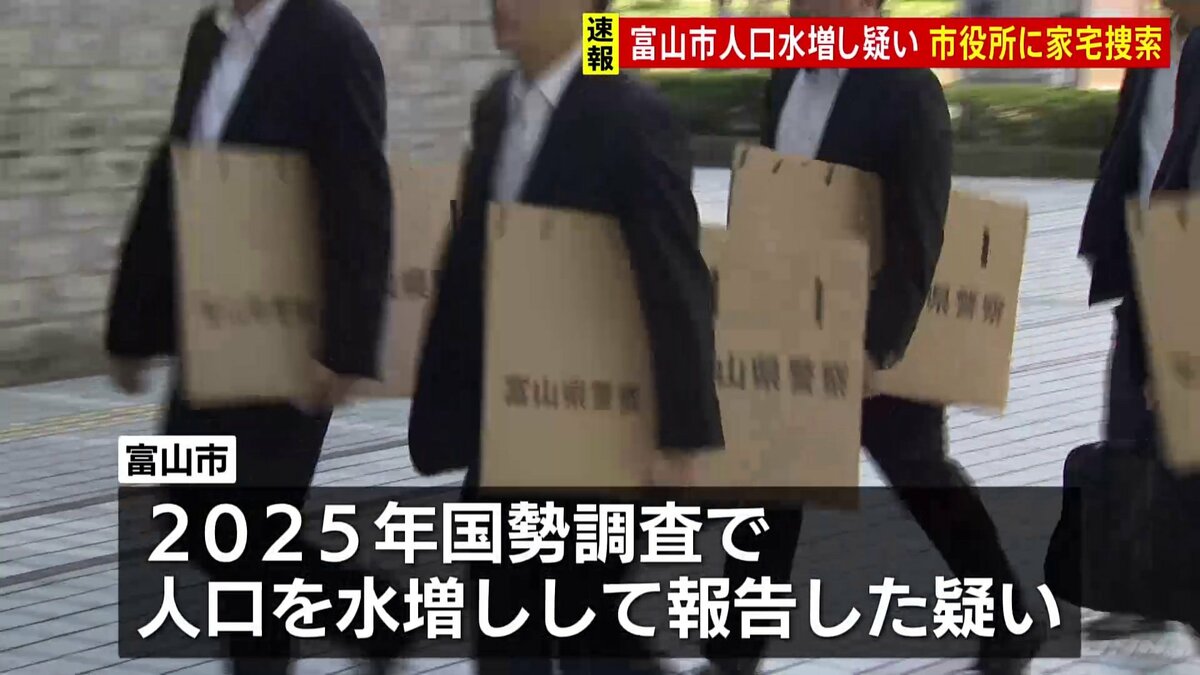
Toyama police didn’t just crack open a case of bureaucratic carelessness. They uncovered something that should make every Japanese citizen uneasy: their city hall may have deliberately inflated the municipal census to game a funding formula.
The raid on Toyama City Hall, reported by TBS News Dig, signals that local officials allegedly manipulated population figures in a way that directly affected how much money flows from Tokyo to the municipality. This isn’t about a rounding error or a counting mistake. It’s about the structural logic of how Japan distributes resources to its cities.
What makes this particular incident stand out is the tone of the police operation. Enforcement Division officers executed the search warrant with unusual publicity, suggesting the investigation had already accumulated enough preliminary evidence to warrant a high-visibility move. That visibility itself sends a message: this isn’t a quiet administrative correction. It’s a criminal probe.
Why Population Numbers Equal Money
Japan’s municipal grant system allocates substantial portions of local funding based on population counts. The key mechanism is the local allocation tax—known as chihō kōfuku zēi—which redistributes a share of national tax revenue to municipalities based largely on how many residents they report. More registered residents equals more per-capita subsidies from the national government. For a city like Toyama—population roughly 418,000, shrinking like much of rural and regional Japan—every additional headcount has real fiscal value.
The incentive is perverse but rational. Local governments face mounting pressures: aging populations, declining tax bases, and rising service costs. When the national treasury distributes money according to who you claim lives in your district, there is enormous motivation to report those residents as accurately as possible—or creatively, as possible.
The mechanics are straightforward enough that the temptation becomes almost structural. Municipalities submit census data to the Ministry of Internal Affairs and Communications, which then calculates grant allocations. There’s no independent verification layer at the point of submission that would catch subtle inflation. The system trusts local officials to self-report, and the financial consequences of over-reporting have historically been negligible compared to the benefits.
This isn’t unique to Toyama. The dynamics exist across Japan wherever population decline intersects with fiscal dependence on central transfers. Smaller cities and towns in Tohoku, Shikoku, and rural Kyushu face the same pressure. What makes this particular case notable is that police are involved—and that the alleged manipulation appears systematic rather than accidental.
Who Loses When Numbers Are Fake
The immediate loser is public trust. Japan already struggles with confidence in local governance. Municipal scandals—from the Nikko burial fees case to various accounting irregularities—have created a low-grade cynicism about local government integrity. Another one doesn’t help. But the damage here runs deeper than reputation. It strikes at the informational foundation that democratic governance requires.
The broader loser is anyone who relies on accurate demographic data for policy decisions. National planning for hospitals, schools, infrastructure, and disaster response depends on knowing how many people actually live where. Inflated census numbers mean misallocated resources: excess capacity in some places, shortages in others. A hospital built for 5,000 patients in a town that actually has 3,000 is a facility with rising maintenance costs and underutilized staff. A school built for 200 students in a district with 120 is a building slowly bleeding money.
There’s also a fairness dimension that reverberates across the fiscal landscape. Municipalities that don’t inflate their counts effectively subsidize those that do. Honest cities lose out. That creates a race to the bottom in which dishonesty becomes the default strategy for survival—a classic prisoner’s dilemma playing out across Japan’s 1,700+ municipalities.
The second-order effect is perhaps the most insidious: when citizens discover their city inflated its population, they may question whether the services they receive actually correspond to the numbers being claimed. If Toyama reported 420,000 residents but only has 418,000, does that mean roads are undermaintained? That emergency response times are longer? That the clinic on the hill was built for a population that doesn’t exist? The erosion of trust compounds.
The Bigger Picture: State Capacity Under Pressure
What this scandal reveals is something English-language outlets aren’t discussing: the growing gap between what Japan’s central government expects from local administrations and what it provides them to deliver. The state sets criteria for funding and services. It doesn’t adjust those criteria when demographics shift dramatically. Instead, it forces municipalities to compete for resources on rules that reward fabrication.
Japan’s census has always been politically sensitive. The 2020 census was marred by controversy when the government announced it would not publish detailed ward-level data due to confidentiality concerns—a move criticized by researchers and opposition lawmakers. The Toyama case suggests that when pressure mounts, local officials respond not by lobbying for better systems but by manipulating the numbers. It’s a symptom of a state that demands precision from its municipalities while offering no genuine support for the demographic realities those municipalities face.
The deeper issue is that Japan’s postwar fiscal architecture was designed for a growing population. Per-capita grants assumed rising headcounts. Infrastructure investment assumed expanding tax bases. When the population began contracting in the 2000s and accelerated into the 2010s, the central government adjusted some formulas but not fundamentally enough. The gap between the old architecture and the new reality is where scandals like Toyama take root.
What Comes Next
Police investigation outcomes will determine whether this remains a localized scandal or becomes precedent-setting. If prosecutors build a case, it could trigger reviews of census data across multiple municipalities. The national government may face questions about whether the current funding formula creates unacceptable incentives. Opposition lawmakers are likely to press the issue in the Diet, and civil society groups focused on fiscal transparency will be watching closely.
For now, the raid is a symptom of a system where population decline has become so economically threatening that falsifying records appears, to some local officials, like just another coping mechanism. The toy of Toyama isn’t exceptional corruption. It’s logical corruption—rational behavior within a broken incentive structure.
That’s the real story here. Not one corrupt city. A broken feedback loop that threatens the credibility of Japan’s entire demographic and fiscal architecture.