The Trillion-Won Bet Behind AI Servers
Samsung Electro-Mechanics just signed its largest-ever MLCC contract for AI servers, worth over 1 trillion won. Behind the scenes, the company that makes tiny ceramic capacitors may hold more leverage in the AI hardware boom than most investors realize.
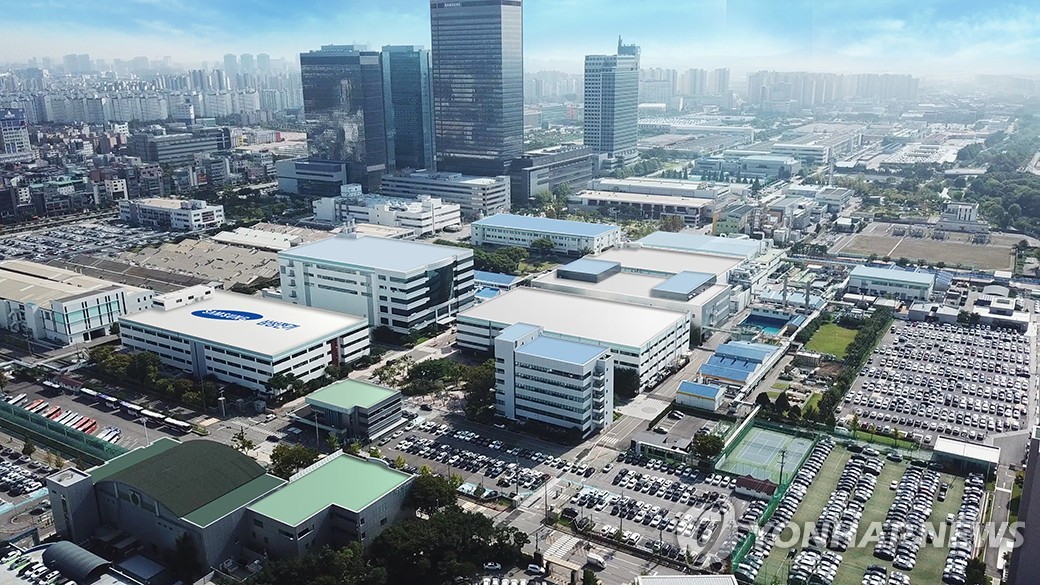
The Component Nobody Notices Until It Is Gone
Samsung Electro-Mechanics has been sitting on something quietly invaluable for years. On September 1st, the company disclosed a contract worth approximately 1.072 trillion won ($740 million at current rates) for AI server-grade MLCCs — multi-layer ceramic capacitors — with a major global firm whose identity remains under NDA. The contract runs from January through December of next year, and internally, Samsung calls it the largest MLCC long-term agreement in its history.
The unnamed buyer is widely believed in the industry to be a leading AI semiconductor company. The implication is not subtle: whoever builds the GPUs that power the current AI gold rush needs Samsung’s capacitors more than anyone realizes.
What MLCCs Actually Are
An MLCC is roughly the size of a grain of rice. It is a ceramic sandwich — alternating layers of metal and dielectric material — that stores and releases electrical energy. In an AI server, dozens of these components sit between every major chip on the board, smoothing voltage fluctuations, filtering noise, and preventing signal interference across circuits that are switching billions of times per second.
A single AI training server uses ten times or more MLCCs than a standard enterprise server. The difference is not marginal. Blackwell-class GPUs and the memory buses attached to them operate at voltages and thermal loads that make capacitor selection a matter of whether the system runs or it does not. A failing MLCC does not slow a server down. It kills it.
This is why the market matters.
The Numbers Behind the Bottleneck
According to Goldman Sachs, the global AI server MLCC market was valued at approximately $1.4 billion in 2025 and is projected to reach $5.8 billion by 2030 — a compound annual growth rate of roughly 34 percent. Samsung Electro-Mechanics holds more than 40 percent of that market. That is not a comfortable position to be in for anyone else.
But the contract Samsung disclosed on September 1st is only the latest in a string of moves that began in May, when the company started lining up long-term agreements across its high-value product lines. Since then, Samsung has secured approximately 3.32 trillion won in total LTA commitments, spanning both silicon capacitors and AI server MLCCs. The company says it now has long-term contracts with around ten global firms and is in active discussions for additional agreements.
In semiconductor terms, that is not a small number. It is a structural repositioning.
Who Else Could Supply This?
The answer is: almost no one at scale. Taiyo Yuden and Murata are the only other players with significant MLCC production capacity, and both face the same fundamental constraint as Samsung — the manufacturing process for high-capacity, high-reliability MLCCs used in AI servers requires specialized sintering techniques, ultra-thin ceramic layer deposition, and yield rates that take years to optimize. New entrants are not forming. Capacity expansion is slow and capital-intensive.
Samsung’s advantage is compounded by geography. The company’s primary production facilities are in Suwon and Gumi, South Korea, within easy logistics distance of the fabs in Taiwan and the assembly houses in China and Southeast Asia that package the GPUs and boards these capacitors ultimately end up on.
The Unseen Leverage in the AI Stack
Most coverage of the AI hardware boom focuses on GPUs, HBM memory, and packaging capacity. Those are the visible chokepoints. But the MLCC supply chain is where the less obvious constraint lives.
When AWS, Google, and Meta are racing to deploy next-generation AI clusters, and when NVIDIA and AMD are designing chips that demand increasingly stable power delivery, the bottleneck is not always the most expensive component. It is the component you cannot ship without, and you cannot easily substitute.
Samsung Electro-Mechanics controls that component in this market segment. A 40 percent+ share with growing demand and limited competitive alternatives is not a comfortable position for any buyer — even one with the negotiating power of a hyperscaler.
What This Means for the Market
The disclosed contract locks in supply for a full year, which sounds stable until you consider the scale of AI server demand growth. If the Goldman Sachs projection holds, the AI server MLCC market will grow by over $1 billion in the next five years alone. Samsung’s 40 percent share means roughly $400 million in annual revenue growth from this segment, before accounting for the silicon capacitor contracts that are also expanding.
For Samsung Electro-Mechanics, a subsidiary of the Samsung Group that has historically lived in the shadow of its semiconductor parent, this represents a meaningful shift in trajectory. The company is no longer just a component supplier. It is a gatekeeper for a class of products that defines the AI infrastructure buildout.
For the GPU makers and cloud providers, it means one more line item in the supply chain that cannot be diversified away quickly. The contract length provides some insulation, but the math of capacity expansion works against them. New production lines take time. Yield ramps take longer.
The Bigger Picture
There is a pattern emerging in AI hardware that goes largely unreported. The narrative is dominated by chips, cooling systems, and data center real estate. But the ancillary components — the capacitors, the passive parts, the connectors — are where real leverage accumulates. These are the items that appear in hundreds per server, that have no single-source substitutes, and that require deep process expertise to produce reliably at volume.
Samsung Electro-Mechanics has spent decades building that expertise. The 1 trillion won contract is not an anomaly. It is a signal that the market is finally recognizing what the company already knew.
The MLCC may be the smallest part in the AI server. It is also becoming one of the most consequential.