Trump Puts Intel Chief in Charge of AI — What It Means Globally
Trump is merging US intelligence leadership with domestic AI governance, a structural shift that reframes superintelligence competition as a national security mission. Here's who wins, who loses, and why Korea should pay attention.
The Intelligence State Meets Silicon Valley
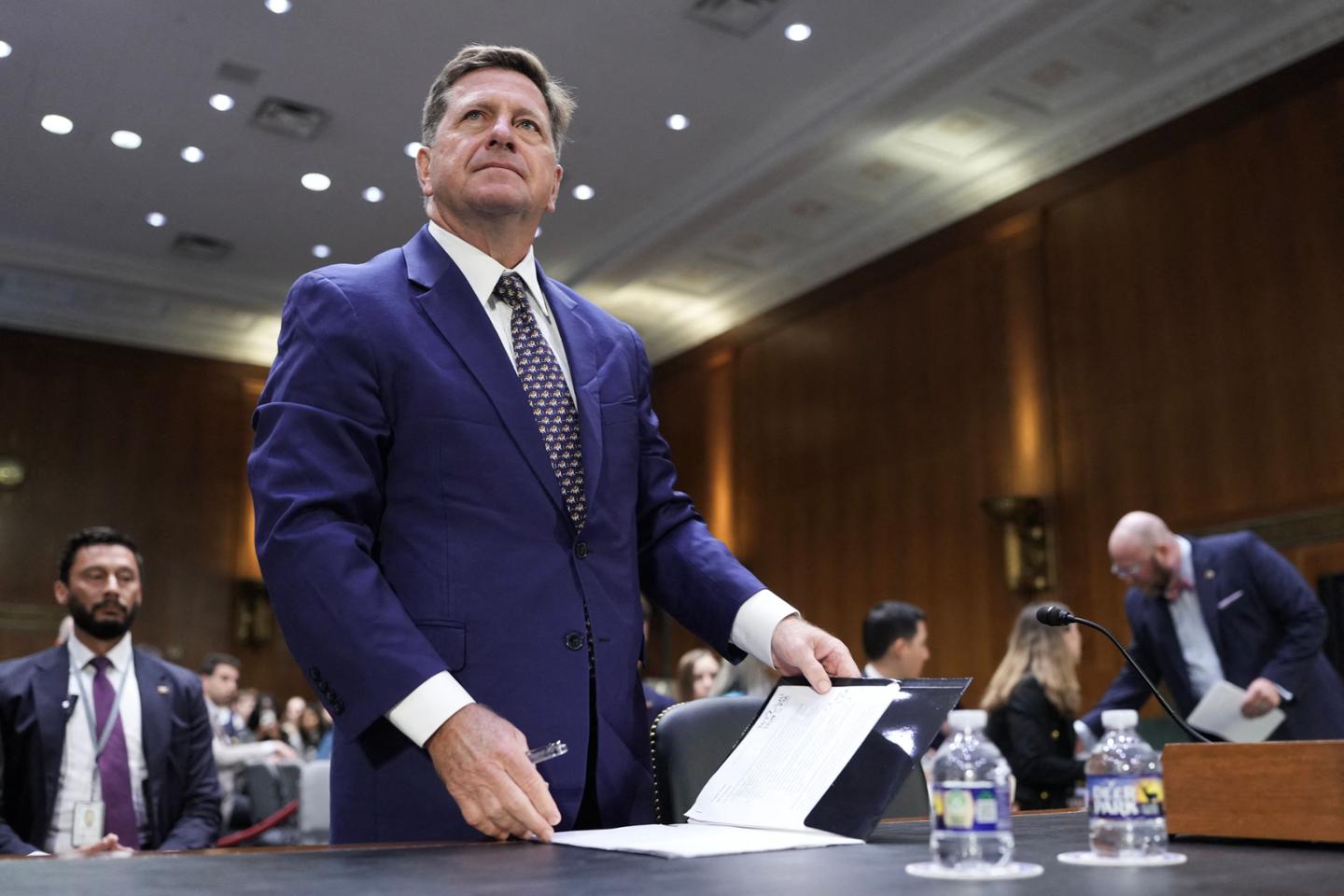
Donald Trump is assembling something new in American governance: a domestic AI policy chief who also commands the nation’s intelligence apparatus. According to a Wall Street Journal report, Trump plans to appoint Jay Clayton, the current Director of National Intelligence, as the administration’s AI czar. Clayton will simultaneously lead a White House task force — dubbed the Super Intelligence Force — tasked with producing a report within 120 days on how the United States handles the risks and opportunities of artificial intelligence.
The structural implication is harder to miss than the personnel move. For the first time, the person responsible for overseeing 18 US intelligence agencies will also be shaping the rules, safety standards, and strategic posture for AI development on US soil. Espionage and domestic regulation are no longer parallel tracks. They are being merged.
Why the Name Change Matters
Before looking at the personnel, notice the vocabulary. The Trump administration has, in official correspondence and public communications, stopped using the term “artificial intelligence” and begun referring to the challenge as “super intelligence” or SI. That is not merely semantic branding. Calling it super intelligence frames the entire contest differently: not as a technology sector with consumer products, but as a strategic capability that could exceed human cognitive thresholds and therefore demands the same institutional seriousness as nuclear weapons or cyber warfare.
The task force itself was born out of a White House lunch on April 29 between Trump and executives from major AI companies. Out of that meeting came an agreement on principles — third-party review of AI model development, board-level reporting on safety efforts, and a general framework for how the federal government will hold developers accountable. Clayton attended that lunch. He will now be the one enforcing whatever standards emerge from the 120-day process.
The Team Around Clayton
This is not a solo appointment. The task force is stacked with officials who have institutional leverage across defense, finance, labor, and consumer protection. Vice President JD Vance sits on the committee. Defense Secretary Pete Hegseth and Treasury Secretary Scott Bessent are named participants. Emil Michael, the Department of Defense’s top technology officer, will handle coordination with AI companies. Scott Cooper of the Office of Personnel Management will manage infrastructure providers and other industrial stakeholders. FTC Chairman Andrew Ferguson will oversee consumer rights, privacy, and speech advocates.
The lineup tells you what this administration thinks the battle lines are. Defense, treasury, labor, and the FTC are all in the room. The message is that AI governance is not a technology question — it is a whole-of-government question.
David Sacks, who previously held a tech portfolio in the Trump White House, has been moved to co-chair the President’s Council of Advisors on Science and Technology. His former AI role is now Clayton’s. That shift alone — from a Silicon Valley insider to an intelligence professional — marks a cultural change inside the West Wing.
What This Means for the Chip War
The most concrete consequence will play out in semiconductors. The United States has already imposed export controls on advanced chips and chipmaking equipment to China. Merging the DNI’s office with AI policy means those controls will now be evaluated through an intelligence lens rather than a commerce or trade lens. That raises the stakes.
When the person who runs the US intelligence community is also deciding which AI chips can leave the country, which models can be trained on American hardware, and which foreign companies are deemed national security threats, the bar for justification shifts. The standard moves from economic competition to threat assessment. That is a higher bar to clear, but also a more powerful tool once cleared.
For China, this means the competitive pressure intensifies. Beijing has already identified AI and advanced semiconductors as domains where it must achieve self-reliance. The US move reinforces that urgency on the Chinese side and likely accelerates Beijing’s own mobilization.
Why Korea Should Watch Closely
South Korea occupies an awkward and critical position in this new architecture. The country is home to Samsung Electronics and SK Hynix, two of the world’s largest memory chipmakers. SK Hynix, in particular, is the primary supplier of high-bandwidth memory chips used in Nvidia’s AI accelerators. Every major US AI company depends on Korean hardware to train and run large models.
That dependency cuts both ways. On one hand, it gives Korea leverage: the US cannot build its superintelligence edge without Korean fabs. On the other hand, it makes Korea vulnerable to policy changes made in a single building in Washington. If Clayton’s task force recommends tighter controls on HBM exports to China — and there is every reason to expect it will — Seoul will face a direct conflict between its largest commercial customer and its security ally.
Korea also has its own AI ambitions. The government has pledged substantial investment in domestic model development. But Korean companies rely on access to US chips and US cloud infrastructure to compete. Any US policy that restricts the flow of advanced hardware or constrains training capabilities will land disproportionately on Korean firms.
The 120-Day Clock
The task force has 120 days to produce its report. That timeline is tight enough to force real decisions and long enough to absorb lobbying from every interested party — US chipmakers, AI labs, Korean manufacturers, European regulators, Chinese state actors. The report’s recommendations will likely shape not just US policy for years but the global regulatory landscape as well. Countries that do not align with American standards will find themselves on the wrong side of a de facto tech order.
Clayton told the Journal that he has assembled a group of people with “rich experience and diverse skills” around a common goal: ensuring the United States wins the superintelligence competition. Whether that competition is won through innovation, restriction, or a combination of both remains to be seen. But one thing is clear — the person now tasked with winning it carries the full weight of the US intelligence community behind him.
That changes the nature of the race. It is no longer just about who trains the biggest model or builds the fastest chip. It is about who can mobilize the deepest institutional machinery — and Jay Clayton now sits at the intersection of both.