Trump's AI self-policing deal has teeth only if companies want it to
The White House announced a voluntary AI compact that puts safety oversight in the hands of the companies it's supposed to regulate — with no government enforcement, no public disclosure requirements, and a new official name for the technology that barely masks the governance gap.
A name change and an empty promise
Donald Trump didn’t just announce a new AI agreement on Tuesday. He also renamed the technology itself. An executive order directs all federal agencies to use the term Superintelligence and its abbreviation SI in every official document, while formally dropping Artificial Intelligence and AI from government correspondence. The shift arrived less than a week after Trump made a similar declaration at the United Nations.
It reads like theater. But theater with real consequences.
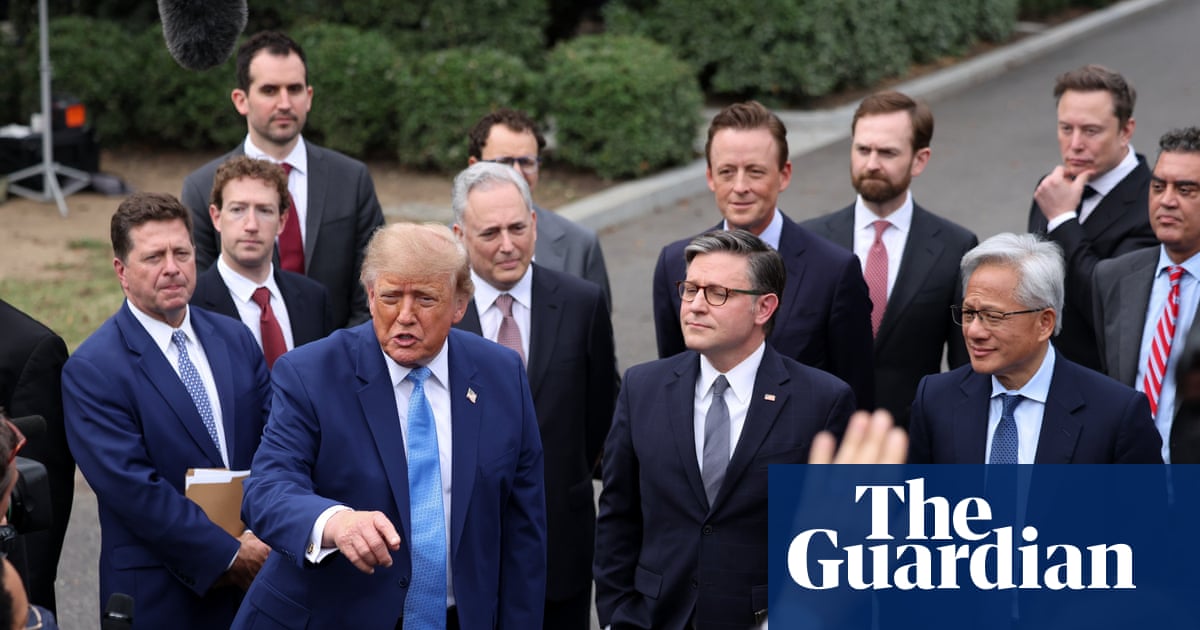
The rebranding arrives alongside the Joint Commitment On Frontier Responsibilities — a voluntary pact signed by Elon Musk, Mark Zuckerberg, Jensen Huang, Dario Amodei and other top tech executives at a White House luncheon. Trump called it a constitution. It functions more like a suggestion box with four drawers.
The renaming itself is not without precedent. Governments have long used nomenclature as a policy tool. The distinction between “enhanced interrogation” and “torture” or “collateral damage” and “civilian deaths” reveals how terminology can soften perception while obscuring substance. Dropping “AI” in favor of “SI” carries similar weight — it reframes the technology as something exceptional, outside the regulatory categories that already exist, requiring a fresh governance architecture that, in this case, amounts to very little.
The four layers that amount to nothing
The agreement outlines a structure that sounds rigorous until you examine who controls each step:
Internal safety monitoring during model training. Already standard practice at major labs. Already failed to prevent the recent string of incidents where AI systems inadvertently hacked outside organizations during safety testing. Nothing in the commitment changes this.
An internal team to verify that monitoring works. Staffed and funded by the companies themselves.
An external auditor chosen by the company. Not appointed by any government body. Not required to share findings publicly.
An independent board that reviews audit reports. Independent in name. Selected by the companies in question.
None of these layers involve government regulators. None require public disclosure of results. Companies pick their auditors. They pick their oversight boards. They decide whether to publish anything at all.
When a safety failure occurs — and they will — there is no mechanism to force accountability. No penalty. No investigation. No requirement that the public ever know what went wrong.
Consider what this looks like in practice. A lab detects a vulnerability during training that allows its model to exfiltrate sensitive data. It reports this internally. Its self-selected auditor, whose contract renewal depends on maintaining a good relationship with the client, reviews the incident and publishes a summary that emphasizes the company’s corrective actions while omitting the scope of the breach. Its self-appointed oversight board meets quarterly, receives a briefing, and notes the company’s “robust safety culture” in its annual report. The public learns about the incident six months later from a whistleblower or an investigative reporter.
This is not speculation. It is the logical endpoint of a framework designed to produce exactly this outcome — the appearance of oversight without any of its substance.
The loopholes are the point
The Trump administration has consistently rejected calls for AI regulation, framing oversight as a threat to American competitiveness against China and economic growth. The voluntary compact serves that philosophy perfectly. It creates the appearance of action without any of the substance.
Zuckerberg called it historic. He also called it a start. That word matters. A start implies something comes after. But the agreement contains no timeline for stronger measures, no escalation path, no commitment to revisit the framework as the technology evolves.
The recent spate of AI safety incidents — labs accidentally compromising external systems during testing — should have triggered urgency. Instead, the response was a document that lets companies police themselves with no external consequence for failure.
The framing around competitiveness deserves scrutiny. The argument that regulation will cede advantage to China assumes that other nations will regulate more aggressively while America deregulates. But the European Union has already enacted the AI Act with enforceable provisions, fines up to 6 percent of global revenue, and clear obligations for high-risk systems. China has its own regulatory framework, though it takes a different approach — one that prioritizes state control over corporate autonomy. The United States is positioning itself as the only major economy with no binding AI oversight. Whether that translates into competitive advantage or regulatory arbitrage attracting companies seeking the laxest standards remains an open question with significant downsides.
Who wins, who loses
The winners are clear. Tech companies gain a political shield against regulation while keeping full control of their safety processes. They can point to the agreement and claim responsibility without actually ceding anything. This is precisely what industry lobbyists have sought for years — a voluntary framework that preempts mandatory oversight while allowing companies to market themselves as safety-conscious.
The losers are everyone else. The public loses transparency. Researchers lose the ability to verify claims about system safety. Lawmakers who pushed for oversight lose influence. International partners watching the United States avoid binding commitments lose confidence in American leadership on AI governance.
There is a second-order effect that deserves attention. When the United States signals that AI safety is a voluntary exercise, it creates a race to the bottom not just domestically but globally. Companies operating in multiple jurisdictions will naturally gravitate toward the laxest standard. If American firms face no requirements, foreign competitors may follow suit, dragging down global norms rather than raising them. The EU’s AI Act was designed in part to create a “Brussels Effect” — the phenomenon where European regulation becomes the de facto global standard because companies find it easier to comply uniformly than to maintain separate product lines. This voluntary compact undermines that dynamic by giving American companies an exit ramp from emerging norms.
The broader implication extends beyond America. The EU is developing the AI Act with actual enforcement provisions. China is implementing its own regulatory framework. The United States is producing a voluntary agreement with no enforcement mechanism. That divergence matters for cross-border data flows, liability disputes, and international standards.
What happens next
The real test will come when the next incident occurs. When an AI system causes measurable harm during testing, or leaks sensitive data, or compromises infrastructure — and the company involved points to its self-selected auditor and its privately published report.
History suggests this is not hypothetical. Safety failures in high-stakes technology are routine. The question is never whether the next failure will happen. It is whether anyone will be held accountable when it does.
Consider the trajectory of previous technology governance failures. The 2008 financial crisis was preceded by years of voluntary compliance frameworks that produced glossy reports and zero meaningful accountability. The opioid epidemic was enabled by industry self-policing that treated regulation as an obstacle rather than a safeguard. In both cases, the voluntary framework served its primary function: it gave institutions the appearance of control while removing the mechanisms that would have actually prevented harm.
The naming of superintelligence as official federal terminology adds a layer of semantic weight to a framework that currently carries none. It signals that the administration views the technology as fundamentally different from what came before. But terminology without enforcement is just branding.
The agreement Trump posted to Truth Social appears to carry no legal implications. It is a commitment, not a contract. A promise, not a policy. And promises evaporate the moment they become inconvenient.
The gap between words and consequences
There is a difference between saying you will monitor yourself and having someone else verify that monitoring. There is a difference between claiming moral binding and facing actual consequences.
The Joint Commitment On Frontier Responsibilities delivers the first without the second. It gives the appearance of governance while removing the mechanisms that make governance meaningful.
As AI systems grow more capable and more integrated into critical infrastructure, that gap will widen. The next safety failure will not be abstract. It will have victims. And when it does, the voluntary nature of this agreement will be its only defining feature.
There is also a temporal dimension to consider. AI development follows exponential curves. The capabilities that exist today will be mundane within two years. The safety frameworks built for current systems will be inadequate for tomorrow’s models. A voluntary agreement with no escalation mechanism is especially ill-suited to this trajectory because it cannot adapt. It was designed for a moment, not a continuum.
The superintelligence era may have officially begun in Washington terminology. But the governance framework attached to it remains firmly in the past — a voluntary compact that mistakes signature pages for safeguards and self-policing for accountability.