Trump's AI Superintelligence Force Targets Chips, Export Controls
Trump's new 120-day AI superintelligence task force, led by DNI Clint Clayton, signals a pivot toward tighter US oversight of AI risk — with direct implications for chip export policy and Korea's semiconductor strategy.
Trump Is Building an AI Czar’s Office — and It Has a Deadline
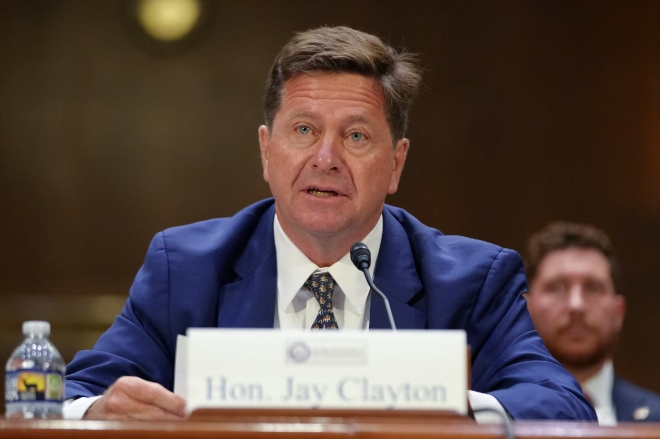
Donald Trump has appointed DNI Clint Clayton as the administrator of a new White House organization called the Super Intelligence Force, and given it a 120-day clock to deliver a report on what AI means for American power. That might sound like bureaucratic theater. It is not.
The task force’s appointment comes barely a month after Trump summoned OpenAI’s Greg Brockman, Anthropic’s Dario Amodei, and Nvidia’s Jensen Huang to the White House — an event that revealed the administration’s deep dependence on a handful of private companies to manage risks those same companies created. Now the White House is adding a layer of formal government architecture on top of that shaky foundation.
Clayton’s mandate is unusually specific: assess the risks and opportunities of super intelligence, determine how far the federal government should go, and produce a report within four months. The task force’s charter explicitly names two dangers it fears most — hackers and jailbreaks, the term for attempts to bypass an AI system’s safety constraints — and says it will review existing government alert and notification systems for AI failures.
The language in the charter is notable. It warns against overregulation and regulatory capture, yes, but it also calls for plans to counter social threats enabled by SI. That tension — between keeping AI companies free to compete and keeping them from producing weapons-grade malware or manipulated elections — is where the real policy fight will happen.
Who Runs What: The Three Deputy Chairs
The task force’s structure tells you where the action will be. Three deputy chairs have been assigned distinct portfolios:
Emil Michael, undersecretary of defense for research and engineering, will handle coordination with AI companies. That is the defense and dual-use angle — the question of whether AI models can be weaponized and how the Pentagon factors into oversight.
Scott Cooper, director of the Office of Personnel Management, will manage relationships with major infrastructure operators and other industry stakeholders. His beat is the physical side: data centers, energy grids, the supply chain that makes AI possible and vulnerable.
Andrew Ferguson, an FTC commissioner, will oversee consumer issues, religious freedom, children’s privacy, and press and expression rights. His portfolio is the civil liberties front — where the administration’s enthusiasm for AI meets First Amendment complications.
JD Vance, Defense Secretary Pete Hegseth, Treasury Secretary Scott Bessent, and Chief of Staff Susie Wiles are all on the task force. External advisors include venture capitalist David Sacks, who sits on Trump’s science and technology advisory committee, and Condoleezza Rice, who provides national security counsel from her Bush-era experience.
The personnel choices are revealing. Bringing in Bessent and Hegseth signals that economic and defense instruments will be used together. Adding Rice gives the task force a foreign policy spine that the rest of the team lacks. This is not just an AI policy body — it is being built as a national security apparatus.
The 120-Day Clock and What Comes After
The 120-day timeline is not arbitrary. It maps onto a political calendar. A report delivered in early February gives the White House a finished product to present before the next legislative session and any mid-term political pressure builds. The charter also allows the task force to extend its work or hand off functions to existing agencies — which means the 120-day report is more likely a founding document than a conclusion.
If the task force recommends stronger export controls on advanced AI chips, for example, the Treasury and Commerce departments would be the natural vehicles. If it pushes for mandatory safety disclosures from model developers, the FTC or a new regulatory body could take that on. The report’s recommendations will determine which agencies get enlarged and which stay small.
Korea’s Dilemma: Alignment or Autonomy?
For South Korea, this task force is a strategic signal. The country’s semiconductor industry — Samsung Electronics and SK Hynix — is the linchpin of the global AI hardware supply chain. Both companies are deeply integrated into the US supply chain and subject to American export controls on advanced chip-making equipment.
The Trump administration has already used chip policy as leverage in broader negotiations with Seoul. Tightening AI oversight through a dedicated White House body raises the probability that export control discussions will expand beyond hardware to include software and model weights — a far more invasive form of regulation.
Korea’s government has been trying to position itself as an AI mid-power, developing domestic models while maintaining good relations with both Washington and Beijing. A US task force focused on super intelligence competitive advantage makes that balancing act harder. If Washington treats AI capability as a national security issue the way it now treats advanced chip manufacturing, Seoul’s room to engage with Chinese AI development shrinks further.
The appointment of DNI Clayton — someone with a background in intelligence community coordination rather than technology policy — suggests the administration views AI primarily through a security lens. That framing benefits companies like Nvidia that already comply with US export rules, but it penalizes competitors and partners who operate outside the American regulatory perimeter.
The Industry Concession Behind the Announcement
The Wall Street Journal reported that the task force’s creation reflects growing awareness inside the Trump administration that some government oversight of AI is necessary. That admission — coming from an administration that campaigned on deregulation — is significant. It means the default position is shifting from no oversight to structured oversight, and the question is now where the boundaries fall.
The AI companies’ voluntary principles, agreed after Trump’s October White House meeting, remain the baseline. But voluntary principles without enforcement teeth are only as strong as the companies’ incentives to follow them. A 120-day report that recommends mandatory disclosure requirements or third-party safety audits would change the calculus overnight.
Clayton’s quote is telling: “The president asked us to build an organization so we can maintain our lead in super intelligence and put American interests first.” The emphasis on leadership and American interests frames the entire debate as a competition, not a governance problem. That framing will shape whatever recommendations emerge.
What Happens Next
Watch three things in the coming months. First, whether the task force’s final report recommends binding safety requirements or stays advisory. Second, whether export control expansions reach model weights and training data — not just hardware. Third, whether Korea gets consulted before recommendations are finalized, or whether Seoul responds to a completed US policy and adjusts accordingly.
The task force meets its deadline in roughly four months. By then, the architecture of American AI policy — and America’s relationship with its key Asian technology partners — may be set.