How Trump's SI Task Force Could Reshape Global AI Governance
Trump's new Super Intelligence task force and appointment of a dedicated AI czar signal America's intention to set the global standard — and other nations will have to respond.
The Rename Is the Point
Donald Trump did not simply announce a new task force on Oct 4. He announced that artificial intelligence is now officially called “Super Intelligence” — or SI — and that the United States would organize itself around that label. The renaming is not semantic housekeeping. It is a framing device. Calling it SI communicates that the technology has crossed a threshold and that Washington intends to govern accordingly.
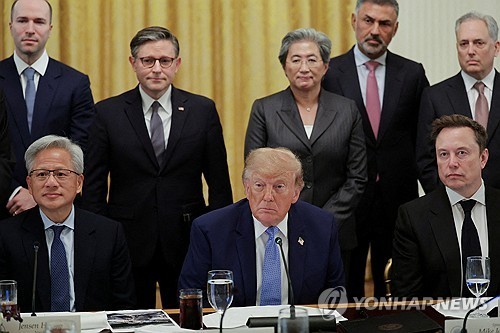
The move came a day after the so-called SI White House Agreement, which brought the CEOs of America’s largest AI companies together for an Oval Office luncheon to formalize commitments about safety and accountability. On Truth Social, Trump described the agreement as historic and said the new task force would be the coordination mechanism to ensure American leadership does not slip. He also signed an executive order earlier this month formally changing the name from AI to SI across federal documents and agencies.
What matters is not the name change but what follows it.
A Czar With Teeth
The most consequential detail in Trump’s announcement was the appointment of Jay Clayton, the Director of National Intelligence, as the person who will oversee all AI-related policy. International outlets including Reuters and AFP reported him as the confirmed “AI czar” — a title the White House has not officially used but that describes the function precisely. Clayton told the Wall Street Journal in a recent interview that the risk of the United States falling behind is not abstract. He said the consequences are tied to threats from hostile nations, whether confirmed or unconfirmed.
Clayton’s arrival at the center of AI policy is notable because he brings a regulatory background from his years leading the Securities and Exchange Commission. The European Union has been developing its AI Act, a comprehensive framework that divides systems by risk tier. The United States has moved in a different direction — closer to sectoral guidance and voluntary agreements with industry. Clayton’s task force will sit at the intersection of those two worlds.
The task force itself will include Andrew Ferguson, chairman of the Federal Trade Commission; Emil Michael, the Under Secretary of Defense for Research and Engineering; and Scott Suho, director of the Office of Personnel Management. They will report to Trump and White House Chief of Staff Susie Wiles. The structure suggests the administration is treating AI governance as a cross-cutting priority that touches commerce, defense, and federal workforce planning simultaneously.
Who Wins and Who Loses
The immediate winners are the companies already operating at the frontier. The SI agreement and task force create a single point of contact with the White House. Firms that were previously negotiating separately with different agencies now have a coordinated federal voice. That concentration of access is valuable.
The losers are smaller players and foreign governments trying to navigate US policy. When one agency becomes the central coordinator, the friction that once gave mid-size competitors room to operate shrinks. International regulators will also face a more streamlined counterpart. Instead of engaging with a scatter of US bodies — the FTC, the National Institute of Standards and Technology, the Department of Commerce — they will likely find themselves talking to Clayton’s office.
Developing economies stand to lose the most. The United States has signaled that its approach to AI safety will be driven by domestic security concerns and partnerships with key infrastructure providers, religious groups, and consumer advocates. There is no indication yet that the US will build the kind of multilateral coalitions that the European Union has been assembling through its AI Act and international standards work. That gap will shape where global rules converge — or fragment.
What Happens Next
The next step is operational. The task force must translate the White House Agreement from a symbolic gathering into enforceable standards. Clayton will need to define what compliance looks like for SI developers, what metrics the government will track, and how enforcement will work without chilling innovation. The FTC’s involvement suggests consumer protection and competitive fairness will feature prominently. The Pentagon’s involvement signals that defense applications and dual-use technology will receive close scrutiny.
The timeline is unclear. No specific date has been announced for when the task force will release its first policy recommendations. But the political sequencing is clear: the agreement came first, the task force second, and the expectations are now set. Industries will be watching for whether Clayton treats his role as a coordinator or as an enforcer.
Other countries will also be watching. China has accelerated its own AI regulatory framework, and the European Union’s AI Act is already being implemented. Neither is aligned with Washington’s approach. The US task force could either bridge those differences by offering a practical alternative to the EU’s risk-tier model or deepen the divergence by establishing a uniquely American standard that other markets must adapt to.
Why This Matters Outside the US
The international implications are already visible. Companies that operate across borders must prepare for a US SI framework that may differ significantly from the EU AI Act and China’s generative AI rules. The cost of compliance will rise if the standards diverge. Investors will reassess which jurisdictions offer the clearest path to deployment.
The naming shift itself carries weight beyond American borders. When the world’s largest technology market rebrands a category of technology, competitors and partners adjust. Japan, South Korea, and India — all major players in the semiconductor and software supply chains — will need to account for a US policy architecture that treats AI governance as a national security imperative rather than a purely economic or civil rights issue.
Clayton’s warning about the dangers of falling behind was directed at a domestic audience. But the signal is audible worldwide. The United States has now placed its bet: it will lead by setting the terms, not by following someone else’s framework. Whether that strategy produces durable advantage or creates friction that slows progress is the question the next twelve months will answer.