Why Trump Is Rushing an Alaska LNG Deal Through Korea
A reported $540 billion Korean investment in Alaska LNG could reshape Northeast Asian energy flows — but the timing screams election politics. What's really being traded here.
The deal behind the deal
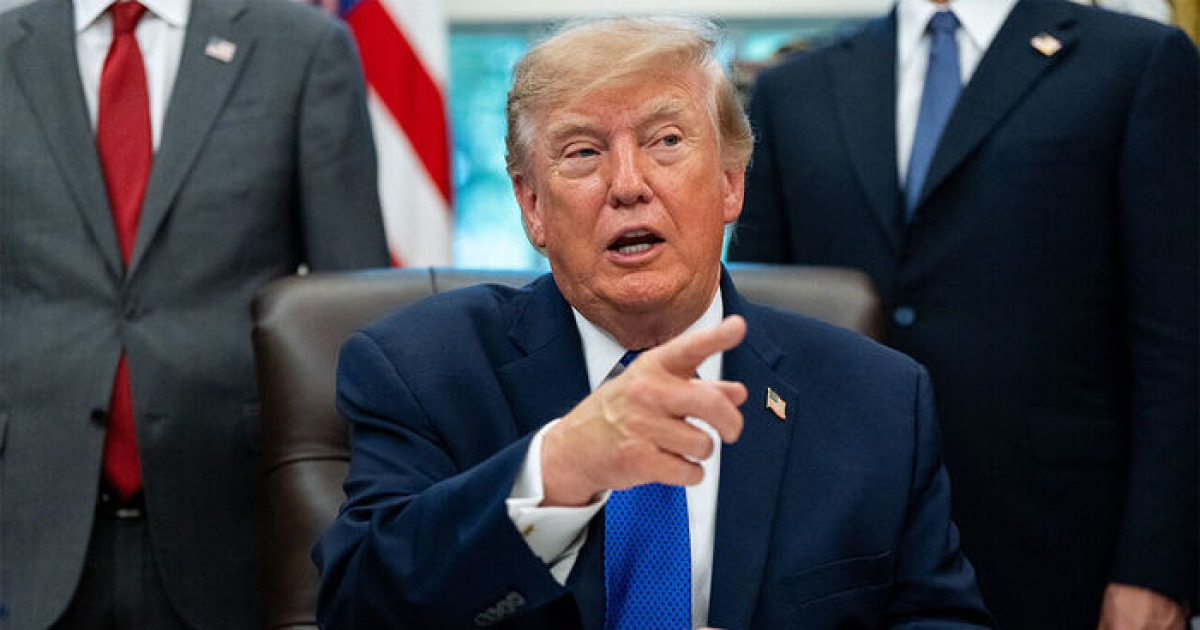
Donald Trump is set to stand at the Oval Office podium alongside Commerce Secretary Howard Lutnick on September 30th and announce something that sounds enormous: a Korean investment package so large it could rewire energy corridors across the Pacific and the Bering Strait. Outlets including Reuters and Bloomberg say the centerpiece will be South Korea’s commitment of roughly $540 billion — about 73 trillion won — to the Alaska liquefied natural gas project.
The figure alone demands attention. But the real story isn’t the number. It’s the geometry of who’s in the room, why the timing is so precise, and what happens to the deal if any of the usual players fall off.
Alaska in the crosshairs
This is not a routine bilateral investment announcement. The guest list tells the real story. Senator Dan Sullivan, the Republican who represents Alaska in the Senate, and Representative Nick Begich are expected to attend. So is Governor Mike Dunleavy. All three are anchored to a single electoral reality: Alaska’s November midterms are shaping up as a tight race between Sullivan and a Democratic challenger. For a president who has staked considerable political capital on the Alaska LNG project despite persistent questions about its profitability, having the state’s congressional delegation share a stage with him at the White House is not coincidental.
The optics are deliberate. Trump can frame a Korean cash commitment to an Alaskan energy project as proof that his energy agenda delivers tangible results for a swing-state senator facing a tough re-election. The policy and the politics are braided together, and untying them would weaken both.
Texas first, Alaska second
Here is what the Korean government has already confirmed to its National Assembly: a $2 billion strategic investment framework with Washington, with the Ensign natural gas combined-cycle power plant in Texas as the first operational commitment. That project is real, it is publicly reported, and it is comparatively modest.
The Alaska LNG deal and a separate agreement to build eight large nuclear reactors in the United States remain in the later-negotiation category. Seoul has not formally signed either. Yet all signs from the White House scheduling and the foreign press coverage suggest Trump plans to treat the Alaska commitment as if it were already closed.
That gap between what is confirmed and what is being presented as confirmed is where the risk lives. If South Korean officials enter the Oval Office without final approval from their own cabinet or without market-signaling commitments from Korean energy firms like SK Innovation or Hyundai Engineering & Construction, the announcement could unravel quickly. Or worse, it could hold — and Seoul could be left managing fallout from a commitment it never formally made.
The profitability question nobody is answering
Alaska LNG has been Trump’s pet project for years. The concept is straightforward on paper: pipe natural gas roughly 1,300 kilometers south from the North Slope to a liquefaction terminal, then ship it to Asian buyers. The reality has always been messier. The project sits in one of the most expensive energy-development environments on Earth. Permafrost, remote logistics, and extreme winter conditions drive costs well above those of established LNG exporters in Qatar, Australia, and the United States Gulf Coast.
Investment banks and energy consultancies have repeatedly flagged profitability concerns. No firm financial model has been published that clears the hurdle rate for a project of this scale in that geography. Korean capital would change the math dramatically — but only if the Koreans believe the contract structure protects them. A long-term take-or-pay agreement at favorable terms would be essential. Without it, the $540 billion figure is theater, not a budget.
Eight reactors and the nuclear bet
The nuclear component deserves equal scrutiny. Eight large reactors on American soil would be the most significant nuclear expansion in the United States in decades. South Korea has proven nuclear export capability through its APR1400 design, which has already been sold to the UAE. If Seoul is positioning its nuclear firms as builders or co-investors, the deal becomes a dual energy-security play: the US gains domestic capacity, and Korean firms gain a reference project that could unlock exports across Asia.
But nuclear projects move slowly. Licensing with the Nuclear Regulatory Commission alone takes years. Construction timelines run a decade or more. Announcing eight reactors alongside an LNG project that is itself years from completion creates a narrative of immediacy that the underlying hardware cannot match. Investors and competitors will notice the difference between press releases and groundbreaking.
Why this matters beyond Washington and Seoul
The broader implication is geographic. Currently, most of South Korea’s LNG supply arrives by sea from Australia, Malaysia, Qatar, and the United States Gulf Coast. Adding Alaska as a supplier — even a partial one — shifts the cargo-routing calculus for Northeast Asia. Alaskan gas, once liquefied, would reach Korean ports faster and at lower freight cost than Gulf Coast volumes, and it would diversify away from the Middle East routes that carry so much of the region’s energy risk.
Japan would feel the same shift. Tokyo is already a major LNG importer with deep ties to Australian and Qatari suppliers. An Alaska-Korea corridor would create competitive pressure on existing contracts and could reshape long-term pricing benchmarks in the Asian spot market.
China, meanwhile, watches everything that moves energy around the Pacific basin. A deeper US-Korea energy nexus, especially one involving nuclear cooperation and critical infrastructure investment, is not lost on Beijing.
Who wins, who loses, who blinks
The winners are predictable if the deal holds: Trump gets a flagship announcement before November, Sullivan gets campaign fuel, Korean energy firms get access to a major project, and the US gains a political argument about energy dominance. The losers are the skeptics — both domestic and foreign — who will point out that none of this exists until contracts are signed, financing is closed, and regulatory approvals are in hand.
The most likely scenario is that Trump announces intent rather than completion. The Alaska LNG figure will sound concrete because it is large. The nuclear reactor commitment may be mentioned in broader terms. Both will require months of follow-on negotiation before anything breaks ground.
But the announcement itself will do real work. It will anchor expectations. It will lock in political narratives. And it will give the Korean government a fait accompli to manage — both with its own business community and with its regional neighbors who now have a new energy variable to price into their strategies.
Watch the press conference for the gap between what is said and what is signed. That gap will tell you everything.