Trump's $8.4 Billion Oil Play Reveals US Coercion Tactics
Trump announced an $8.4 billion South Korean investment in US oil projects without confirming the deal existed. The move exposes how Washington is turning energy partnerships into political leverage ahead of midterm elections.
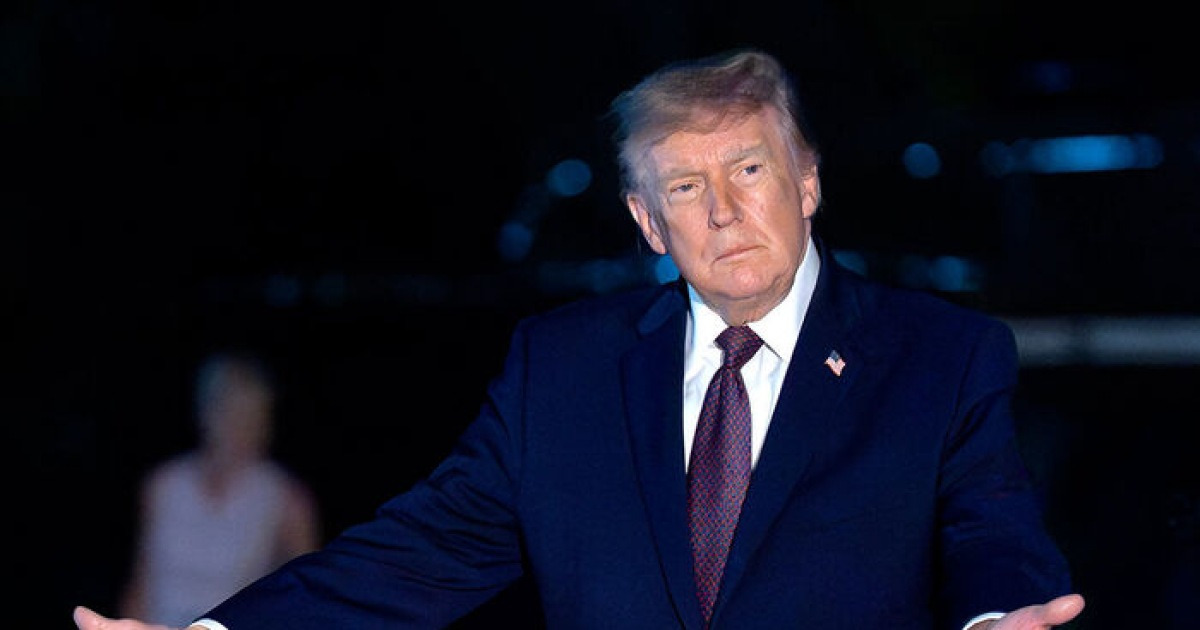
The Deal That May Not Exist
Donald Trump took to his social media platform last week with a claim that startled diplomatic circles in Seoul: South Korea had agreed to invest $8.4 billion in a US crude oil enhanced recovery project. The article, posted without prior consultation with the Korean government, described the investment in vague terms — referring only to injecting carbon dioxide into oil fields to boost production — and framed it as a victory for American energy dominance.
No contract exists. No Ministry of Trade, Industry and Energy official confirmed the figure. The $8.4 billion — roughly 11.3 trillion won at current exchange rates — appears to be a number Trump pulled from the air to flex leverage over an ally that cannot afford to be seen defying him.
This is not standard diplomatic practice. It is a tactic of manufactured fait accompli: announce a deal before it exists, then force the target country to either legitimize the fiction or publicly resist a president who controls tariffs, trade access, and military commitments.
The Alaska Connection
The timing is not coincidental. Trump’s office had previously announced a separate deal involving South Korean investment in Alaska’s liquefied natural gas development — again without confirming Seoul’s consent first. When US media outlets pointed out the procedural breach, Trump responded with a threat that revealed the machinery beneath the announcement.
“If South Korea says no, it doesn’t matter,” Trump said. “We just charge them more. Tell them if they don’t sign soon, we’ll double the cost.”
He did not specify what costs would double. The language was deliberately ambiguous — a threat calibrated to create anxiety without demanding accountability. In practice, it signals that South Korea’s access to the US energy market, and by extension its broader trade relationship with Washington, is now negotiable on a day-by-day basis rather than governed by the kind of institutional frameworks that usually underpin alliance politics.
What South Korea Actually Needs
South Korea is the world’s third-largest oil importer and one of the largest buyers of US liquefied natural gas. Its refineries are structured around Middle Eastern crude; its power plants depend on imported LNG. Any deal that ties Seoul’s energy security to Washington’s political moods creates a structural vulnerability.
The $8.4 billion figure, if real, would represent a significant commitment for a country already managing a chronic current account surplus decline and a won under sustained pressure. Korean energy firms have signaled openness to enhanced oil recovery projects in the Permian Basin and the Gulf Coast — techniques that are成熟 globally and commercially viable — but the political framing transforms a routine investment decision into a geopolitical test.
This is where the China factor matters. Seoul has spent years trying to maintain a calibrated distance between Washington and Beijing, positioning itself as a middle power that can trade with both without fully aligning with either. Every demand from Trump that links energy access to political compliance narrows that room. An ally pressured into deeper energy integration with the US is also an ally less able to serve as an intermediary in the kind of strategic dialogue that keeps Northeast Asian security architecture from fracturing.
The Domestic Calculus
The real audience for Trump’s announcement is likely not Seoul but American voters. The president has entered a nationwide campaign schedule ahead of the November 3 midterm elections. Announcing bold deals with allied countries is election theater with a geopolitical tail — it projects strength without requiring Congress to pass anything.
The enhanced oil recovery angle is particularly suited to this purpose. CO2 injection projects are real, they are commercially active in Texas and Oklahoma, and they can be framed as both job creation and climate-conscious — a narrative that absorbs potential criticism from environmental groups by pointing to carbon utilization. Whether the $8.4 billion figure corresponds to actual committed capital or projected potential investment is impossible to verify from the available record.
What is clear is that Trump is treating unconfirmed investment pledges as campaign assets. This creates a feedback loop: announce aggressively, let allies scramble to respond, then claim the resulting negotiations as proof of the original announcement’s validity.
Who Wins, Who Loses
The immediate loser is institutional predictability. South Korean planners now face a US partner who publishes deal terms before negotiations begin and treats non-participation as a punishable offense rather than a diplomatic disagreement. This raises the cost of doing business with Washington for every allied economy — Japan, South Korea, the Philippines, European NATO members will all be watching.
The winner is short-term political capital for Trump, provided the announcements generate headlines before the midterms. Longer term, the strategy risks eroding the very alliance cohesion it claims to strengthen. Allies that feel coerced into energy deals they did not independently negotiate will recalibrate their risk assessments — and in East Asia, that recalibration increasingly points toward diversification, not consolidation.
What Comes Next
Seoul’s response will determine whether this episode becomes a recurring pattern or an outlier. If the government moves quietly to validate the $8.4 billion claim without securing concessions, it signals that Washington’s coercion model has a working template for allied economic policy. If it pushes back — citing the need for proper parliamentary review, commercial due diligence, and transparency — Trump’s next move will reveal how far he is willing to escalate.
The ambiguity is the point. By not specifying what “doubling the cost” means, Trump keeps his allies in a state of strategic uncertainty — the same uncertainty that makes coercive diplomacy effective. The question for Seoul is whether it accepts that framework or tests whether the threats are as binding as the announcements.
For readers outside Korea, the broader takeaway is simpler: the era of alliance economics operating on established institutional rails is over. Market access is now a bargaining chip deployed in real time, and the collateral damage falls on the economies least equipped to absorb sudden shifts in their most vital supply lines.