How Trump Apocalyptic Rhetoric Rewrites American Democracy
Trump's escalation to civilizational-collapse warnings in midterm campaigning isn't ordinary political fear-mongering. It marks a new threshold in American polarization — one that former national security officials say demands institutional preparation, not dismissal.
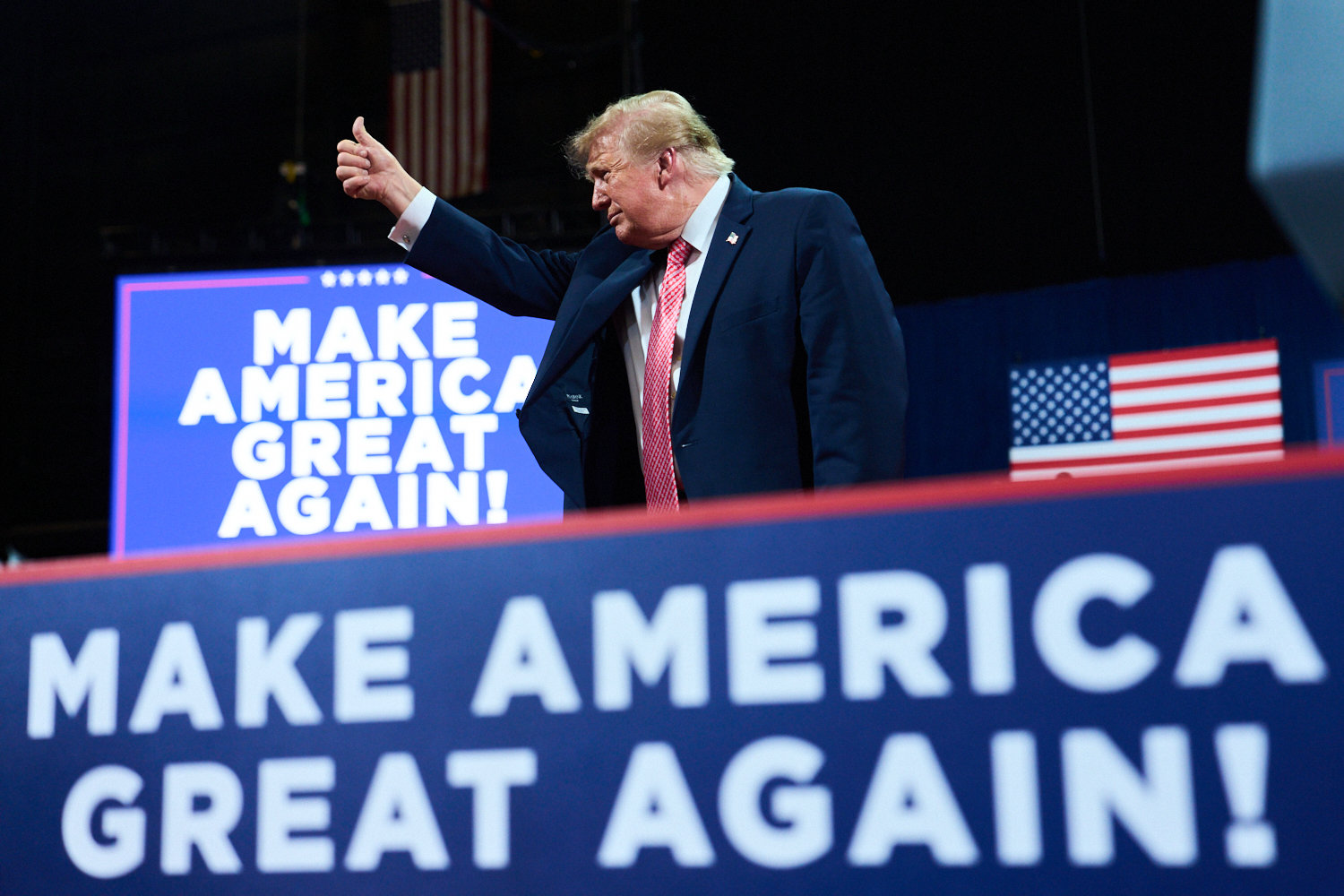
The End of Normal
Donald Trump did not simply say the economy would suffer if Democrats win the midterm elections. He said Western civilization would be wiped out.
The escalation matters more than the lies behind it. Yes, his claims about Democrats performing gender-affirming surgeries on minors without parental consent are false. Yes, the suggestion that Democrats want to confiscate all firearms — complete with the offhand remark that wild animals would “get fat” if people were disarmed in Montana — is absurd. Yes, his pledge to pay every adult citizen $5,000 if Republicans retain Congress requires over a trillion dollars with no disclosed funding mechanism.
But these details are almost secondary. The real story is that Trump is now governing his campaign speeches the way a besieged warlord addresses supporters before a revolt: with existential dread, fabricated catastrophes, and promises of salvation that come only if his side holds power.
Fire in France, Fear in America
On October 19 in Kansas, Trump pointed to pictures of protests and fires in France and told his audience to remember them — because they are what radical Democrats would do in the United States. On October 17 in Tennessee, he warned that a Democratic victory would bring an economic depression comparable to 1929.
This is not the rhetoric of persuasion. It is the rhetoric of mobilization through terror. Trump is framing the midterm election not as a policy choice but as a fork in history — civilization or collapse, order or chaos. He has made the Republican Party’s survival synonymous with the survival of the West itself.
The technique has a long lineage. But its application by a sitting president, from the Oval Office and the campaign trail simultaneously, is unprecedented in American political history. Campaign rhetoric normally stays in the campaign. This rhetoric now carries the weight of executive authority behind it.
The Institutional Response
What makes this development genuinely alarming is not just the content of Trump’s speeches but the institutional reaction they have triggered. According to The Washington Post, more than a dozen current and former national security officials with Department of Defense experience have been conducting private consultations with governors, election officials, and members of Congress across ten states in recent months.
Their scenario planning is specific: troop deployments near polling places, CBP agents at the polls, baseless fraud claims used to invalidate results. These officials are not acting on classified intelligence. They are reading the same public record as everyone else — Trump’s statements, his administration’s actions, his demonstrated willingness to test institutional boundaries.
The White House dismissed the concern outright. Press Secretary Lauren Verss called the allegations baseless and pointed to enforcement actions against election crimes and infrastructure hardening. Dismissal is the expected response. What is notable is that the concern exists at all among people who spent their careers inside the national security apparatus.
The Trust Deficit
Polling data from Politico, ABC News, and YouGov collected between September 9 and 13 reveals the scale of the damage. Seventy percent of Americans say they do not trust Trump to accept a Democratic midterm victory. Thirty-six percent of Republicans — the party’s own base — share that doubt.
That number alone should unsettle anyone who takes American democracy seriously. A functioning republic requires a baseline of mutual tolerability: the assumption that opponents are legitimate and that electoral defeat is survivable. When more than a third of a major party’s voters believe their own president will not honor an electoral loss, that assumption is gone.
Meanwhile, 35 percent of respondents expect Democrats to take the House, compared with just 16 percent who project Republican retention. Trump knows this. The apocalyptic framing is likely calibrated precisely to close that gap — to convert uncertainty into fear, and fear into turnout.
Who Wins, Who Loses
The immediate winner of this strategy is whoever benefits from suppressed turnout among moderate Republicans and elevated turnout among Trump loyalists. If the rhetoric succeeds in framing the election as apocalyptic, it raises the emotional stakes for his base while intimidating swing voters who may prefer not to participate in what feels like a civilizational referendum.
The loser is the institutional architecture that holds American governance together. Every false claim erodes public confidence in shared facts. Every doomsday prediction normalizes the idea that democratic processes are fragile and require authoritarian guardianship. The $5,000-per-adult promise, dangling without a funding source, trains voters to expect spectacular giveaways while accepting that the mechanics don’t matter.
Longer term, the most dangerous consequence may be the quiet preparation happening behind closed doors. When former and current security officials feel it necessary to bypass public channels and counsel governors and legislators directly about election defense, the informal institutional safeguards that have traditionally absorbed political shocks are already under stress. The system is preparing for a scenario that has not yet occurred — because the rhetoric has made it seem plausible.
What Comes Next
The midterm election on November 3 will test whether American democratic norms can survive a campaign built on manufactured existential threats. If Trump’s coalition retains Congress, the apocalyptic rhetoric will have worked — and the precedent will be entrenched. If Democrats take the House, the question becomes whether Trump will accept the result, and whether the 36 percent of Republicans who already doubt his willingness to do so will follow him into institutional confrontation or retreat into the system.
The former national security officials advising state governments are not preparing for a coup. They are preparing for the possibility that a sitting president will use the machinery of government to contest an electoral loss — something no modern American president has attempted on this scale. The fact that they find it necessary to hold private briefings rather than make public appeals suggests they believe the public channel is compromised.
That is the real warning sign. Not the false claims about French fires or monster animals. Not the trillion-dollar promises with no path to payment. The warning sign is that the people tasked with defending American institutions have concluded they cannot do so through the normal processes of public discourse — because the discourse itself has become a weapon.