How Trump's Asia Summit Reset Is Undermining Extended Deterrence
A potential Trump-Kim meeting alongside a historic Xi-Putin-trilateral reframes U.S. security commitments as transactional deals rather than treaty obligations, sending alarm signals through Tokyo, Seoul, and Manila.
The Deal Is the Doctrine
Donald Trump’s Asia itinerary reads like a negotiation playbook written by someone who believes treaties are suggestions and summits are transactions. On paper, the plan is modest: a visit to China, meetings with regional partners, perhaps a face-to-face with Kim Jong Un. In practice, it carries implications that reach far beyond any single agreement.
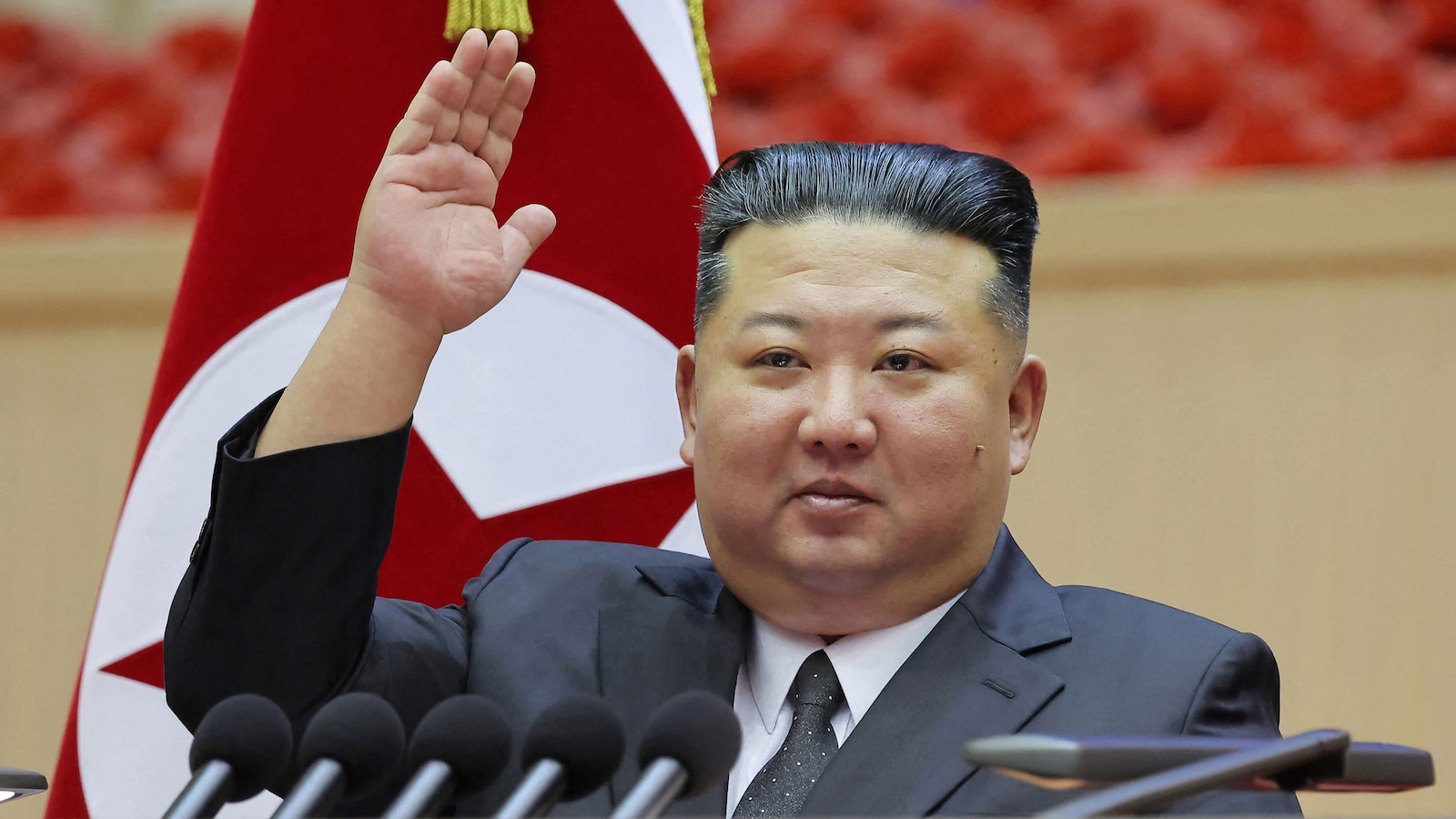
The critical detail is what Trump himself flagged on departure from the White House Monday — he “may” meet with North Korea’s leader while in China, but “that’s up to President Xi.” The phrasing matters. A bilateral U.S.-North Korea encounter requires only Washington’s consent. A trilateral meeting demands Beijing’s complicity. By placing the ball in Xi’s court, Trump is implicitly acknowledging that America cannot resolve the Korean nuclear question without Chinese cooperation, even as he frames it as a casual possibility rather than a structured negotiation.
Coupled with the first-ever trilateral meeting between the leaders of the United States, China, and Russia on APEC sidelines, the itinerary compresses three of the world’s most volatile nuclear Flashpoints into a single diplomatic exercise. The message to Tokyo, Seoul, Canberra, and Manila is unmistakable: your security architecture is negotiable.
The Triangle That Wasn’t Supposed to Exist
A Trump-Xi-Putin meeting is structurally unprecedented in the post-Cold War era. The closest historical analogue would be the kind of great-power condominium arrangements that characterized early Cold War periods, when nuclear decisions were managed among capitals rather than through multilateral institutions. What makes this configuration significant today is not the symbolism — though that is considerable — but the substance being discussed.
Senior U.S. officials confirmed the meeting will address Iranian denuclearization, explicitly ruling out Ukraine. That qualification is itself a geopolitical statement. It tells Moscow that its war of aggression in Europe does not forfeit its seat at the table on another theater’s nuclear negotiations. It also tells Tehran that whatever constraints emerge from this conversation will be part of a broader deal-making framework rather than a standalone nonproliferation regime backed by institutional guarantees.
The omission of Ukraine deserves emphasis because it reveals the administration’s underlying logic. Extended deterrence in Europe and extended deterrence in Asia are being treated as separable domains. If Washington can detach its Russian engagement from its European commitments, the same logic can be applied transregionally: why should Pyongyang’s nuclear ambitions constrain our dealings with Beijing when those same dealings might yield cooperation on Tehran?
This is not a new calculus. It is, however, a newly public one. And publics include America’s treaty allies.
Who Wins, Who Loses
Winners: the four leaders at the table. Each gains diplomatic visibility, each avoids the domestic political cost of formal negotiation processes, and each retains maximum flexibility to walk away. Putin acquires legitimacy as a great-power participant rather than an isolated aggressor. Xi demonstrates that he can broker access to Pyongyang without formally endorsing its weapons program. Trump can claim a personal diplomatic achievement outside congressional scrutiny. Kim Jong Un, should he appear, reinforces the proposition that nuclear weapons buy access regardless of how much defiance accompanies them.
Losers: the alliance system. Extended deterrence rests on credibility, and credibility rests on consistency. When security guarantees become contingent on the scheduling of summits rather than the text of treaties, allied governments must discount the value of their agreements. Japan cannot price its defense budget around a president’s travel calendar. South Korea cannot station additional tactical assets on the assumption that Washington will honor an arrangement made six months earlier by a different administration.
The practical damage is subtle but structural. Every time a leader signals that treaty obligations are subject to renegotiation through personal diplomacy, the cost of alliance participation rises for everyone else. Defense industrial bases contract. Threat perceptions intensify. Regional arms races accelerate as states conclude that external guarantees are unreliable and self-reliance is preferable.
The Huang Shadow
Compounding the strategic ambiguity is a domestic scandal that reached its climax just days before departure. Jensen Huang, co-founder and long-time chief executive of Nvidia, resigned Nov. 12 following reporting that he maintained a relationship with Alice Huang, a Chinese national accused of intelligence work. Secretary of State Marco Rubio shared intelligence on the matter aboard Air Force One in May, according to sources familiar with the briefing.
The timeline is consequential. Rubio warned Trump before the May China trip. Trump acknowledged the allegations were known publicly but dismissed them as unproven. White House officials indicated the president would not raise the matter with Xi during this trip, choosing instead to prioritize implementation of existing trade agreements. Meanwhile, Elon Musk will accompany Trump for portions of the itinerary, though officials stopped short of specifying his role beyond vague references to business interests.
The Huang case illustrates the broader tension running through this entire enterprise. America’s most valuable semiconductor company — the primary manufacturer of chips that power frontier AI systems — is led by a CEO whose personal conduct has raised espionage concerns, yet whose lobbying influence has shaped U.S. export policy. In December 2025, after sustained advocacy from Huang, the Trump administration loosened restrictions on AI chip sales to China, approving the export of older but still powerful processors in exchange for a twenty-five percent government revenue share.
That transaction created a perverse incentive structure: the same individual who lobbied for relaxed controls stands accused of maintaining ties to a suspected foreign intelligence operator. Whether intentional or circumstantial, the overlap erodes the evidentiary basis for confidence in either technology policy or personal loyalty.
The Midterm Mirror
Trump enters this trip carrying the residue of November’s electoral verdict. Voters rejected two pillars of his foreign policy agenda: expansive tariffs and military engagement in Iran. Polling data confirmed broad disapproval of both directions. Democratic control of Congress beginning in January compounds the political pressure, as legislators prepare to reassert statutory authority over trade policy that the administration has exercised through executive action.
Yet Trump appears indifferent to the political signal. On Nov. 12, he threatened to double tariffs on Mexico unless immigration enforcement improved — a move that simultaneously flouted trade norms and previewed an administrative strategy built on coercion rather than coalition. The legal challenges to existing tariffs remain unresolved. The Iran conflict continues without congressional authorization. And now comes a diplomatic itinerary that further marginalizes institutional guardrails in favor of direct executive engagement.
The contradiction is defining. Trump’s base punished him for the consequences of aggressive unilateralism abroad, yet his response has been to double down rather than recalibrate. The reasoning is internally consistent if strategically dubious: if voters rejected the tools, replace the tools; if critics reject the framework, operate outside it.
What Happens Next
Several scenarios merit consideration, none mutually exclusive.
In the most optimistic reading, the Trump-Kim encounter produces a limited de-escalation framework: a commitment to suspend certain missile tests in exchange for humanitarian assistance and the resumption of some bilateral consultations. Xi facilitates the contact and extracts a quiet understanding that U.S. forces remain deployed in the region. Putin observes and records the precedent. No formal agreements are signed. Progress is measured in gestures rather than verification protocols.
In the plausible middle ground, the trilateral meeting generates diplomatic photo opportunities without substantive output. Officials characterize it as an initial conversation. Leaders acknowledge differences on Iran and reaffirm positions on Ukraine. No breakthrough occurs. No regression occurs. The meeting serves as proof that channels remain open rather than evidence that they produce results.
In the worst-case scenario, the announcement of any negotiated arrangement — with Pyongyang, Tehran, or Moscow — triggers allied panic. Japan accelerates defensive procurement. South Korea debates deterrent modernization beyond thecurrent trajectory. The Philippines deepens its basing agreements with Washington while simultaneously requesting additional capabilities. Regional nuclear thresholds lower as states conclude that American guarantees require augmentation rather than substitution.
History provides uncomfortable parallels. The Camp David Accords succeeded because Carter possessed sustained political capital and clear negotiating objectives. The Iran nuclear deal collapsed because it lacked durable bipartisan support. The Helsinki Accords legitimized Soviet dominance in Eastern Europe for decades before appearing to accomplish nothing. None of these outcomes predict the future; they illustrate how personal diplomacy can produce results that look brilliant in retrospect and catastrophic in hindsight depending on which timeframe you choose.
The Real Question
The central issue is not whether Trump will meet Kim, or Xi, or Putin. Those encounters are likely. The question is whether extended deterrence survives as a concept when its enforcement depends on whoever holds the office rather than the institutions surrounding it.
Alliance credibility requires predictability. Treaty obligations require permanence. Strategic commitments require insulation from electoral cycles. None of these characteristics describe the current administration’s approach to international security.
If the Xi-Putin-Trump triangle establishes a pattern — periodic high-level contact substituting for structured negotiation, personal diplomacy replacing institutional framework — then American extended deterrence enters a phase of systematic erosion. Allies will hedge. Adversaries will test. Partners will recalibrate. The architecture that took seventy-five years to construct will prove fragile under the weight of a single itinerary.
That fragility is the story Trump’s Asia trip tells whether anyone intends it to or not.