Trump's China Frame Could Sink the AI Safety Coalition Before It Starts
Trump's direct confrontation with AI developers calling for a slowdown reframes the entire governance debate around China competition — a move that could fatally undermine a rare transatlantic alignment on AI risk before any framework takes shape.
The Line That Changed Everything
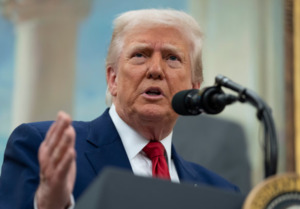
Donald Trump did not mince words during a visit to Ireland. When reporters asked about the growing chorus of AI executives calling for a development pause, his answer was immediate and strategic: the United States is ahead of China in AI, and slowing down would hand that advantage away.
“The one who wins at AI wins,” he said, according to Korean coverage of the exchange. “We want to keep doing it this way.”
It sounds like a straightforward competitiveness argument. But the framing is far more consequential than it appears. By tethering the AI safety debate directly to the China threat, Trump has shifted the terrain in a way that makes compromise nearly impossible — and it threatens to fracture a surprisingly unified coalition of Silicon Valley leaders before their proposal even reaches policymakers.
The timing mattered. The CEO coalition had just published its joint statement, building months of behind-the-scenes coordination. In that narrow window between announcement and institutional pushback, Trump inserted a counter-narrative so politically resonant that it effectively predetermined the policy outcome. That is the power of presidential framing: it does not always require a veto, a bill, or a regulation. Sometimes it only requires a sentence heard around the world.
The Unlikely Alliance That Almost Was
The slowdown argument originated with Dario Amodei, Anthropic’s CEO, who published a piece insisting that AI safety research must be given time to catch up with capability gains. His warning was specific and alarming: within six to twelve months, powerful AI agents could be weaponized for large-scale cyber attacks. Sam Altman at OpenAI, Elon Musk through xAI, and Demis Hassabis at Google DeepMind all signed onto the same premise.
This was notable. These companies are fierce competitors. They do not typically issue joint policy positions. OpenAI and Anthropic are locked in an ongoing public dispute over safety philosophy and corporate structure. Google DeepMind operates under a parent company with its own regulatory entanglements in the European Union. Yet they converged on the same timeline and the same recommendation — slow the pace of development to install guardrails — suggesting something rare: an industry-wide reckoning.
Amodei was not arguing for a halt. He was arguing for a calibrated slowdown, a period in which safety research could catch up to the capabilities being built. It was a technical pitch dressed in geopolitical urgency. The underlying assumption was that the United States could afford a temporary reduction in development velocity without ceding its competitive position — a bet that now looks dangerously naive.
What made the coalition compelling was its domestic credibility. These are not outsider activists demanding regulation on industry. These are the people inside the labs, the ones with access to the training runs and the alignment experiments. When they speak, regulators listen. That attention is what made the China frame such an effective counterweapon.
The Washington Response Was Instant
The White House and congressional leadership did not take long to push back, and their counterarguments reveal exactly why the China frame matters.
Kevin Hassett, director of the National Economic Council, acknowledged the cyber threat concern but flipped the priority. He argued that the greater danger is not AI agents going rogue — it is adversaries, specifically China, acquiring superior AI capabilities first. The calculus is blunt: playing it safe at home while China races ahead is the riskier bet. This is a familiar logic in national security circles, one that has justified countless interventions from Vietnam to drone strikes. What makes it dangerous in the AI context is that it treats capability accumulation as inherently good, regardless of what that capability might later enable.
Mike Johnson, the Speaker of the House, went further. He dismissed panic but drew the same line. “We cannot stop development because China might overtake us,” he said, calling for industry-led safety rules rather than government mandates. The message was clear: the China clock is ticking louder than any safety timer. Johnson’s position also reveals a secondary political calculation — by pushing for industry self-regulation, he avoids creating a statutory framework that could constrain future Republican administrations while still appearing to address safety concerns.
David Sacks, the White House science and technology advisor, targeted the coalition directly. He warned AI companies against using safety concerns as leverage for favorable regulation. “If you want to slow down, decide on your own,” he said. “But do not use that as a bargaining chip for regulatory advantages.” Sacks also flagged the diplomatic impossibility: China is extremely unlikely to join any international agreement to slow AI development. Any pause would be unilateral — and unilateral pauses benefit the competitor who keeps running.
Sacks’ comment about bargaining chips introduces a suspicion that extends beyond policy. There is a growing sense in Washington that the AI safety coalition may be performing caution as a strategy for shaping regulation in its favor — slowing development just enough to entrench incumbents while newcomers scramble to catch up. Whether that suspicion is warranted or not, it gives political actors ammunition to dismiss the entire framework.
The Fatal Flaw in the Safety Argument
Here is what the safety coalition overlooked. Amodei’s six-to-twelve-month window assumes a level playing field. It assumes that slowing development in the United States does not accelerate a relative gap with China. But that assumption does not hold under the China frame Trump deployed.
If Anthropic, OpenAI, and DeepMind all collectively reduced their development velocity, the output would not be safer AI. It would be Chinese AI, produced at full speed, pulling further ahead. The safety coalition treated the problem as technical — capabilities outpacing alignment research. The White House treated it as strategic — capabilities outpacing a rival nation.
These are not compatible frameworks. Under the strategic frame, any pause is surrender. Under the technical frame, a pause is prudence. Trump’s intervention ensured the strategic frame would dominate the policy conversation. And once that frame takes hold, it becomes nearly impossible to reintroduce the technical argument without appearing naive or disloyal.
There is also a second-order effect worth noting. By forcing the safety debate into a geopolitical straitjacket, the Trump administration has inadvertently made it harder for European regulators to advance their own approach. The EU has spent years building a regulatory framework centered on risk assessment and human oversight — the AI Act, the Digital Services Act, and associated guidelines. Those frameworks were always going to face scrutiny from American industry. But they at least had a chance to develop independently. Now, any regulatory movement toward caution can be dismissed domestically as surrender to Chinese competitiveness, which weakens the transatlantic alignment that might otherwise have provided a counterweight.
What Happens Next
The immediate consequence is political isolation for the slowdown advocates. They now face a government that has publicly linked their proposal to competitive weakness — not negligence, not caution, but strategic risk. That is a hard narrative to escape. Even Amodei’s careful language — calibrated slowdown, not halt — reads differently when the president has already declared the premise itself as dangerous.
Congress is already moving. Legislation to pause AI development has been floated, but the leadership backlash suggests any such bill will stall. The path forward points toward voluntary industry safety commitments, not binding development limits. That outcome aligns with the preferences of both the White House and the tech industry, but it leaves the core safety questions — alignment research, interpretability, agent governance — largely unresolved.
The deeper consequence is more structural. The AI safety movement was gaining credibility precisely because it came from inside the industry. When the CEOs who build these systems warn about risk, the argument carries weight. Trump’s framing — reinforced by Hassett, Johnson, and Sacks — transforms that insider warning into an obstacle to national competitiveness. That is a dangerous precedent for any future safety advocacy, regardless of the specific claim.
There is also a financial dimension. Venture capital flows into AI startups are already pricing in regulatory certainty. A government that signals development speed is a national priority sends a clear message to investors: the race continues, and those who slow down do so at their own peril. This will disproportionately affect smaller labs that lack the capital reserves of OpenAI or Google DeepMind. The result could be further consolidation — exactly the outcome the safety coalition claimed to want to avoid, since concentrated capability without proportional safety investment is arguably the riskiest configuration of all.
Whether the slowdown coalition recovers depends on whether a concrete catastrophic event forces a reevaluation. A major cyberattack attributed to an autonomous AI agent, a leaked demonstration of unaligned behavior, or an international incident involving AI-enabled disinformation could shift theOverton window again. Until then, the China frame belongs to its opponents. And the developers who wanted a breather have been told, in no uncertain terms, to keep running.