Trump's Clemens Honor Is About More Than Baseball
Trump awarded Roger Clemens the Presidential Medal of Freedom at a Texas rally, bypassing the Hall of Fame debate with a political shortcut. What this reveals about sports, stigma, and presidential power.
The Shortcut Around Cooperstown
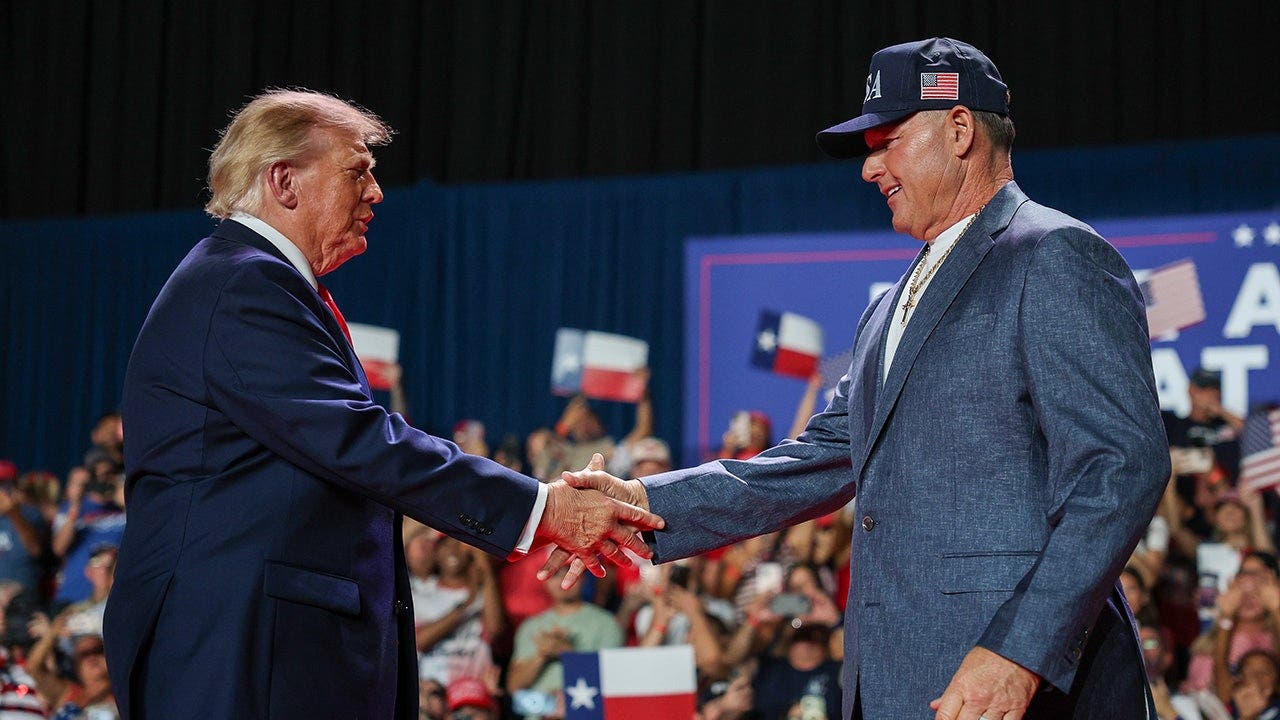
Roger Clemens walked onto the stage at San Antonio’s Freeman Coliseum on Wednesday night expecting to do something routine: introduce President Donald Trump at a Republican National Committee rally ahead of the midterm elections. What he received instead was the kind of theatrical surprise only a sitting president can orchestrate.
Trump announced Clemens would receive the Presidential Medal of Freedom — the nation’s highest civilian honor — right there on stage, in front of a crowd that included Texas Senate candidate Ken Paxton. Trump told the audience Clemens “is being given the single highest award along with the Medal of Honor.” Clemens, visibly taken aback, called himself “stunned” and said the honor “supersedes obviously anything I’ve done in my playing career.”
But the real story isn’t the medal itself. It’s what the timing and the venue reveal about how American institutions handle scandal, and how presidential power operates as a substitute for traditional gatekeeping.
The Hall of Fame Problem That Never Went Away
Clemens finished his career with 4,672 strikeouts — third all-time — and a 3.12 ERA across 709 games. He was the 1986 AL MVP, won seven Cy Young Awards, and starred on two World Series champions. By every conventional measure of pitching excellence, he belongs in Cooperstown.
He isn’t there.
The Mitchell Report, published in 2007, named Clemens as one of several star players who allegedly used performance-enhancing drugs during baseball’s Steroids Era. Despite his denial and the lack of a criminal conviction, the shadow of that report has kept him on the outside of the Hall of Fame ballot. Voters on the Baseball Writers’ Association of America panel have consistently rejected his candidacy, drawing on both the evidence and the unease surrounding it.
Trump, standing at a podium in Texas, essentially sidestepped the entire machinery. He couldn’t force the Hall of Fame to induct Clemens — that institution answers to its own voting body, not the White House — but he could confer the Medal of Freedom. It’s a workaround that turns a civic honor into a de facto rehabilitation.
What the Medal Actually Does
The Presidential Medal of Freedom has been awarded to everyone from scientists and statesmen to entertainers and athletes. It carries moral weight more than institutional authority. It doesn’t rewrite history. It doesn’t change a Hall of Fame vote. It signals, loudly and publicly, that the president believes someone deserves recognition.
That signal matters precisely because Clemens occupies a space where formal institutions have refused to extend it. The Hall of Fame has spoken — or rather, refused to speak in his favor. The federal government has not prosecuted him. The Mitchell Report investigated but did not produce charges. Clemens exists in a legal and cultural gray zone: never convicted, never exonerated, perpetually suspect.
Trump’s announcement collapses that ambiguity in one direction. By bestowing the nation’s highest civilian honor, he is effectively declaring that whatever happened on the field — or off it — does not disqualify Clemens from national respect.
The Political Geometry of the Moment
The rally took place in Texas, Trump’s home state, during a campaign swing for Republican candidates ahead of the midterms. Ken Paxton, the Texas Attorney General and a Senate contender, was seated nearby in a tightly contested race against Democrat James Talarico. The presence of a national political event layered onto a local electoral fight turned Clemens’ honor into something larger than sports.
Clemens played the part gracefully. He joked that Trump, who recited his career statistics with precision, could be his agent. He called Trump a winner. He said there was no other president he would want to receive the medal from. But the framing was unmistakable: this was a political moment dressed as a sporting one.
Trump has previously stumped for Clemens’ Hall of Fame induction, making the case publicly before. The Medal of Freedom announcement extends that advocacy into executive territory. It is both a personal tribute and a political gesture — one that rewards loyalty, reinforces cultural grievances about how baseball treated its stars, and delivers a sound bite that travels well beyond the coliseum.
Who Wins, Who Loses
Clemens wins immediate prestige. The Medal of Freedom enters his biography alongside his trophies and records, and it will be referenced in any future discussion of his legacy. It does not guarantee Hall of Fame admission — voters may view it as political interference or simply ignore it — but it alters the cultural conversation.
The Hall of Fame loses nothing structurally. Its voting process remains intact. But the episode reinforces a recurring complaint from players and fans alike: that the institution’s standards are applied unevenly and that political pressures shape who gets in and who does not.
Baseball’s Steroids Era narrative loses a bit of its moral clarity. When a sitting president honors a player implicated in that era, the stigma attached to it softens, at least in the public imagination. That may frustrate those who believe the league’s history deserves unvarnished accountability. It may encourage others who see Clemens as a scapegoat.
The Bigger Picture
Trump’s announcement is, in many ways, a mirror of how American culture increasingly handles disputes over legacy and reputation. Institutions move slowly. Courts move slowly. Social media moves fast, but it moves erratically. The presidency sits somewhere in between — capable of rapid, decisive symbolism that bypasses deliberation entirely.
Clemens called himself stunned. He said the honor was a huge privilege. He thanked the crowd. He didn’t address the Hall of Fame directly during his remarks, though Trump raised the topic himself. The medal won’t solve the lingering questions about his career or the era he played in. But it will sit beside his rings and his awards, and for many observers, it will serve as the final word.
That is the power of the gesture. And it is also its limitation. History is complicated. A medal cannot simplify it. But in American politics, symbolism often counts as resolution — at least until the next controversy arrives.