Korea Decouples From Global Rally as Foreign Selling Weighs on KOSPI
South Korea's KOSPI has shed nearly 30% from its June high while the US, Japan, and Taiwan rally — driven by 197 trillion won in foreign net selling and a structural liquidity squeeze that could ripple through EM flows.
The Disconnection Is Real
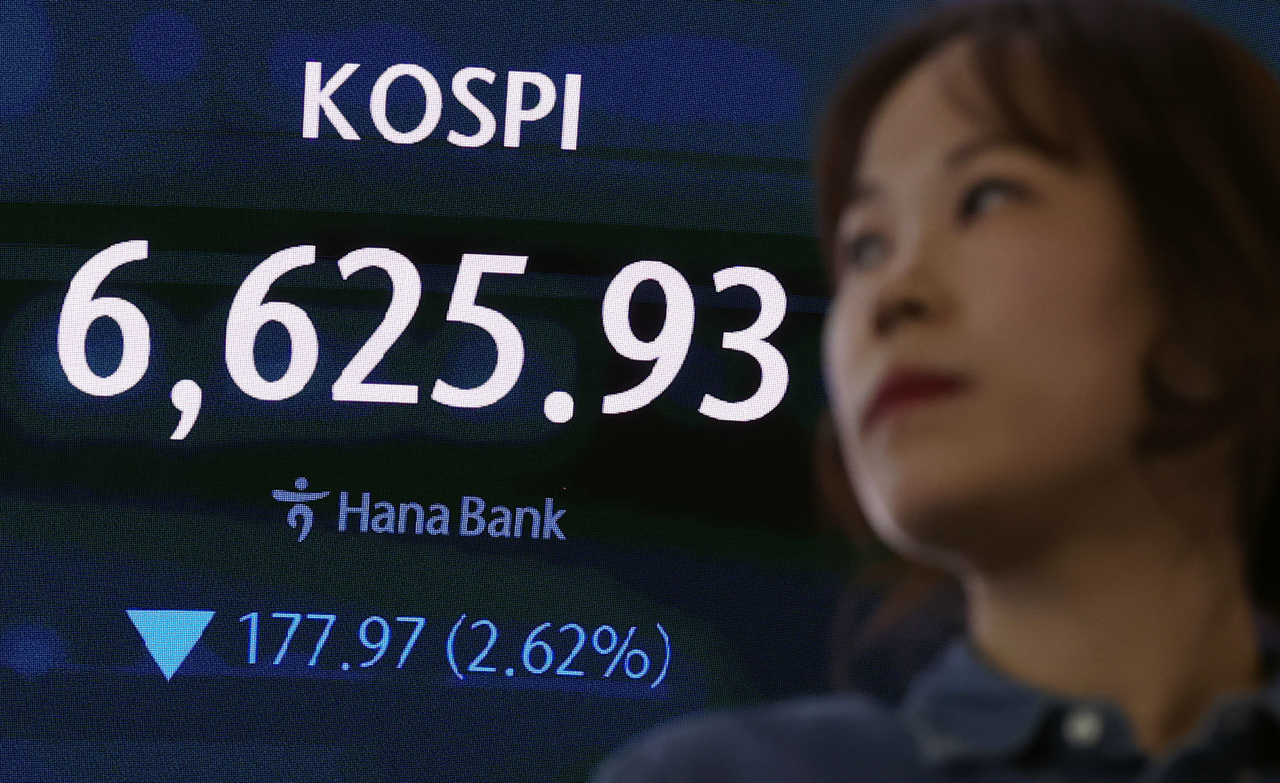
South Korea’s benchmark KOSPI closed at 6,625.93 on Oct. 8, a 2.62% drop driven by synchronized selling from foreign and institutional investors. The number itself is not unusual for a single session. What matters is the context: the index has collapsed nearly 30% from its June peak of 9,385.59, even as the United States, Japan, and Taiwan—all neighbors and trade partners—climbed to fresh highs over the same window.
Since June 22, the Nasdaq Composite rose 5.24%, hitting a record 27,599.79 on Oct. 6. Japan’s Nikkei 225 added 0.35%, reclaiming the 70,000 level after more than three months away. Taiwan’s GPCI surged 4.33% and also set an all-time closing high. The KOSPI, meanwhile, spent July briefly touching 5,000 before rebounding into the mid-6,000s—where it has remained stuck ever since.
This is not a story about weak fundamentals alone. Samsung Electronics posted its first-ever quarterly operating profit exceeding 100 trillion won this period, a landmark for any company anywhere. The stock itself rose sharply in the first half of the year, yet the broader index failed to follow. A single corporate triumph cannot carry an equity market when the water around it is draining.
Where the Money Went
The numbers are blunt. Year-to-date through Oct. 8, foreign investors sold 197 trillion won worth of KOSPI-listed shares—roughly $140 billion at prevailing rates. That is more than double the total net buying by domestic retail investors (96 trillion won) and vastly outsized to institutional (37 trillion won) and other corporate buyers (62 trillion won).
The concentration is striking. Foreign selling in Samsung Electronics alone reached 85.5 trillion won, while SK Hynix accounted for another 86.1 trillion won. Combined, those two semiconductor giants absorbed 171 trillion won in foreign net outflows—nearly 87% of total foreign selling across the entire market. For context, that single concentration means foreign investors effectively exited their positions in Korea’s two most important companies, likely locking in gains after a powerful first-half run.
Domestic liquidity tells an equally stark story. Investor trust accounts—money parked and waiting to enter the market—stand at 100.4 trillion won as of Oct. 7, down from 121.6 trillion won at the end of June. That is a withdrawal of roughly 21 trillion won in standby capital, precisely when the market needed replenishment most. “The liquidity that could lift index activity has been depleted compared to the first half,” said Kim Dae-jun, a researcher at Korea Investment & Securities. “Under these conditions, a sharp recovery in large-caps looks unlikely.”
The pattern suggests that domestic retail investors, who had flocked to equities in early 2024 on the back of strong chip-sector momentum, are now in survival mode. Trading data from the Korea Exchange shows retail participation volumes fell 18% in September compared to the same month last year—the sharpest contraction since the onset of the pandemic selloff. With trust-account balances declining and retail appetite fading, the KOSPI has lost both its institutional tailwinds and its retail floor.
Why Korea, Why Now
Several factors converge here, none of them unique to Korea but together creating a compounding effect.
Global macro conditions have hardened. The US 10-year Treasury yield breached 5% during this period, and speculation emerged about a slowdown in AI development pace—both headwinds for risk assets everywhere. Yet other Asian markets absorbed those shocks without fracturing. The difference lies in structure.
Korea’s equity market has a disproportionate exposure to semiconductors, and semiconductors are cyclical by nature. When the first-half rally exhausted itself, there was no second wave of domestic money ready to step in. Foreign investors, sensing the shift, exited ahead. The result is a market that lost its two biggest winners and found no replacement buyers on either side.
Taiwan shares Korea’s semiconductor reliance, yet the GPCI continued climbing. The divergence likely reflects differing investor bases and sector compositions—Taiwan’s index carries more advanced packaging and foundry exposure through TSMC, while Korea’s heavy weighting in memory chips makes it more vulnerable to cycle turns and profit-taking pressure. Additionally, Taiwan’s market benefits from a larger base of domestic institutional holders who absorbed foreign selling without triggering cascading exits.
Korea faces a second structural headwind: the won’s depreciation trajectory. The Korean currency weakened against the dollar through early October, reaching levels that further incentivized foreign investors to repatriate capital rather than absorb additional FX risk. A weaker won does not merely erode returns for dollar-denominated holders—it signals broader macro uncertainty that compounds selling pressure.
Second-Order Effects
The implications extend well beyond a lagging index. Korea’s semiconductor sector underpins critical segments of global electronics supply chains, from memory modules to display panels. Sustained equity underperformance can translate into reduced capital expenditure, slower R&D investment, and diminished competitiveness vis-à-vis Taiwanese and American peers.
Domestic industrial policy may face mounting pressure. The Korean government has positioned semiconductors as a national-security priority, with subsidies and regulatory support earmarked for expanded fab construction. But when the stock market punishes the very companies the policy intends to bolster, political incentives shift. Lawmakers have already begun questioning whether the pace of overseas investment by Korean chip firms—particularly into US and Japanese fabrication facilities—is draining too much domestic capital from the sector they depend on for tax revenue and employment.
Emerging-market fund flows are another channel of contagion. South Korea remains one of the largest components in most EM equity benchmarks, and systematic fund-tracking models automatically reduce allocations when a constituent underperforms its peers over extended periods. The result is mechanical selling that operates independently of company fundamentals—a self-reinforcing cycle that has already begun depressing valuations across a broader swath of Korean equities beyond the semiconductor names.
Regional investors are watching closely. Japanese institutions that maintained exposure to Korean equities through the June trough are now reassessing whether the decoupling reflects a temporary dislocation or a structural realignment of capital flows toward markets with stronger governance frameworks and more diversified sector compositions.
What Comes Next
The critical variable is foreign capital behavior. “The direction of the KOSPI from mid-October onward depends on whether foreign investors resume net buying,” said Lee Jun-young of Eugene Investment & Securities. “The scale of foreign net selling since the start of the year exceeds retail net buying by more than double.”
Institutional earnings season is underway for Q3 results, which will determine whether any sector-level rallies emerge. Companies that beat expectations could attract tactical buying, but broad index recovery requires the kind of sustained foreign inflow that has not appeared this year.
A meaningful inflection point would likely require at least one of three conditions: a decisive reversal in US Treasury yields that reduces the opportunity cost of EM exposure, a stabilization of the won that removes the FX overhang for foreign holders, or an explicit policy signal from Seoul indicating that the government will intervene to support domestic market liquidity. None has materialized convincingly to date.
The KOSPI is not in free fall. It has stabilized in the 6,600–7,000 range after its July low. But stabilization is not recovery, and recovery is unlikely without the foreign inflows that have so far stayed on the sidelines. Until they return, Korea’s market remains an island amid a regional wave—and the longer the divergence persists, the harder it becomes to explain away as a temporary anomaly rather than a structural shift.