Trump's Iran Boycott Could Ignite Spillover Risk for Korea
Washington's new secondary sanctions on Iran target third countries like China and Turkey — but Korea's economy sits in the crosshairs of a conflict it did not start. Trump's race against midterm elections is turning economic warfare into something increasingly unpredictable, and Seoul may pay the price.
The Real Target Isn’t Tehran — It’s the World
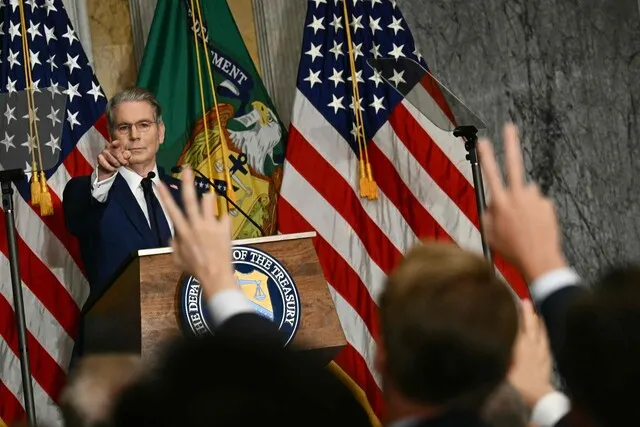
Washington announced what Treasury Secretary Scott Bessent called Operation Economic Outcast on April 24 — a sweeping second-strike sanctions regime designed to choke Iran’s economy by punishing any country that continues trading with it in five key sectors: digital assets, technology, gold, aviation, and shipping.
The stated goal is simple: close every economic lifeline Iran has left. But the real story here is who gets squeezed, and where the blowback lands first.
South Korea may not appear on Washington’s hit list today. Direct trade between Seoul and Tehran has all but vanished — down from $17.4 billion in 2011 to roughly $150 million now, largely limited to food and pharmaceuticals. Korean banks stopped handling Iranian transactions years ago after the US reimposed sanctions following the collapse of the Joint Comprehensive Plan of Action in 2018.
That makes Korea feel like a bystander. It shouldn’t.
The Hormuz Chokepoint Problem
Korea imports roughly 70 percent of its crude oil through the Strait of Hormuz. That isn’t a strategic vulnerability that vanishes because Washington decides to sanction Iran harder. It is a geographic fact that gets worse the more aggressively the US pushes against Tehran.
The Strait of Hormuz carries approximately 21 million barrels of oil per day — roughly one-fifth of global petroleum consumption. In 2023, Korea alone funneled 1.3 million barrels daily through that narrow waterway, nearly all of it destined for refineries in Yeosu, Ulsan, and Busan. When the strait tightens — and it has tightened repeatedly since 2024 — Korean refiners are the first to feel it in their input costs.
The current phase of US-Iran confrontation entered what Professor Yoo Dal-seung of Korea University calls its third stage: after initial aerial strikes and Iran’s retaliatory blockade of the strait, Washington has escalated to economic strangulation as Trump grows impatient that diplomacy isn’t producing quick results.
Every escalation raises the probability that Iran responds by further disrupting Hormuz — exactly the scenario that would hit Korea hardest, despite Korea having done almost nothing to provoke it. The second-order effect is immediate: Korean gasoline and diesel prices climb, manufacturing costs rise, and the Bank of Korea faces a dilemma between curbing inflation and protecting growth.
China Is the Linchpin — and the Ticking Clock
The sanctions regime’s effectiveness depends entirely on one question: will Washington actually enforce secondary sanctions against Chinese firms?
China’s small refining companies import an estimated 90 percent of Iran’s crude oil, backed by Chinese financial institutions. If the US threatens those entities, Beijing will almost certainly retaliate. Chinese Foreign Ministry spokesperson Lin Jian warned on the day of the announcement that China would take all necessary measures to defend its rights, calling the sanctions illegal and lacking UN Security Council authorization.
A US-China collision over Iran wouldn’t stay bilateral. Supply chains would fracture. Energy prices would spike. And Korea, sitting at the end of those supply chains, would absorb the shock.
The timing makes this especially dangerous. Trump is racing toward the November midterms, and every indication is that he views the Iran dossier as a political asset he can deploy for quick wins. When those quick wins don’t materialize — as has been the pattern across multiple escalations — the pressure seeks another outlet. The question is where that outlet opens.
There is also a structural risk that American pressure on Chinese refiners forces Iran to redirect its remaining export volume through other channels — including maritime transfers, ship-to-ship swaps, and reflagged tankers. Those alternative routes are more expensive and less reliable, which raises the baseline cost of Iranian crude even in normal conditions. That cost gets passed through the entire supply chain, and Korea’s refineries — many of which are configured specifically for Middle Eastern heavy crude — have few quick substitutes.
The Unspoken Threat: Passing Over Seoul
Professor Yoo raised a specific warning that English-language coverage has largely ignored: if Trump fails to secure a deal with Iran, he may pivot to pressuring North Korea — and use South Korea as leverage.
The mechanism is straightforward. A stalled Iran strategy gives Trump an excuse to demand more from Seoul — increased military contributions, higher defense cost-sharing, perhaps even tacit acceptance of US hardline posture toward Pyongyang. If Trump decides to “pass over” Korea in negotiations with North Korea, Seoul loses its negotiating position on the peninsula entirely.
This is not conspiracy theory. It is a documented pattern in Trump’s negotiation style: create external pressure, then demand concessions from allies who feel abandoned. The 2019 Summertimes summit in Hanoi, where Trump walked away from negotiations with Kim Jong-un without explanation, demonstrated his willingness to treat alliance management as a zero-sum transaction. Analysts at the Korea Institute for International Economic Policy noted in a June briefing that the current Iran escalation follows a familiar playbook — isolate the adversary, showcase maximum pressure, then extract alliance burden-sharing before pivoting to the next crisis.
For Korea, the implication is stark: even if Washington achieves its stated goals against Iran, the political capital generated could be used to extract concessions from Seoul on issues entirely unrelated to Tehran.
Turkey and India Won’t Comply Either
The sanctions also target Turkey and India, neither of which has shown willingness to fully comply with US secondary sanctions on Iran. Turkey maintains significant energy and trade ties with Tehran, including a natural gas pipeline that has operated continuously despite multiple US warnings. India, despite closer US alignment, continues limited Iranian petroleum purchases through complicated financial arrangements involving third-country intermediaries and barter mechanisms.
When major economies refuse to enforce Washington’s extraterritorial sanctions, the system creates uncertainty rather than compliance. Markets hate uncertainty more than they hate sanctions. The result is volatility that punches down hardest at energy-importing countries like Korea.
There is a secondary effect here that deserves attention. When the US punishes allies for trading with Iran, it implicitly questions the legitimacy of those allies’ energy procurement strategies. For Korea, that sends a uncomfortable message: your energy security decisions are subject to Washington’s approval, even when Iran isn’t your trading partner. That dynamic shifts the bargaining power firmly in America’s direction and leaves Seoul with fewer options when the next crisis arrives.
What Seoul Should Be Doing Now
The Foreign Ministry says it is reviewing the impact, which is appropriate but insufficient. Korea needs a concrete contingency plan for Hormuz disruption — not a review.
That means identifying alternative crude sources beyond the Middle East, accelerating LNG procurement flexibility, and preparing financial workarounds in case US secondary sanctions inadvertently create compliance traps for Korean firms operating in the Gulf region. Korea’s state-owned Korea Oil Corporation should be evaluating long-term supply agreements with Saudi Arabia, Iraq, and the UAE that bypass Hormuz where possible, even if the premium is higher.
The UAE has already suspended all trade and financial transactions with Iran pending further notice. That signals regional partners are bracing for disruption, not compliance. Korea should brace too.
Beyond energy, Seoul needs to prepare for the diplomatic contingency Professor Yoo described. That means maintaining open communication channels with Pyongyang that don’t depend on Washington’s tolerance, and developing a strategy for peninsula negotiations that doesn’t require US permission. It also means rebuilding strategic dialogue with Japan — not just on North Korea, but on energy security coordination in the broader Gulf region.
The Bigger Picture
Operation Economic Outcast sounds decisive. In practice, it extends American economic warfare into territory where Washington has less leverage and Korea has more exposure. The sanctions won’t collapse Iran’s economy because Beijing and Ankara won’t fall in line. But they could destabilize the energy flows Korea depends on — and give Trump cover to demand concessions from Seoul he otherwise couldn’t extract.
The midterm clock is ticking. That is the variable no one in Tokyo or Seoul is factoring in publicly, but should be. Every day of American impatience with Iran adds probability to scenarios that Seoul didn’t design and can’t control. The question isn’t whether Korea will be affected by Washington’s Iran strategy — it already is. The question is whether Seoul recognizes the exposure soon enough to prepare for it.