Trump's Iran Pivot: Peace Talk Posturing Before the Strike
Donald Trump claims productive talks with Tehran while preparing for possible escalation. The contradiction isn't confusion—it's calculated ambiguity designed to move oil markets and test regional allies.
The Message That Wasn’t Meant to Be Clear
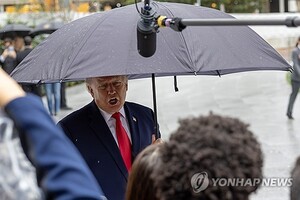
Donald Trump told reporters on November 6 that his administration is in active dialogue with Iranian representatives and that negotiations are “going very well.” The same day, he noted the United States has not lost a single soldier in the ongoing Iran conflict over the past six to seven months.
Both statements are true. Neither tells you what comes next.
The contradiction between Trump’s talk of productive diplomacy and the military posture he has built over nearly a year of tension is not an accident. It is the default posture of an American president who treats ambiguity as a negotiating weapon. The question is not whether Washington is talking to Tehran—the intelligence community already knows channels exist. The question is what position the administration wants to be in when those channels close.
What Trump Is Selling—and What He’s Hiding
Trump’s statement to the press corps before departing for Florida was carefully calibrated to achieve two objectives at once. First, he signaled to global energy markets that escalation is not imminent, which keeps crude prices from spiking ahead of any potential strike. Second, he reminded Iran that the United States can sustain a prolonged low-intensity conflict without casualties, implying patience and strategic depth.
The claim about zero military losses is the most consequential line in his remarks. It reframes a war that critics have called open-ended and unwinnable as a controlled operation with acceptable risk. That framing matters because it lowers the political cost of escalation. If no American soldiers are dying, Congress has less leverage to constrain executive action. If the public sees a clean operational record, the threshold for ordering more aggressive strikes rises only slightly.
The Oil Market Read
The source material from Union InfoMax references broader market movement on the same day—dollar strength, tech stock recovery, bond yield fluctuations. Those are symptoms of a market pricing in geopolitical uncertainty without a clear direction. Oil has been range-bound because traders cannot tell whether Trump is bluffing toward diplomacy or bluffing toward force.
That ambiguity benefits Washington. Iran’s economy is already under severe pressure from sanctions and domestic inflation. A prolonged period of market uncertainty allows Tehran’s currency to weaken and its import costs to rise without a single missile being fired. Every week of confused messaging is a week Tehran spends bracing for a strike that may never come—or may come in a form that bypasses conventional detection.
The United States gains because energy prices stay manageable while Iran’s strategic calculus grows more expensive. That is not accidental. It is the product of an administration that understands financial warfare can achieve what kinetic warfare risks compromising.
Stephen Miller’s Quiet Entrance
Trump also addressed the appointment of Stephen Miller as his new secretary of staff, praising his political instincts and management ability. The mention was brief but notable. Miller has been one of the most consistent voices in Trump’s outer circle on immigration, executive power, and strategic deterrence. His elevation to a formal staff role signals that the administration is consolidating ideological alignment at the top, not just hiring operational help.
In the context of Iran, Miller’s presence matters because he favors maximum pressure as a doctrine. He has argued for years that engagement without preconditions yields nothing. If Trump is indeed moving toward a military option, Miller will be the voice ensuring that any deal—real or performative—does not grant Iran concessions without verification. That stance makes the current diplomatic chatter look even more like theater.
Who Wins, Who Loses
The clear winner from Trump’s dual messaging is the American military-industrial complex, which benefits from sustained tension without triggering full-scale war. Defense contractors see continued procurement cycles. Regional allies like Saudi Arabia and Israel watch Washington maintain leverage without committing to an invasion.
The loser is Iran’s reform faction. Hardliners in Tehran have long argued that America cannot be trusted to keep its word. Trump’s mixed signals—peace on one channel, military readiness on another—validate that argument. Any Iranian official considering negotiation faces pressure from domestic rivals who can point to Washington’s inconsistency as proof that diplomacy is a trap.
Global markets lose liquidity. Companies operating in the Gulf region face insurance premiums that do not drop until clarity arrives. Consumers at home feel the trickle-down of energy uncertainty through vacation travel costs and holiday supply chain anxiety.
What Comes Next
Trump’s announcement that talks are progressing well likely serves one primary purpose: buying time. Time to position assets. Time to let oil inventories build. Time to ensure that if a strike occurs, it catches Tehran off-guard rather than迎击 a prepared adversary. The six-to-seven-month casualty-free record suggests the United States has already established a pattern of targeted operations that avoid broader conflict. That pattern can continue indefinitely—or it can end abruptly.
The real test will come when Trump leaves Florida. If his next public remarks shift from “going very well” to something sharper, the market will react before the strike happens. If the language stays soft while military movements escalate in the Persian Gulf, that is the moment buyers and sellers will realize the war was never about to be won through words.
The Bottom Line
Trump is not confused about Iran. He is using confusion as strategy. The United States will appear to pursue peace while preparing for war, because that posture extracts concessions without firing a shot. When the shot finally comes—or when the talks actually produce something tangible—the market will know exactly which one it is watching.
The question is whether Washington wants negotiation or leverage. Right now, it is enjoying both.