Trump Admitted He Knew Iran War Would Spike Energy Prices
Energy Secretary Chris Wright confirmed Trump knew the Iran conflict would disrupt global oil flows and raise fuel costs. The admission reframes the war as a calculated economic gamble—with midterm elections hanging in the balance.
The Admission
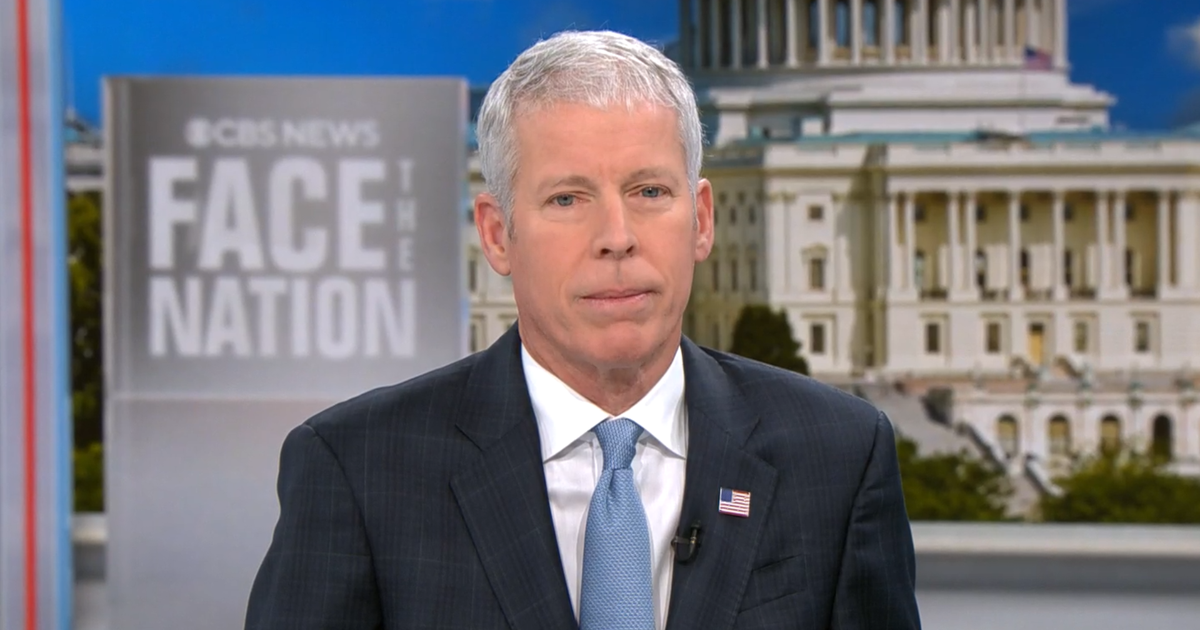
Chris Wright did not mince words on Sunday. Speaking on Face the Nation, the Energy Secretary confirmed that President Trump entered the Iran conflict fully aware that energy flows would be disrupted and fuel prices would surge. Trump’s calculus, as Wright described it, was blunt: accept the short-term pain, bet on a longer-term strategic win, and trust that markets would correct before voters noticed.
“He knew it was going to elevate energy prices in the short run,” Wright said. “I’m going to take a hit there, but I got to do the right thing.”
The phrasing matters. This was not a case of surprise escalation or miscalculation. It was a decision made with eyes open—and that changes how the rest of the world should read the conflict going forward.
What This Means for Global Markets
Diesel has touched $6.50 a gallon in recent weeks. Farmers feel it first. Then construction companies. Then the food banks that depend on diesel trucks to move donations. Gasoline has been climbing too, though not as dramatically. The agricultural sector, already squeezed by inflation, now faces a direct hit to its operating costs.
Wright expects relief. He pointed to rising supplies through the Strait of Hormuz, growing U.S. gasoline production, and the seasonal slowdown in summer driving demand. Diesel, he noted, has already dropped about 20 cents in recent days. He forecast prices falling below $6 before long, though he could not pin down a timeline.
The G7 agreed last week to release 100 million barrels of fuel over four months. Wright called it a “big deal.” Europe, which stores large diesel reserves precisely because it cannot refine enough for its own economy, is expected to receive a significant share of American diesel shipments. The logic is straightforward: replace lost flows from the Gulf with flows from Texas and the Gulf Coast.
But the release is not infinite. One hundred million barrels over four months is meaningful but modest against daily global consumption of roughly 100 million barrels. It is a buffer, not a solution.
The Export Ban Question
Perhaps the most consequential detail from Wright’s interview was what he did not rule out. When asked whether Trump had abandoned the idea of a diesel export ban, Wright’s answer was characteristically evasive: the president throws out ideas every day, and the discussion is ongoing.
An export ban on American diesel would be a dramatic escalation. It would signal that the administration prioritizes domestic price relief over alliance commitments—a move that would unsettle European leaders who have come to rely on U.S. fuel shipments to fill the gap left by Russian sanctions and reduced Chinese deliveries. It would also complicate the G7 coordination Wright praised just days earlier.
Wright suggested the president’s constant public pressure on energy prices may have actually helped secure the G7 deal. Whether that logic holds if an export ban materializes remains unclear. Markets tend to punish uncertainty, and Trump’s rhetoric around diesel is exactly that.
The Political Gamble
All of this unfolds against a midterm election backdrop. Republicans face a tough environment. Energy prices are a visceral issue for voters—unlike sanctions policy or nuclear negotiations, a trip to the pump is impossible to ignore. Wright’s confidence that prices will fall within four weeks reads less like an economic forecast and more like a political strategy: get through November, let the corrective dynamics do the work, then reassess.
But Wright also refused to say whether Trump plans to escalate militarily after the midterms. He described the president as “always planning for contingencies” and keeping both diplomatic and military tracks open. That ambiguity is itself a tool. Allies do not know where the ceiling is. Adversaries do not know where the floor is. Both are left guessing.
The Bigger Picture
The most important implication of Wright’s comments is not about diesel prices or G7 stockpiles. It is about precedent. The Trump administration has now publicly acknowledged that it launched a military conflict with full knowledge of the energy supply consequences—and accepted the economic fallout as a deliberate cost of doing business.
That framing normalizes energy disruption as a tool of statecraft. If the United States can enter a conflict knowing it will spike global fuel prices and weather the domestic backlash, what signals does that send to other powers about the acceptability of targeting energy infrastructure? The answer matters for markets, for alliances, and for anyone who relies on predictable energy flows.
Wright also framed the conflict as reversing “years of policies directed exactly the opposite—to shrink our ability to produce, refine, and deliver hydrocarbons.” The message is clear: the administration sees energy independence as both a strategic asset and a weapon. How that weapon is deployed—and whether it is deployed consistently with alliance commitments—will define the next phase of the conflict.
What Comes Next
The immediate question is whether diesel reaches $6 per gallon before November. Wright says yes. The data so far supports cautious optimism, but the Strait of Hormuz remains a chokepoint, and any escalation there could erase weeks of gains in hours.
The broader question is whether the G7 release mechanism becomes a standing tool or a one-time intervention. Europe’s diesel storage strategy, built to handle Russian supply disruptions, is now being tested against a different kind of shock. The alliance is learning in real time how interdependent energy security has become—and how fragile that interdependence can be.
And then there is the export ban. Wright will not confirm it is off the table. Trump continues to float ideas. Markets will keep pricing in the risk.
The admission that Trump knew the costs upfront is significant. It means the war is not an accident of escalation. It is a choice—and the bill, whatever Wright says, is still being paid.