Trump's LA Threat to Iran Is Not a Joke — It's a Deterrence Test
Donald Trump's remark that Iran could 'destroy Los Angeles' as a small price for peace is reshaping how Washington thinks about deterrence in the Persian Gulf. The backlash from California officials and Republican candidates reveals a fracture that goes deeper than election politics.
The Remark That Unlocked a Strategic Debate
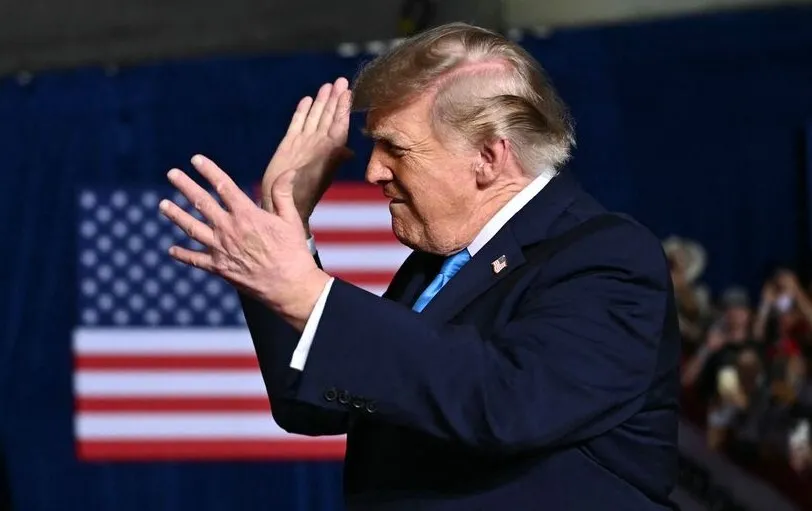
Donald Trump did not say this in a private briefing. He said it on a stage in Grand Island, Nebraska, at a campaign rally, while early voting was already underway for the midterm elections. The line was simple and incendiary: if Iran chooses to destroy Los Angeles or San Diego in a conflict, so be it — it is a small price, and the war will be over soon anyway.
He framed wartime inflation the same way — artificial, elevated, but manageable. The underlying message, however it lands, was unmistakable. In Trump’s framing, the preservation of broader US strategic position in the Persian Gulf outweighs the protection of specific American urban centers. That is not nothing. It is a statement about hierarchy of values in American national security doctrine, and it has forced every California politician, from Gavin Newsom to local Republican congressional candidates, into an uncomfortable public reaction.
What Trump Actually Said — and What It Implies
The full context matters. Trump was speaking about a hypothetical war with Iran, describing how costs would be distributed. He argued that the world and US defenses would remain secure, that Iran has no navy, no air force, no money, no nuclear weapon — and therefore the US has more to gain than to lose. LA destruction, in this calculus, is collateral.
The White House press secretary, Steven Cheung, pushed back hard against the fallout the next day, calling media reactions exaggerated and arguing Trump had actually been making the opposite point: that because of Trump’s deterrence posture, Iranian cities were the ones under threat, not American ones. Cheung’s defense reframed the remark as deterrence logic rather than willingness to accept civilian casualty. But the text of what Trump actually said on that stage does not support the softer reading.
This is the central problem with provocative deterrence rhetoric. Once a president says a specific American city can be sacrificed, allies and adversaries alike will remember it, regardless of how spokespersons later recast the moment.
The 25th Amendment Question Is Not Paranoia
Governor Gavin Newsom did not mince words. He told The Hill that Trump is not sane and is dangerous, and that the 25th Amendment should be invoked. Newsom’s reference was to Section 4 of the amendment, which allows the vice president and a majority of the Cabinet to declare the president unable to discharge duties — even against the president’s will. It has never been used this way in American history. But the threshold it sets is deliberately vague: inability to discharge duties can arise from physical or mental conditions.
The political consequence of Newsom raising it is significant. A sitting governor of the most populous state, invoking a constitutional mechanism to remove a president, is not routine. It signals that at least one major Democratic figure considers Trump’s rhetoric about LA destruction to cross a line into genuinely unstable judgment.
Whether Trump’s comment demonstrates genuine instability is debatable. Whether it demonstrates a willingness to treat American civilian populations as acceptable loss in geopolitical calculation is not. Both readings coexist in the same moment, and both will matter depending on who controls the narrative going into the next election cycle.
The Republican Crisis in California
Perhaps the most revealing dimension of this episode is what it has done to Republican candidates running in California. The state is structurally Democratic at the statewide level but contains competitive House districts, particularly in the Southern California region around San Diego. Those are the districts where the cost of Trump’s remark falls most directly on Republican incumbents and challengers alike.
Jim Desmond, a Republican candidate for Congress near San Diego, used X to distance himself from Trump’s language, saying firmly that no American city should be abandoned and no family treated as acceptable collateral. He did not stop there. He framed the commander-in-chief’s first responsibility as protecting American citizens and territory — an implicit rebuke that reached further than his words alone might suggest.
Kevin Kiley, another Republican House candidate in a Northern California competitive district, called Trump’s remarks unhelpful. The adjective matters. He did not condemn the substantive claim about deterrence; he condemned its political utility. That distinction — between moral disapproval and tactical disapproval — runs through much of the Republican response.
Deterrence, Credibility, and the Psychology of Alliances
The deeper issue here is about deterrence itself. Classical deterrence theory holds that threats must be credible, proportionate, and communicated clearly. The problem with Trump’s version of this logic is that it is so loudly communicative that it undermines rather than strengthens deterrence. When you tell an adversary that you will tolerate the destruction of your own largest city, you are simultaneously telling them that their threshold for aggression is lower than they might have calculated — and telling your allies that you may prioritize strategic gains over their security.
Gulf allies, particularly Saudi Arabia and the United Arab Emirates, watch this kind of rhetoric with acute attention. They are not Los Angeles. But they are asking themselves the same question that California Democrats are asking now: what happens when American strategic calculations treat allied or partner populations as secondary considerations? Trump’s comment did not name a Gulf city. It named an American one. The implication for allies is worse precisely because it was not filtered through diplomatic language.
Why This Matters Beyond the Midterms
The immediate political stakes are obvious. The midterms are days away, and California’s electoral weight — 54 electoral votes, a massive Democratic base — makes anything that looks like abandonment of the state politically toxic. Newsom’s 25th Amendment reference, whether operational or rhetorical, inserts a constitutional question into an election cycle that was already volatile.
But the longer-term strategic consequences are more consequential. A president who publicly entertains the destruction of a major American city as acceptable trade-offs changes the psychology of deterrence globally. Adversaries will note the willingness to absorb catastrophic loss. Allies will note the willingness to impose catastrophic loss on others. That ambiguity is either a sophisticated strategic signal or a dangerous diplomatic failure — and the line between the two depends entirely on whether the stated position can be reversed when convenient.
Trump’s supporters will argue that deterrence works precisely because it is unpredictable. Opponents will argue that deterrence requires consistency, clarity, and mutual restraint — and that treating civilian populations as bargaining chips erodes the very norms that make deterrence sustainable.
The Unanswered Question
What remains unresolved is whether Trump’s rhetoric reflects a genuine strategic assessment or a campaign tactic designed to project toughness on Iran. The White House defense insists the former. The scale of the backlash suggests many observers believe the latter — or at least that the collision between the two is irrelevant because the political damage is already done.
Either way, one fact is certain: the comment has forced a public conversation about something most American presidents try to avoid discussing openly. What would a war with Iran actually cost? Which cities are expendable? And who decides?
Those are not campaign questions. They are national security questions. The fact that they are being asked in public — and not by the president — is itself a signal about where American deterrence credibility currently stands.