Inside the Trump Media Ban Ruling: What It Means
A federal judge blocked Trump from banning CNN, Politico, and MSNBC from the White House. The ruling exposes how executive overreach gets dressed in national security language, and reveals the fragility of press access in America.
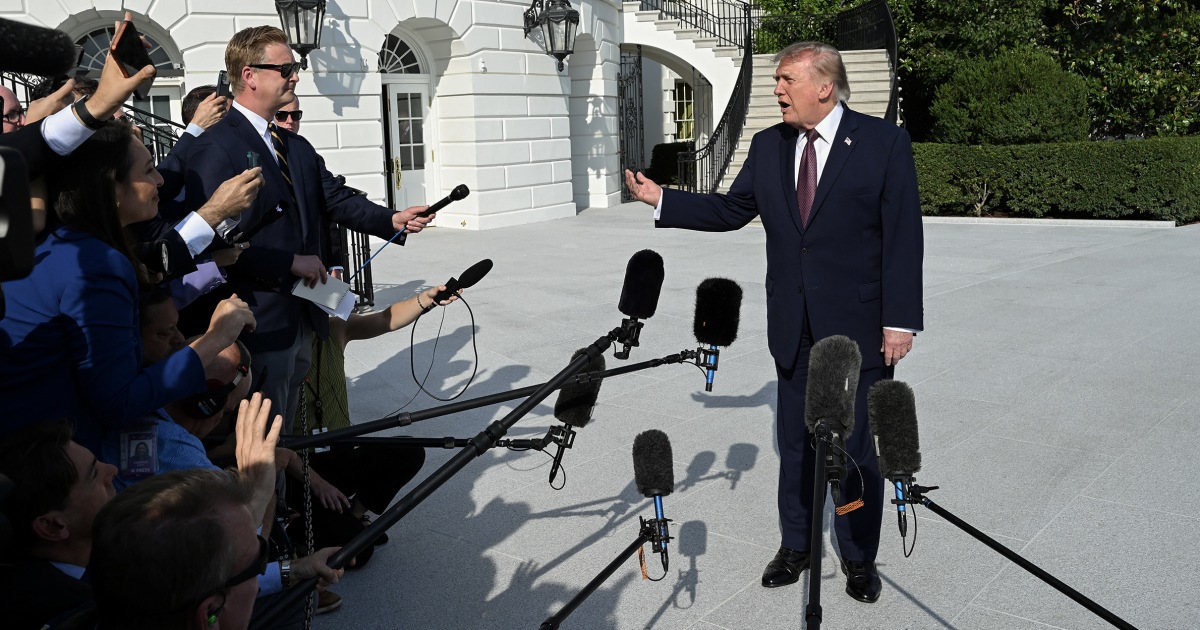
The Ban Was Never About National Security
Federal Judge Timothy Kelly saw right through it.
In a 26-page opinion issued late Tuesday, Kelly blocked the Trump administration from enforcing a ban on CNN, Politico, and MSNBC at the White House complex — and he made clear his reasoning hinged on something far more mundane than national security: displeasure.
The administration had pivoted hard to national security arguments after the fact, with the Justice Department insisting the banned outlets posed a threat. Kelly was unconvinced. “There is practically nothing national security-related in the record connected to the President’s decision to revoke Plaintiffs’ hard passes to which the Court can defer,” he wrote.
The evidence spoke for itself. Trump had announced the bans on Truth Social on September 18, calling the outlets purveyors of “FAKE NEWS” and “FICTION and LIES.” He later told Time magazine he banned them because he was tired of “bad story after bad story” and felt he should not “be forced to bear” reporting he considered unfavorable — language Kelly’s attorney, Ted Boutrous, neatly characterized as a confession.
“President Trump, I’ll give him credit,” Boutrous said after the ruling. “He’s not hiding it.”
But the real story here isn’t just that Trump admitted motive. It’s that he did so repeatedly, publicly, and in a way that made judicial review almost inevitable. The administration then tried to dress that naked hostility in security-language, and Kelly simply refused to buy it. That dynamic — executive impulse followed by legal rationalization — is not unique to this moment. What makes it notable is that a court of record has now formally separated the two.
Who Wins, Who Loses
The three news organizations win a tactical victory, at least. Kelly’s preliminary injunction restores hard-pass access for 78 credentialed journalists to the White House complex — but not to the Oval Office or Air Force One, where the administration continues to block them. It’s a partial return to normal that underscores how selectively access is being managed even within a ruling that favors the press.
Kelly also found that the administration violated the journalists’ due process rights under settled D.C. Circuit precedent, rebuffing the White House’s argument that those prior appeals court decisions were wrong. “Maybe — but this Court is bound by D.C. Circuit precedent, full stop,” he wrote.
Trump has already vowed to appeal. The White House has not responded to requests for comment.
What’s worth noting about the scope of Kelly’s ruling is what it leaves untouched. Even under the injunction, certain presidential spaces — specifically the Oval Office and Air Force One — remain off-limits to the banned outlets. That means the administration retains a functional tool: it can grant or withhold access on a case-by-case basis without triggering immediate judicial intervention. The ruling is a shield, not a blanket guarantee.
The Pool System Is the Hidden Stakes
Here’s what English-language coverage of this case has largely missed: the collateral damage to the White House pool system.
Last week, the Justice Department announced it was investigating five major TV networks, including CNN and NBC, for potentially violating federal antitrust laws. The trigger? When the three outlets were banned, they declined to participate in pool coverage of Trump’s public appearances — a rotating arrangement where one network records a president’s activities and shares the footage with others. Several networks walked away from their pool duties in protest, disrupting the flow of presidential imagery to the public.
That’s the quiet casualty here. The pool system is an informal but vital infrastructure for American democracy — it ensures that every major network can cover the president without duplicating effort, and that the public gets consistent access to presidential activities regardless of which outlet they watch. When outlets treat pool participation as conditional on their own access, the system fractures. And when the government responds by investigating those outlets for antitrust violations, it flips the script: the press becomes the accused, not the defender of a First Amendment right.
The antitrust angle deserves special attention. The Justice Department’s theory would treat a collective refusal to pool — a coordinated protest — as a conspiracy to restrain trade. That sets a precedent with chilling implications. If a group of news organizations can be sued for choosing not to share footage, then the traditional tools of press solidarity become legally risky. It’s one thing to ban a reporter. It’s another to make it illegal for reporters to refuse to cooperate with each other in solidarity.
This is a second-order effect that extends well beyond the three banned outlets. Any future administration could deploy the same leverage: restrict access, provoke a coordinated response, then pivot to antitrust enforcement. The tool is now visible.
What Happens Next
This case is far from over. A preliminary injunction is not a final ruling on the merits — it’s a temporary measure meant to preserve the status quo while litigation proceeds. Trump’s team will appeal, likely to the D.C. Circuit, and the legal battle could stretch for months or even years.
But Kelly’s opinion does something significant: it puts the administration’s national security rationale on the record and finds it wanting. Future courts, and the public, now have a judicial opinion stating that the bans were motivated by viewpoint discrimination, not security concerns. That matters beyond these three outlets. It establishes a factual baseline that any future administration will have to work around.
Kelly also carefully noted that his ruling doesn’t concede Trump’s concerns about accuracy are unfounded, or that the government is powerless when classified information is unlawfully disclosed. The door remains open for legitimate security-based restrictions — but the bar, as Kelly set it, is substantially higher than the administration cleared it this time.
Another development to watch: the pool system’s fragility was exposed in real time. If pools continue to break down, courts may be asked to rule on whether the government can compel participation — a question that sits at the uncomfortable intersection of antitrust law and First Amendment rights. Neither doctrine was designed to answer that question, and the fact that it’s now on the table is itself a signal of institutional strain.
The Bigger Picture
What’s unfolding in D.C. is a live experiment in how institutional checks respond to executive overreach in real time. The judiciary is holding the line. The press is testing its willingness to absorb retaliation. And the public is watching — through whatever pool feeds remain available.
But the deeper question this case raises is about institutional memory. The White House press corps operated under norms that had been tested and reinforced over decades — norms about access, about non-retaliation, about treating press credentials as a logistical matter rather than a reward for loyalty. This administration has been explicitly testing whether those norms are enforceable or merely customary. Kelly’s ruling says they are enforceable. But a preliminary injunction is only as strong as the institution behind it. If the executive branch chooses to comply grudgingly, to limit the scope of access within the letter of the ruling, the press will find itself in the same position next week, next month, next year.
The pool system, once taken for granted, now looks like the canary. Its vulnerability tells us something about the health of an institution that no one thought needed defending — until the moment it cracked. What happens next will depend not on courts alone, but on whether the press and the public treat these norms as permanent or provisional.
The real question isn’t whether Trump will appeal. It’s whether the mechanisms that protect press access can survive repeated challenges, and whether the pool system — that unglamorous backbone of presidential coverage — can endure when its participants start treating access as negotiable rather than guaranteed.