Trump's No-Regrets Stance on Iran War Signals a Longer, Costlier Conflict Ahead
Donald Trump has doubled down on the Iran war, refusing to express regret even as diesel prices hit $6 a gallon and his approval ratings hit a low. The real story is the widening gap between his political promises and his own defense establishment's long-war planning.
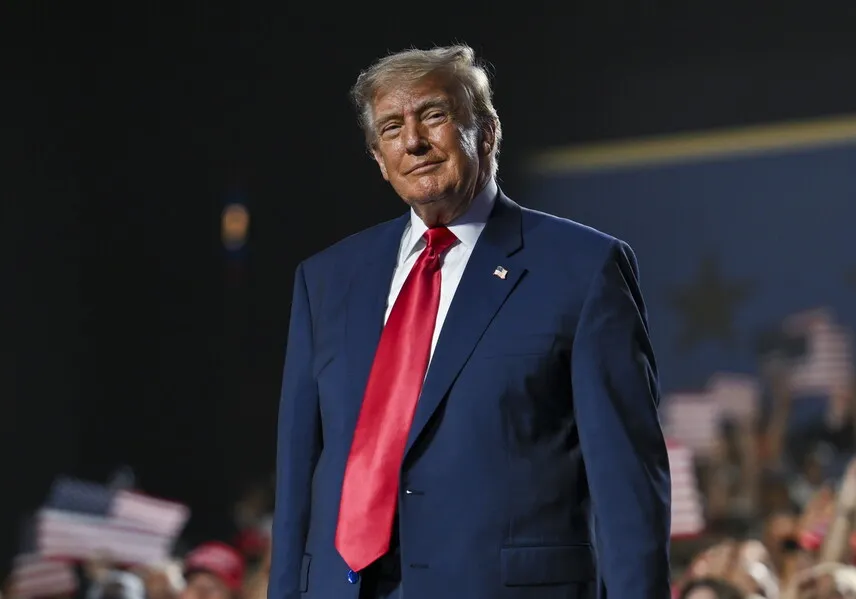
Trump Has Drawn a Line — and It Runs Through Rising Fuel Costs and Falling Approval Ratings
Donald Trump did not mince words at the Republican National Convention in Dallas last week. Asked by Laura Ingraham whether he regretted the war against Iran, his answer was a flat refusal to even entertain the concept. “I don’t believe in the word regret,” Trump said. “If I were to do it again, I would do exactly the same thing.”
The remark landed on a day when American diesel prices cracked above $6 a gallon for the first time in history — a 61 percent jump from late February, when hostilities in the Middle East began. It is a number that does not distinguish between Democratic and Republican voters. Truckers in red states and urban commuters in blue ones feel the same pain at the pump. In Montana, farmers who already operate on razor-thin margins are calculating whether to fallow acreage rather than pay to haul harvest to market. In New Jersey, suburban parents are rerouting school runs to avoid congestion while burning through tanks faster. The cost of movement, across every sector of the American economy, has risen in lockstep with the conflict’s duration.
What Trump’s declaration makes clear is not simply that he feels no remorse. It is that he is prepared to absorb whatever political cost comes with sustaining a military campaign that has already destabilized energy markets and eroded his standing at home. More significantly, it signals a willingness to reframe the war not as a liability but as a cornerstone of his foreign policy legacy — one he intends to defend regardless of how the data looks at the ballot box.
The Contradiction at the Heart of the White House
The more intriguing detail emerged not from Trump himself but from the infrastructure around him. On the same day he told Ingraham the war would end immediately after the midterm elections — and that oil prices would plunge — reports surfaced that the Department of Defense and his own military advisers are preparing for a protracted conflict extending into 2029.
Two narratives cannot occupy the same Oval Office. One is a campaign promise designed to defuse voter anger before November. The other is a contingency plan acknowledging that the military reality on the ground does not match the political calendar. Pentagon documents obtained by reporters indicate that force posture adjustments, including the redistribution of carrier strike groups and the prepositioning of munitions in Qatar and Kuwait, were approved months ago under timelines that assume no resolution before 2027 at the earliest.
This contradiction matters far beyond Washington. International allies watching the United States try to reconcile a short-war promise with a four-year war plan will recalibrate their own strategic assumptions. Japan is accelerating its own defense spending beyond the 2 percent GDP target it had quietly committed to. Germany is revisiting energy supply agreements with Azerbaijan and Norway that were on hold during the initial crisis phase. NATO partners are wondering whether Article 5 consultations should account for a conflict the United States treats as open-ended.
Adversaries will note the gap. Iran’s military commanders, observing the disparity between American political rhetoric and military preparation, have likely concluded that prolonged attrition favors their position. Regional proxies — from Hezbollah in Lebanon to Houthi operatives in Yemen — are adjusting their own timelines accordingly, testing whether the United States will commit resources to multiple theaters simultaneously or draw lines that reveal its constraints.
Neutral parties will question whether American commitments are anchored in policy or in polling. That uncertainty is itself a strategic liability. Capital flows toward markets perceived as stable; when the world’s largest economy appears to be operating on two incompatible timelines, investors price in a risk premium that no single policy shift can easily dispel.
Who Wins, Who Loses
The winners from Trump’s hardline posture are limited and specific. Hawks within the Republican base see their leader standing firm — a performance that may stem the bleeding among voters who supported the initial strikes on Iranian nuclear facilities. Trump argued that his supporters remain proud of preventing Iran from acquiring a nuclear weapon, dismissing concerns that the war has damaged morale. Exit polls from primary states suggest he is not entirely wrong about this coalition. But primary voters and convention delegates do not determine general election outcomes, and the base that cheered the opening strikes is not the same demographic that fills out ballots in swing districts where commuting costs matter more than deterrence credibility.
But the losers are broader and more expensive. American consumers already absorbed a 61 percent increase in diesel prices. Global markets are pricing in the possibility of extended Middle East instability, with crude briefly touching $100 a barrel earlier in September before retreating on speculation of strategic reserve releases. Shipping routes that depend on Persian Gulf transit face continued risk premiums that are being passed through to consumer goods — electronics, pharmaceuticals, and agricultural inputs all carry higher logistics costs now. Allies from Japan to Germany are recalibrating energy import strategies without clear guidance from Washington about how long the disruption will last.
The second-order effects are mounting. Airlines facing elevated jet fuel costs are trimming capacity on transatlantic routes. Freight companies are raising rates on last-mile delivery, which disproportionately affects rural communities already dependent on trucking. The Federal Reserve, watching inflation reintroduce itself through the energy channel, faces a dilemma: tightening further risks deepening a slowdown that the war itself helped trigger, while holding steady risks anchoring expectations at levels that could become self-fulfilling.
Domestically, Trump’s approval ratings have dropped to their lowest point since taking office, according to multiple polls cited in Korean media reporting on the convention. Independent voters, who historically decide midterm outcomes, are expressing skepticism not about the war’s original justification but about its trajectory — whether the investment of blood and treasure is yielding commensurate returns. The war that was sold as a swift, decisive action is now a cost center that no faction fully supports, and that kind of consensus failure is toxic for the party in power.
What Happens Next
The midterm elections create a strange incentive structure. Trump has publicly promised the war will end after November. Defense officials are planning for 2029. If the president delivers on his promise quickly, he gains a political win but potentially compromises military objectives and alienates the defense establishment whose support he needs for any further operations. Contractors who have scaled up production based on extended deployment forecasts will face cancellations or delays. Service members who signed up for longer tours will confront an abrupt pivot that complicates retention.
If he does not deliver — and the 2029 timeline suggests the Pentagon does not expect to — then the backlash from both sides of the aisle intensifies. Voters who wanted quick action feel betrayed. Voters who opposed the war from the start see vindication. Markets that priced in a resolution face renewed volatility. The dollar, already under pressure from divergent monetary policies abroad, could weaken further if confidence in American strategic direction erodes.
Energy analysts should watch two signals closely: whether the Department of Defense releases any revised force posture statements before November, and whether Trump’s rhetoric softens or hardens in the weeks leading up to the midterms. A shift toward the 2029 planning timeline would be a clear signal that the short-war narrative was always electoral mathematics rather than strategic assessment. Conversely, a visible winding down — troop rotations, base closures, public statements from defense officials confirming drawdown — would validate the political promise and potentially stabilize energy markets ahead of the election.
There is also the question of what happens after the midterms, regardless of outcome. If Democrats gain ground, Trump will face a Congress unwilling to fund an open-ended conflict, creating a constitutional friction that has not been tested at this scale since the Vietnam era. If Republicans hold or expand their majority, the political constraint on continuation weakens, but so does the incentive to pretend the war is finite — meaning the 2029 plan becomes the explicit plan rather than the silent one.
One thing is certain. Trump’s refusal to express regret is not a temporary political calculation. It is a declaration that the United States will not step back from its current military posture regardless of domestic pressure or global market disruption. The question now is not whether the war continues — it is what happens when the political promise of an end collides with the military reality of a long fight. And when that collision occurs, the losses will be measured not just in dollars at the pump but in the credibility of American leadership on every issue that follows.