Trump's Shadow Sanctions Threat Is Already Reshaping Global Banking
Trump signaled a second wave of sanctions on Chinese banks without confirming whether they're already in motion. The ambiguity itself is the weapon — and it's forcing every major bank with China-Iran exposure to play defense.
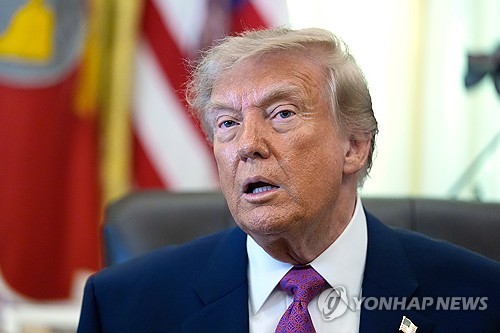
The Threat That Already Feels Like a Weapon
Donald Trump did not announce new sanctions on Chinese banks. He did something more useful.
On August 27, when reporters at the White House pressed him on why Beijing’s financial institutions were still operating with what the US sees as impunity on Iran trade, Trump simply asked: Who told you I wasn’t doing anything? I don’t need to announce everything. And then, almost as an afterthought: Aren’t I right?
The effect was immediate and disproportionate. Chinese banks now face the possibility of punishment for activity that may already be sanctioned — or may be about to be. The ambiguity is not a policy gap. It is the policy.
What makes this moment distinct from previous administrations’ approach to Iranian financial flows is not the substance — the US has always viewed Chinese bank involvement in Tehran’s energy sector as a problem — but the deliberate maintenance of uncertainty about enforcement timing. Previous officials built cases, held briefings, and published designation lists. This approach operates through what could be called anticipatory deterrence: making targets police themselves before any official action occurs.
The Broader Campaign You May Have Missed
Four days earlier, Treasury Secretary Scott Bessent unveiled what the White House internally called an economic ostracism campaign — a coordinated effort to cut off Iran’s remaining financial lifelines. The publicly released framework notably excluded explicit mention of Chinese financial institutions. But Bessent’s language was deliberate: no one escapes the reach of US sanctions.
That line was understood everywhere. It just left the mechanics deliberately vague.
Iran’s largest trading partner is China. Chinese banks have handled billions in energy transactions that skirt Western restrictions. The US has known this for years. What has changed is the administration’s willingness to make the threat more destabilizing by keeping its timing opaque.
AFP noted the implication directly: the Trump administration appears to be preparing targeted sanctions against Chinese banks linked to Iran, a move that would significantly intensify America’s isolation campaign against Tehran.
The economic ostracism framework Bessent outlined represents something larger than a single sanctions round. It signals a doctrinal shift toward treating financial intermediation as a strategic vulnerability rather than merely a compliance issue. When the US Treasury frames its approach as ostracism rather than enforcement, it is explicitly acknowledging that the goal extends beyond punishing specific actors to reshaping market behavior through perceived risk.
Beijing’s Response Was Predictable — and Revealing
Chinese Foreign Ministry spokesperson Lin Jian did not mince words on August 28. Illegal unilateral sanctions, he said. China’s position is consistent and clear. On Iran, dialogue and negotiation remain the only path.
The word unilateral is doing heavy lifting here. China has spent years building the opposite narrative — that the US is the nation imposing extra-territorial jurisdiction on global commerce. Beijing’s anger is real but also performative. The Chinese government understands exactly what is happening. Its diplomats are simply keeping the official record clean while their banks scramble to comply.
That scramble is where the actual story lives.
What Lin Jian’s statement omitted was as telling as what it included. There was no mention of concrete retaliatory measures, no indication that China would challenge US jurisdiction in international forums, no signal that Beijing would pressure Chinese banks to maintain existing transaction volumes. The absence of actionable countermeasures suggests the Chinese government recognizes the structural advantage Washington holds in dollar clearing systems and is choosing diplomatic friction over economic confrontation.
Who Is Actually Punished First
The banks most exposed sit at the intersection of three systems: US dollar clearing, Chinese trade finance, and Iranian energy flows. Major players include Bank of China, Industrial and Commercial Bank of China, and various regional lenders that have facilitated Iranian crude purchases through third-country routing.
None of these institutions want to be the first case study. That means they are now likely tightening their own compliance standards preemptively — reducing Iranian transaction volumes, increasing documentation requirements, and quietly redirecting business away from the highest-risk corridors. The sanctions do not need to land officially for them to change behavior.
This is the shadow sanction effect: compliance without conviction, risk reduction without declaration.
Regional Chinese banks present an even more acute problem. While the state-owned giants have compliance infrastructure and legal teams capable of assessing exposure, smaller lenders operating in border provinces with Iran and Central Asian trade routes may lack similar resources. These institutions are likely to face the steepest decisions: exit Iranian markets entirely, absorb the cost of enhanced due diligence, or gamble that Washington’s attention remains focused on the largest players.
What This Means for Allied Banks
European and Japanese banks have been watching Washington’s Iran posture shift for months. The second-wave threat against Chinese lenders sends a clear signal: the US is preparing to widen its financial perimeter beyond traditional targets. Any institution — regardless of nationality — that maintains meaningful Iranian trade exposure through Chinese correspondent relationships should assume it is next in line.
The practical impact is already measurable. Several major global banks have reportedly begun internal reviews of their Chinese-Iranian transaction chains. Some have paused new commitments while legal teams assess exposure. The speed of that review cycle will determine which institutions are caught flat-footed when the next announcement drops.
For European lenders, the calculus carries additional complexity. The EU has maintained its own position opposing secondary sanctions on Iranian trade, yet individual member states and banks often operate at cross-purposes with Brussels’ diplomatic stance. German banks with energy sector relationships, French institutions with Middle East trade connections — all now face the dual pressure of US enforcement risk and domestic political constraints.
Japanese banks occupy an even narrower position. Tokyo has historically balanced US alliance demands with pragmatic engagement across the region. The current environment leaves little room for that balancing act when American enforcement threats target the very intermediaries Japanese lenders depend on for regional clearing.
Second-Order Effects Already Erupting
The shadow sanctions campaign is generating consequences beyond the banks directly in Washington’s sights. Insurance markets are pricing in elevated risk for energy shipments routed through traditional Iranian channels. Shipping firms are reassessing port calls at Iranian terminals. Even commodity traders without direct banking relationships are adjusting positions as market participants tighten credit lines.
The yuan-denominated trade settlement system China has been building as an alternative to dollar clearing is likely to see increased adoption — not because of ideological alignment but because banks need alternatives that do not carry the same enforcement risk. This accelerates a longer-term trend toward financial multipolarity even as the immediate impact reinforces dollar dominance through fear.
Smaller nations with Iranian trade relationships — including Pakistan, Iraq, and several Central Asian republics — are now facing pressure from multiple directions. Their banks must navigate Washington’s threats, Beijing’s economic leverage, and Tehran’s political demands simultaneously. The resulting uncertainty creates opportunities for intermediaries who can structure transactions that satisfy all three centers of gravity.
Why This Matters Beyond the News Cycle
The Trump administration’s approach to Iran sanctions represents a fundamental recalibration of how the US projects financial power. Rather than building a case, announcing it, and watching enforcement follow, the strategy now operates through calibrated ambiguity — applying pressure before confirmation, forcing markets to price in worst-case scenarios.
This method is efficient in the short term. It creates maximum disruption with minimum administrative overhead. But it also degrades the predictability that global financial markets depend on. When the threat of sanctions is as important as the sanction itself, compliance becomes a guessing game rather than a rule-based system.
Chinese banks are the immediate target. But the precedent stretches further: if ambiguity about enforcement can achieve compliance gains, the model is replicable across other adversarial relationships and financial corridors. Russia, Venezuela, North Korea — all have experienced variations of this approach. The innovation here is the willingness to keep the threshold intentionally模糊, creating a environment where targets police themselves.
The Next Move
China’s response has been diplomatic rhetoric. Its banks’ response has been quiet risk reduction. The next measurable event will be specific. A Treasury advisory, a blocked transaction, a correspondent relationship terminated. Any of those signals would mark the transition from threatened to enforced.
Until then, the market is already moving. Banks are pricing the risk. Traders are adjusting positions. And the question is no longer whether additional Chinese institutions will face consequences but which ones and when.
Trump made that timeline everyone’s problem.
The broader implication extends beyond Iran or China. This represents a new phase in financial statecraft where uncertainty itself becomes a policy tool. Markets will adapt, as they always do. But the adaptation comes at a cost — higher compliance expenses, reduced transaction volumes, slower settlement cycles. The efficiency gains from integrated global finance erode gradually, replaced by fragmented risk assessments and precautionary exits.
For banking executives, the lesson is uncomfortable: the old playbook of legal interpretation and compliance optimization no longer protects against politically motivated enforcement. When the rules are ambiguous and the timing is opaque, the only rational strategy is conservatism — reducing exposure, increasing documentation, and preparing for the possibility that interpretation belongs entirely to the enforcer.
That landscape favors institutions with the resources to absorb compliance costs and the patience to wait out political cycles. It penalizes smaller players who cannot afford redundant legal teams or the flexibility to exit markets quickly. The consolidation trend in global banking accelerates not through competition but through regulatory fear.