How Trump's Tariffs Turned Farm States Against Him
Trump's tariffs on China devastated American farmers — even in GOP strongholds like Iowa and Kansas. The backlash is reshaping U.S. trade policy and sending ripples through Japan's export strategy.
The Farmers Who Turned
When Donald Trump launched his first term’s tariff assault on China, soybean farmers were told they would be compensated for any losses. The protection was meant as both shield and message — but it became a boomerang that would reshape electoral maps.
In last November’s presidential election, Trump won Iowa by roughly 13 points. Two years later, Democrats took the state’s Senate seat and flipped the governorship. Kansas and Ohio saw similar reversals. These are Republican citadels — ground party leaders assumed could never flip. What happened represents one of the clearest case studies in modern trade policy consequences.
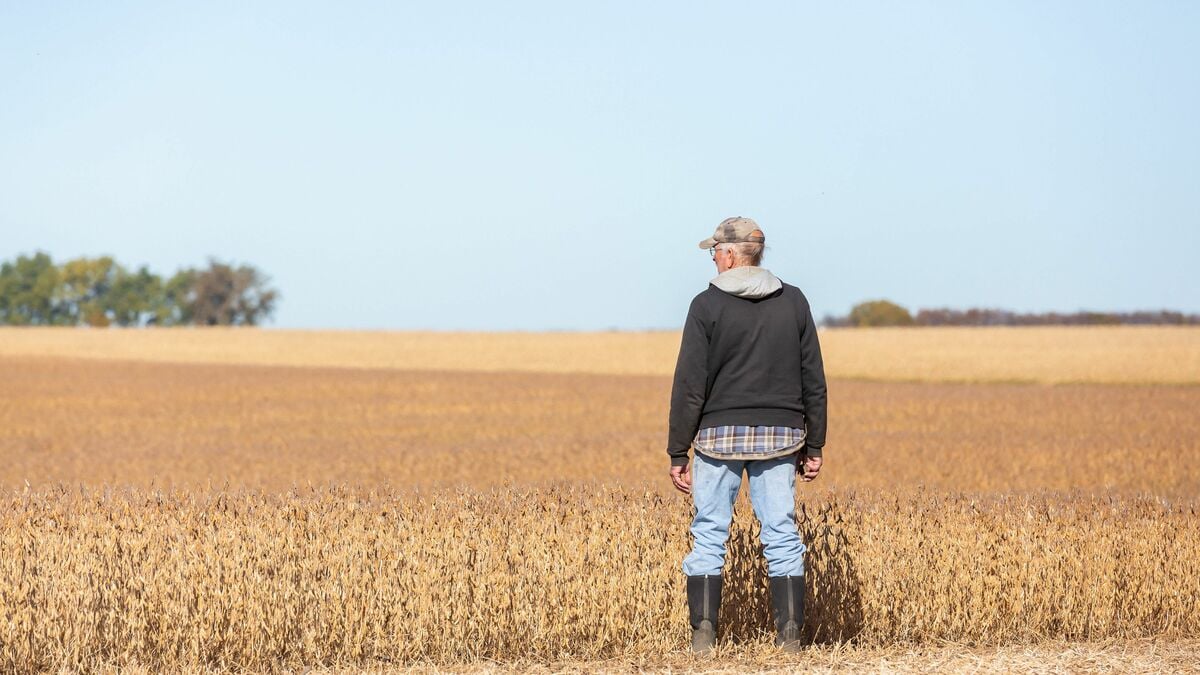
A farmer in rural Story County, Iowa, spoke to the Asahi Shimbun on condition of anonymity. Despite a bumper harvest, profits would fall roughly 30 percent. That is not speculation. It is operational reality — diesel prices surged after the Iran conflict began in June 2025, machinery costs escalated, and Chinese tariffs made it far harder to move the commodity downstream. The farmer described watching grain elevators empty while storage facilities filled to capacity, a bottleneck that compounded losses daily.
Polling conducted across central Iowa revealed that 71 percent of crop farmers blamed federal trade policy for financial strain, compared to just 18 percent who credited tariff protections. Those numbers carried weight at the ballot box.
Why Soybeans, Not Wheat or Corn
The nuance here matters. After the September US-China summit, Beijing rolled back tariffs on wheat, corn, and most other agricultural products. They did not touch soybeans. The explanation is bluntly economic: Chinese planners knew exactly which crop hurt America hardest, and they kept the pressure precisely there.
Soybeans are the strategic weakness in American agricultural exports. Roughly 60 percent of US soybean output goes to China. When tariffs hit, there is nowhere else for that volume to go overnight. Brazil and Argentina absorbed some, but logistics, infrastructure, and pricing limits prevent a clean diversion. Port congestion in Paranaguá, increased shipping rates, and competing demand from African buyers created ceiling constraints that kept Brazilian purchases well below replacement levels.
This is what trade strategists call a choke point — a single market dependency that amplifies political risk into financial pain. Chinese policymakers understood this architecture well before imposing tariffs. Washington learned the same lesson slowly, too late.
Corn fared differently because China had already diversified sourcing during previous trade disputes. Soybeans lacked that preparation. Farmers who had expanded acreage based on predictable export flows found themselves holding inventory no one would buy at viable prices.
The Double Pain
Farmers faced two compounding shocks simultaneously. First, the Iran conflict drove diesel and energy costs higher across Midwest operations. Second, tariff retaliation cut demand precisely when input costs peaked. The intersection created an asymmetry — rising expenses combined with shrinking revenue — that no amount of subsidy could fully offset.
Trump administration support packages followed, distributing $28 billion in Market Facilitation Program payments throughout 2018 and 2019. But assistance typically arrives months after damage materializes. Cash flow problems do not resolve with checks written later in the season. Many farm operations simply cannot sustain the gap between planting decisions and harvest returns, especially when operating on tight margins established decades earlier.
The subsidy structure created its own distortions. Large landowners received proportionally larger payments, while family farms struggling to service debt saw insufficient relief relative to losses incurred. Agricultural lenders reported rising delinquency rates, and several mid-sized banks in Iowa and Illinois tightened credit terms specifically for crop producers.
This pattern mirrors structural realities: US agricultural trade has built itself around scale and concentration. Moving away from those markets is expensive. Staying exposed is dangerous. Neither option is comfortable.
What This Means Beyond the Ballot Box
Political shifts aside, the deeper signal is institutional. For decades, both major parties treated free trade assumptions as background truth — a framework so accepted it needed no defense. The 2018 tariff campaign broke that consensus. Farmers felt the break immediately. Voters remembered longer.
The result is not temporary discontent. It is recalibration. Agricultural states that voted overwhelmingly Republican in 2024 have shifted toward Democrats, suggesting that trade policy calculations now outweigh traditional partisan alignment in regions where economics dominate daily life.
Partisan loyalties survive hardship. Economic survival does not always. Congressional districts once considered safe Republican seats now face genuine competitiveness, with agricultural interests forming cross-party coalitions around trade stabilization rather than ideological conformity.
Policy experts note that this realignment may prove permanent. Even if tariffs ease, the memory of loss persists among voting-age farmers who watched competitors absorb market share during shutdown periods. Rebuilding buyer relationships takes years. Political consequences arrived faster than policy adjustments could follow.
The Ripple Toward Tokyo
Japan should pay attention. The American agricultural sector serves as a sensitive indicator for broader trade dynamics. When US-China tariff friction pushes American farmers toward political reckoning, the implications extend to Japan’s own export calculus.
Japan depends heavily on food imports from the United States — soybeans, beef, pork, and dairy all carry strategic importance for domestic supply stability. A US agricultural sector weakened by external trade actions creates pricing volatility that reaches Tokyo through global commodity markets. Rice prices responded within weeks of soybean disruption because trading algorithms and commodity funds adjust portfolios reactively across sectors.
Conversely, the tariff precedent establishes that trade escalation can target specific sectors with surgical precision. If Washington can isolate soybeans, other economies may study the method. Export-oriented nations like Japan have learned that relying on any single trading partner carries asymmetric risk — a lesson made sharper by recent American domestic fallout.
Japanese agricultural cooperatives, led by JA Zen-Noh, have quietly accelerated diversification efforts, exploring alternative suppliers and expanding domestic production capacity for key crops previously reliant on trans-Pacific shipments. The insurance premium of over-reliance is being calculated in boardrooms across Kansai and Kanto.
Where This Goes Next
The bipartisan compromise on trade that stabilized American commerce for generations appears fractured. Farmers no longer automatically vote on party loyalty alone; they vote on whether their livelihood survives the current approach.
China retains leverage precisely because it identified America’s single largest agricultural exposure and held pressure there. Future administrations will face the same dilemma: protect domestic industry through tariffs, or accept exposure to calculated retaliation. Either choice carries political cost.
Market observers anticipate continued volatility as planting cycles adapt to uncertain demand signals. Some farmers have switched acreage to wheat or sorghum, seeking crops less concentrated in Chinese purchasing patterns. Others are diversifying into specialty products — organic soy, non-GMO varieties — targeting premium markets insulated from commodity-level disruptions. The transformation is uneven, benefiting operators with capital flexibility while straining those locked into conventional production contracts.
Neither path offers comfort to voters who planted crops hoping for stable returns. The political consequences have already manifested. They are unlikely to disappear once the next harvest cycle closes, nor will they resolve through incremental policy tweaks alone.