The 65-Billion-Barrel Gamble That Could Redraw Energy Politics
Trump says the U.S. has struck a deal for access to 65 billion barrels of Venezuelan oil. If even partially realized, it could upend OPEC+, strain U.S.-Russia relations, and expose the limits of coercion as foreign policy.
A Deal That Sounds Like a Treaty
Donald Trump announced a deal with Venezuela this week that, by his own words, is “the biggest oil deal in world history.” The number that matters is 65 billion barrels — proven reserves across 17 fields, granted through a new private company with 100-year development rights. The United States gets 55 percent of effective output, plus the right to buy the oil at cost. Under the terms, the new entity would rank as the second-largest corporate holder of proven reserves globally, trailing only Saudi Aramco.
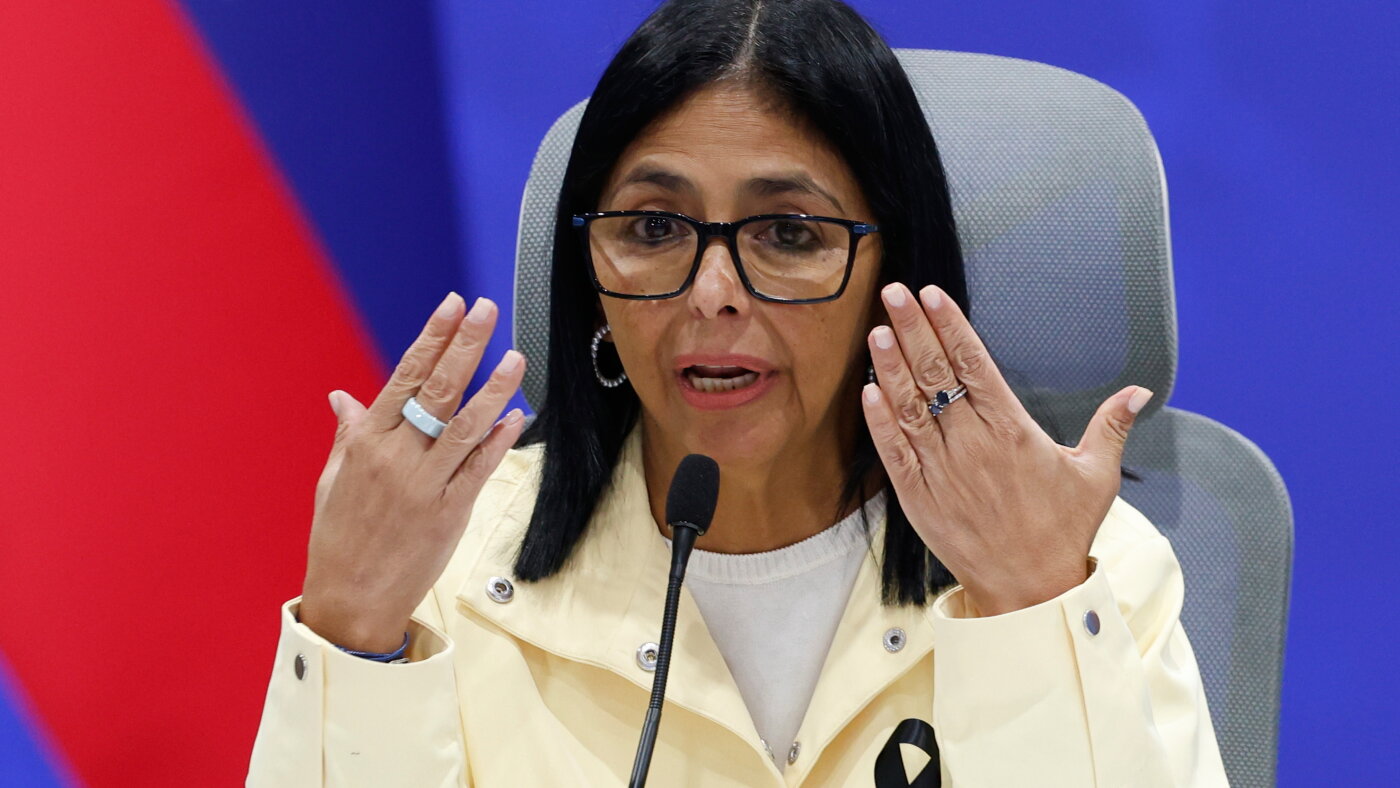
The announcement came less than nine months after U.S. forces, at Trump’s direction, detained then-President Nicolás Maduro and brought him to the United States on federal narcoterrorism charges. Maduro remains imprisoned in the U.S., having pleaded not guilty. Meanwhile, Delcy Rodríguez, his appointed successor, signed a law opening Venezuela’s oil sector to privatization — and then cut a deal that effectively hands over a fifth of the country’s remaining reserves to a U.S.-linked operator.
The geometry of power here is unusual enough to warrant its own category. The U.S. does not typically negotiate 100-year resource concessions with the government of a country whose sitting leader is jailed in an American federal penitentiary. This is not ordinary diplomacy. It is the architecture of a settlement imposed from above and sold abroad as partnership.
The Numbers That Don’t Add Up to Lower Gas
The political math driving this deal is transparent. Gasoline in the United States averaged roughly $4.09 a gallon Friday, compared with $3.21 a year earlier. The Strategic Petroleum Reserve fell below 300 million barrels in early August — down more than 100 million since January 2026, largely due to draws triggered by disruptions in Gulf oil flows through the Strait of Hormuz. The conflict with Iran entered its sixth month without resolution. Trump is under direct pressure to deliver cheaper fuel before voters connect the dots between an unfinished war and the pump.
But 65 billion barrels does not translate into cheap gas anytime soon. Even optimistic industry models suggest Venezuela needs five to seven years of sustained capital deployment before output rises meaningfully. The infrastructure — pipelines, refineries, offshore platforms, flow stations — has been decaying for over a decade. An unnamed private operator will need billions in upfront spending just to reach the first barrel of incremental production. ExxonMobil’s CEO, Darren Woods, called Venezuela “un-investable” after Maduro’s ouster. The company’s assessment likely reflects reality more than fear.
The deal does promise $100 billion in investment and $209 billion in taxes for Caracas, according to Rodríguez’s government. Those figures are directional, not guaranteed. They assume a level of security, regulatory continuity, and price stability that Venezuela has not experienced in living memory. Even if every dollar arrives, the oil will not be flowing to the U.S. market fast enough to move the gasoline price this year or next.
What This Does to OPEC+
The real geopolitical shock of this deal lands in the cartels, not at the pump.
Venezuela currently produces roughly one percent of global oil — far below its reserve share of 17 percent — because it lacks the capital and capacity to develop its heavy crude. If the new company brings output online, even gradually, Venezuela will hold a formal or de facto seat at the OPEC+ table. The group already manages production cuts to support prices. A new member with 65 billion barrels in claimed reserves, a guaranteed off-take partner in the United States, and a 100-year concession that outlasts multiple OPEC cycles changes the calculus.
Saudi Arabia and the United Arab Emirates, the cartel’s internal pole stars, have spent years learning to tolerate Venezuelan output freezes as a form of passive discipline. An actively producing Venezuela, tied to a U.S. buyer with preferential pricing rights, breaks that discipline. Riyadh and Abu Dhabi will watch closely whether the new company respects OPEC quotas or treats them as suggestions.
Russia, already locked in a strategic partnership with Caracas and a separate strategic competition with Washington over energy markets, will interpret this deal as an American move to encircle it. Moscow has used energy exports as both revenue and leverage against European adversaries. A U.S.-aligned operator controlling a significant share of Venezuelan output removes one potential tool from Moscow’s inventory — not by force, but by contract.
That may be exactly what Trump wants. The administration has treated the Iran conflict and Russian energy dominance as two fronts of the same economic war. Venezuela, in this framing, is a rear-echelon strike.
The Russia Connection
The deal’s implications for U.S.-Russia relations deserve more attention than they are likely to get.
Russia and Venezuela have maintained a military and energy partnership since the Putin-Chávez era. Russian firms have operated in Venezuelan fields, provided technical expertise, and benefited from sanctions-busting arrangements. A U.S.-backed company taking 100-year control of 17 fields displaces Russian presence not through sanctions enforcement but through a commercial settlement that Moscow cannot credibly block.
This is a structural shift. Russia has spent years trying to maintain influence in Latin America as a counterweight to U.S. hemispheric dominance. A deal that gives the United States preferential access to Venezuela’s oil while keeping Caracas politically dependent on Washington undermines that strategy without a single sanction being invoked.
The flip side is equally important. Russia, sensing encirclement on its southern flank and simultaneous pressure from the Iran war on its eastern energy corridor, may accelerate efforts to deepen ties with China. Beijing has been circling Venezuelan resources for years, waiting for an opening. If Moscow concludes that U.S. expansion in Latin America is irreversible, the logical response is not confrontation but realignment — toward the one power that can absorb Venezuelan and Russian output if Western markets contract.
The Sanctions Paradox
Perhaps the most unusual element of this deal is how it sidesteps the entire legal architecture the U.S. has built around Venezuela.
For over a decade, Washington has maintained sweeping sanctions on Venezuela’s oil sector, designed to isolate the Maduro government and deny it revenue. The Trump administration did not lift those sanctions before negotiating this deal — it simply carved out a parallel pathway. A private company, structured outside the sanctions regime, can operate Venezuelan fields with U.S. backing while the broader legal framework technically remains in place.
This creates a precedent that will outlast the current administration. Any future government can invoke the same logic: sanctions stay on the books, but a bilateral deal with an agreed-upon partner creates a carveout that functions in practice as a lifting. The law becomes flexible; the leverage becomes transactional.
It also raises questions about enforcement. If the new company operates under a 100-year concession granted by Rodríguez’s government, who enforces compliance if the government changes? Who enforces U.S. policy if the next administration decides the deal was a mistake? Venezuela’s constitutional framework offers no clear answer, and U.S. contract law has limited reach over a foreign sovereign’s asset-granting authority — especially when that authority was exercised through an appointed interim executive, not an elected government.
Who Wins, Who Loses, Who Waits
If the deal holds and production rises, the United States gains a strategic asset: a reliable, low-cost source of crude near its southern border, a lever against OPEC+ pricing discipline, and a wedge between Russia and its Latin American partners. Gasoline prices may not drop sharply, but the U.S. energy position strengthens in ways that matter beyond the pump.
Venezuela, under Rodríguez, gains investment and tax revenue — provided the numbers materialize and the political settlement holds. Caracas avoids the deeper integration with China that a prolonged standoff with Washington would have forced.
OPEC+ loses a constraint. Russia loses a flank. Maduro, sitting in a U.S. cell, loses everything.
The winners are conditional. The infrastructure gap is real. The political risks in Caracas are real. The question is whether the United States is prepared to spend a decade managing a country it just removed from its list of adversaries, all while fighting a war in the Middle East that shows no sign of ending.
The deal is not a resolution. It is a bet — and bets of this size are rarely settled on announcement day.