Trump and Xi Swap Allies While Japan Watches Its Umbrella Fray
At a White House summit, Trump invoked the US-China wartime alliance and called China an 'ally' — a framing that benefits both leaders but leaves Tokyo exposed. While Washington and Beijing buy time, Japan's strategic position grows more precarious.
The Word That Changes Everything
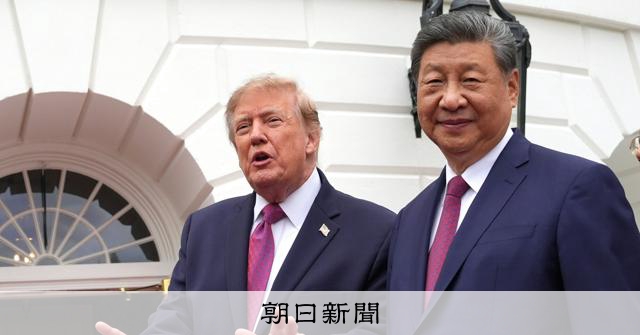
Donald Trump stood before Xi Jinping at the White House on September 24, 2026, and chose a word that carried the weight of eight decades. “Allies,” he said, recalling how the United States and China had fought side by side in the Second World War — the Flying Tigers, the vast ocean between them, the differences that nonetheless could not prevent cooperation. He even invoked Chiang Kai-shek’s Nationalist government almost by accident, because that was the alliance that actually existed. The Communist Party of China did not come to power until 1949, four years after the war ended. But the CCP leadership has always preferred the simpler story: that America and China have always been natural partners, separated only by circumstance.
This is not merely historical window dressing. The language Trump used at that podium sends a signal through every capital in the Indo-Pacific, and the message Tokyo receives is uncomfortably clear. It arrives not in the form of an explicit abandonment but in the quiet erosion of precedence — the subtle shift that occurs when one alliance is rhetorically elevated above another, and the public understands the hierarchy even if no treaty is ever formally amended.
Time Bought, Time Lost
Both leaders walked away from that summit having achieved something concrete: time. For Xi, it is the kind of breathing room that allows Beijing to continue its military modernization without the distraction of an active trade war or the threat of fresh sanctions. The Chinese navy now operates over 380 vessels, and the PLA’s missile forces have been steadily repositioned across the Taiwan Strait in ways that make any intervention calculation significantly more complex by 2030. Every month of détente buys Xi the opportunity to harden those positions further, to integrate the People’s Liberation Army into a more cohesive command structure, and to test whether Washington’s renewed engagement is genuine or tactical.
For Trump, it is the political capital of having met a rival superpower’s leader on American soil and emerged with a handshake that looks like statesmanship. In a domestic landscape where his approval ratings have remained stubbornly flat and the midterms loom as an unavoidable threat, the image of a president delivering a diplomatic breakthrough carries weight — even if the substantive outcomes are deliberately vague. Neither man needs to deliver a breakthrough on Taiwan, on tariffs, or on the South China Sea. They needed only to look like they were building something, and the shared invocation of a wartime alliance provided the imagery.
But time is a zero-sum resource in geopolitics, and the hours both men purchased may be the very hours Japan loses. The Asahi Shimbun’s analysis cuts to the core of the problem: when Washington and Beijing perform reconciliation, Tokyo watches its security umbrella fray. The framing is deliberate and consequential, and it operates on a frequency that many in Tokyo still have not fully calibrated to.
The Japanese Exposure
Japan’s postwar security architecture rests on a simple assumption — however strained it has become in recent years — that the United States will treat the Japan alliance as a centerpiece of its Asian strategy, not one option among many. Trump’s choice to describe the US-China relationship in allyship terms, however historically qualified, undermines that assumption at its foundation. It signals to Beijing that America’s most important treaty partner in the region may be negotiable, and it signals to Tokyo that its own strategic value is conditional.
The risk is not abstract. A recalibrated US-China posture could alter deterrence calculations across the East China Sea, the Senkaku Islands, and the broader maritime approaches that Japan depends on for energy and trade. More than 80 percent of Japan’s crude oil imports transit these waters. Any shift in the balance of power that makes Chinese assertiveness more costly for Washington to counter effectively would ripple through Japanese supply chains, defense budgets, and the fundamental question of whether the US security guarantee is anchored or adrift.
Japanese defense planners are already factoring this possibility into their assessments. The 2024 Defense Acquisition Guidelines, which committed Tokyo to doubling its strike capability and purchasing Tomahawk missiles, can be read as much as a response to China’s military expansion as a bet on American reliability. When the great powers are talking directly, the question that will haunt Japanese strategists is whether the American commitment to Japan’s defense — enshrined in the 1960 security treaty and repeatedly reaffirmed — survives that recalibration intact. The answer, so far, has been deliberately unspoken.
The Secondary Effects
The implications extend well beyond the bilateral triangle. South Korea, already navigating its own delicate dance between Washington and Beijing, now faces a reinforced incentive to pursue strategic autonomy rather than alignment. President Yoon’s successors will interpret Trump’s language as confirmation that Tokyo-style dependence carries diminishing returns, and Seoul may accelerate its own hedging strategies — including deeper economic engagement with China and a more cautious posture on extended deterrence commitments.
Australia and India, key pillars of the Quad architecture, are beginning to question whether the coalition that held together during the Trump administration’s first term can withstand a second term characterized by transactional diplomacy with Beijing. The Quad’s operational momentum — joint naval exercises, critical mineral supply chain initiatives, infrastructure financing alternatives to China’s Belt and Road — risks stalling if Washington’s primary focus shifts toward managing rather than countering Chinese power. Regional actors who invested heavily in diversifying their partnerships now face the prospect that the diversification premium was priced for a different world.
Even within Japan, the summit’s language is likely to accelerate an ongoing internal debate about whether the country should pursue nuclear ambiguity or overt deterrent capability. Discussions that have long been confined to academic journals and closed parliamentary sessions are moving closer to the surface, fueled by the perception that the American umbrella may no longer be as reliable as generations of Japanese policymakers assumed. Prime Minister Kishida’s successor — whoever wins the upcoming Liberal Democratic Party leadership race — will inherit a constituency that is increasingly willing to contemplate options once considered unthinkable.
The Historical Irony
There is a bitter irony in Trump reaching for the Flying Tigers as a symbol of enduring partnership. Those volunteers fought against the Japanese imperial military — the very force that occupied parts of China and built the arsenal of aggression that the Communist Party still warns against with its rhetoric of “military nationalism.” The alliance Trump evoked was fundamentally anti-Japanese. By drawing that parallel, the American president is implicitly placing Japan somewhere in the background of a narrative about great-power harmony, rather than at the center of it.
For the CCP, this is a welcome development. The party has long sought to position China as a responsible stakeholder with a natural right to great-power status, and an American president publicly calling China an “ally” — even in a historical frame — advances that project. Meanwhile, the party’s own warnings about Japanese “military nationalism” gain rhetorical momentum when spoken by Washington’s leader. Chinese state media has already begun amplifying the summit’s language, framing it as evidence that the so-called conflict between the two powers was always manufactured by hardliners on both sides, and that history ultimately rewards those who remember shared struggle rather than recent friction.
What Comes Next
The immediate question for Japan is not whether this summit changes anything overnight — alliances do not dissolve in a day — but whether it establishes a new baseline. If the Trump-Xi framework becomes the dominant lens through which Washington views Asia, Tokyo will need to argue harder and smarter than ever to remain central to the conversation. The alternative is to become a geographic fact rather than a strategic priority, a reliable partner whose concerns are acknowledged politely but deprioritized operationally.
Japan’s response will likely focus on two tracks: deepening defense cooperation with other partners — Australia, India, the Philippines, South Korea — and making the economic and technological case for why decoupling from China is neither desirable nor possible. Tokyo has already signaled its intent to maintain robust trade relations with Beijing even as it strengthens security ties with Washington, a balancing act that assumes the two relationships can coexist without competition. That assumption is now under direct pressure.
But neither track fully compensates for the erosion of the bilateral alliance’s centrality, which is what the summit’s language subtly communicates. The Asahi Shimbun’s framing — that Xi and Trump bought time, and Japan inherited the remainder — captures something essential about this moment. The great powers are performing diplomacy. The smaller powers are counting the seconds.
What remains to be seen is whether Tokyo can convert those seconds into leverage before the performance becomes policy. The next twelve months will determine whether Japan’s response is proactive or reactive, whether it shapes the emerging architecture or merely adapts to it. The summit may have been about buying time, but for Japan, time is no longer on its side.