Trump's Pivot to a Zelensky-Free Peace Deal
Trump's suggestion that Zelensky shouldn't represent Ukraine in peace talks, paired with his openness to a three-way meeting with Putin and Xi, signals a fundamental reset in Washington's Ukraine policy — one that Europe and allies are watching nervously.
The Meeting That Changes Everything
Donald Trump did not say he would hold a three-way summit with Vladimir Putin and Xi Jinping. He said he would, if it came down to it. The distinction matters — it is the language of a man who wants the option to look decisive without yet committing to the messiness of diplomacy with two adversaries who share few interests but may converge on isolating Kyiv.
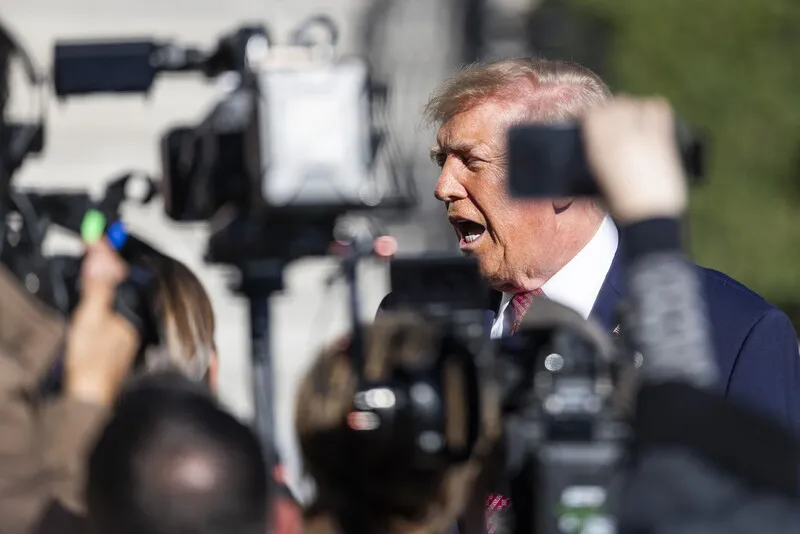
Speaking to reporters at the White House on October 19 before departing for Kansas, Trump framed the potential meeting as an APEC side event in Shenzhen next month. He called the topic nuclear nonproliferation, not Ukraine. But when pressed, he added a quieter line: he would do whatever it takes to end the war.
That contradiction — between the staged non-Ukraine summit and the willingness to broker a settlement — is the signal. The framework Trump is testing is one where the United States, Russia, and China sit at the table without Ukraine. Where Zelensky is not the author of his country’s fate but a guest to be informed, not consulted.
The Real Proposal Was Never About Nuclear Talk
The Wall Street Journal reported that Putin himself floated the trilateral meeting during a call with Trump on October 9, explicitly tying it to Ukraine. Trump has now circled back, reframing it as a strategic summit on nuclear issues while keeping the Ukraine door cracked. It is a classic move: present the plausible surface, retain the real play beneath it.
The more extraordinary claim came in Trump’s comments about Zelensky. He said the Ukrainian president does not know what he is talking about, that a far better deal could have been struck long ago, and that “1 million Ukrainians would be alive” if Zelensky had listened. He then said, plainly, that it is time for someone else to represent Ukraine.
This is not an offhand remark. It is a direct challenge to the legal and diplomatic authority of Kyiv’s government. If the United States — the war’s primary backer — declares that Zelensky lacks the legitimacy or judgment to negotiate, it creates immediate ambiguity for every European capital that has committed to supporting Ukrainian sovereignty. It also hands Moscow a gift: the opening to argue that Ukraine’s leadership is unreliable and that peace requires a different voice.
Why China’s Presence Is the Point
A three-way meeting is not symmetrical. Putin and Xi have their own unresolved tensions — border disputes, competition for Central Asian influence, the memory of Chinese economic leverage over Russian energy exports. But both have an interest in shaping a settlement that locks in Russian gains in Ukraine while redirecting American attention toward the Indo-Pacific. China benefits from a drained and distracted NATO. Russia benefits from a partner who can absorb Western economic pressure.
Trump’s framing of the summit as a nuclear dialogue rather than a Ukraine ceasefire is telling. It elevates the China dimension, which is where Beijing has the most to gain from a de-escalated European theater. The United States would then appear as the broker of a grand bargain — trading time in Ukraine for progress on North Korea or Iran. Ukraine would become the currency, not the principal.
For Kyiv, the message is unambiguous: American patience is no longer unconditional. For Europe, it is far worse — the United States may be preparing to negotiate without it.
Europe Is Already Bracing
Brussels has not yet responded publicly with the force such a proposal demands. That silence is itself data. European defense planners know they cannot match American capability overnight, but they also know the political cost of being left out of a settlement shaped by Washington, Moscow, and Beijing is existential. If the United States decides Ukraine’s future independently, NATO’s credibility across Eastern Europe collapses in a single gesture.
Germany and France have quietly accelerated defense industrial plans. Poland is spending beyond 4 percent of GDP on defense. Finland and the Baltic states are deepening military integration with NATO’s northern flank. But these are defensive postures, not negotiating strategies. None of them address the scenario in which the United States pulls back from its security commitment to Europe in favor of a transactional arrangement with Russia and China.
Seoul and Tokyo, for their part, are watching with particular intensity. Both nations have large stakes in the Indo-Pacific equilibrium that a Trump-Xi-Putin deal would reshape. Seoul understands that a Russian pivot toward Beijing — locked in by a settlement that leaves China unpressured on Ukraine — would strain the trilateral security cooperation that Tokyo and Washington are building around North Korea and Taiwan. Tokyo sees the same logic: every dollar Moscow saves on a frozen conflict in Europe is a dollar it can redirect toward Arctic modernization or deeper economic dependence on Chinese markets.
What This Means for the Fighting
The timing is not coincidental. Ukraine’s air defense system is running dangerously low on interceptor missiles. The United States has restricted Starlink bandwidth, a move that degrades Ukrainian drone operations along the front. Trump’s public criticism of Zelensky follows Kyiv’s sharp rebuke of US sanctions relief. The pressure is layered — operational, diplomatic, and now rhetorical.
If Trump proceeds with the trilateral meeting, the most likely outcome is not a peace agreement but a signaling event: the United States confirms it will no longer treat Ukraine’s government as the sole legitimate voice of its people. Russia gains diplomatic cover. China gains leverage over both Moscow and Washington. Zelensky’s government faces the prospect of negotiating from below, not above.
The alternative — Trump drops the trilateral format — would not restore the prior status quo. The erosion of trust between Washington and Kyiv is now public. Even without a summit, the administration has signaled that the old framework is over. Europe will need to decide whether to fill the gap or accept a settlement it did not write.
That decision is the real story. Not the summit itself, but what happens in the weeks leading up to it — and what happens if it never happens at all.