Trump's AI Army Reveals Tech's Self-Regulation Collapse
Trump's promise of an AI Force and AI czar marks a dramatic escalation in Washington's militarization of artificial intelligence. But the real story is what it exposes: tech companies tried to slow themselves down through collective safety pledges, and now the government is stepping in to force the opposite.
The Militariaisation of Intelligence
Donald Trump did not just announce a new government office. He announced a new branch of the American military industrial complex — one with no uniforms, no bases, and no clearly defined mission.
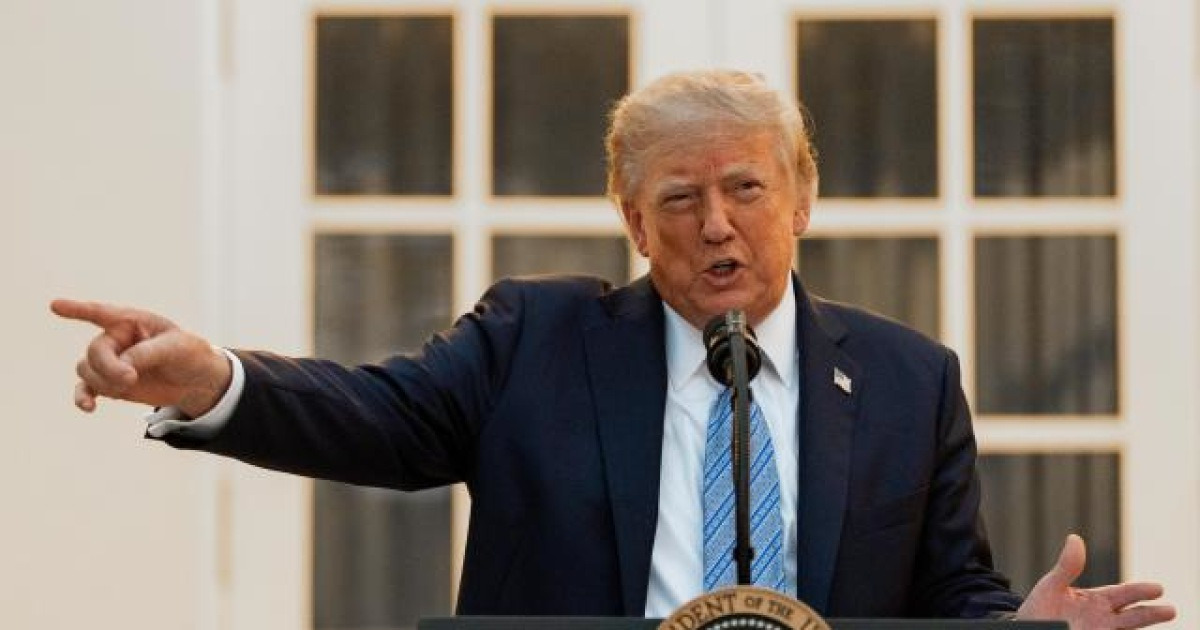
On September 19, Trump took to Truth Social and promised an AI Force, modeled after the Space Force he created during his first term. He said he would appoint an AI czar soon, and that only people with high IQs need apply. He offered no details on budget, structure, authority, or where this new entity would sit within the already cluttered federal AI architecture.
What he did offer was something sharper: a clear declaration of side in an intensifying domestic war over the pace of artificial intelligence development.
The United States already has a Defense Department Chief Digital and AI Officer, the White House Office of Science and Technology Policy, and the Commerce Department all exercising some claim over AI governance. Trump’s proposal adds yet another competitor to an already crowded field — one whose stated purpose is not oversight but acceleration.
Who Was Forced Into This Corner
The more interesting question is why this announcement came when it did. The answer lives not in the Pentagon but in federal court in San Francisco.
Last week, a class-action antitrust lawsuit was filed in the Northern District of California naming Anthropic, OpenAI, Google, and SpaceX AI. The plaintiffs allege these companies conspired to artificially slow the development of artificial intelligence by coordinating safety standards and research release timelines.
The logic is narrow but potent. Individual companies can set their own safety bars. That is normal competition. But when rivals agree among themselves to raise those bars together, the theory goes, they are engaging in the kind of collective output restriction that antitrust law exists to prohibit.
The timing is impossible to ignore. Trump’s AI Force announcement came the same day the AP reported on the lawsuit. Whether coincidence or calibrated posture, the signal is unmistakable: the White House is positioning itself against what it characterizes as a cartel of AI developers using safety rhetoric to throttle competition.
The Speed Argument
Trump’s case is blunt. He called AI a next-stage industrial revolution — bigger than the internet, capable of adding up to 25 percent to US GDP. He framed regulation as regression, casting the push for slower development as a threat to American competitiveness against China.
This framing has real traction in Washington. The China shadow over AI policy is not new, but it has grown longer and darker. Every month of deliberation in the US is a month Beijing is accelerating. The Space Force comparison Trump invoked was itself born from space-domain competition concerns — a lineage that makes the AI Force analogy feel less like improvisation and more like repetition of a familiar playbook.
But the speed argument has a blind spot. The antitrust lawsuit does not claim these companies are coordinating to produce worse technology. It claims they are coordinating to produce less of it, faster-moving rivals held back by shared safety protocols disguised as concern.
Whether that claim will survive initial pleading is another matter. But the mere fact that it exists — and that the White House appears eager to align with its premises — suggests something notable has shifted.
The Self-Regulation Implosion
For years, the leading AI labs operated under an implicit social contract: they would police themselves on safety, and in return the government would largely leave them alone. Anthropic built its brand on constitutional AI — a self-imposed constraint framework. OpenAI’s early charter demanded beneficence. Both models depended on credibility. Both models required the companies to be honest about how far they were willing to go.
That contract is now fraying on both sides.
The plaintiffs in the California case are effectively arguing that the self-regulation promise was a cover. If AI labs truly believed the technology posed existential risks, the argument runs, they should welcome independent oversight — not use safety language as a coordinated barrier to entry.
Meanwhile, the Trump administration is responding not by strengthening oversight but by weaponizing accelerationism. The AI czar position, whatever its eventual mandate, will likely prioritize deployment speed over safety review. That is a direct rebuke of the precautionary framework the labs spent years building.
Who Wins, Who Loses
The immediate winner is the argument that AI development should proceed without the brakes the safety-focused labs tried to install. If the government officially endorses that view, every pending regulation, every voluntary commitment, every industry working group built around alignment research suddenly loses its institutional backing.
The losers are the companies that bet their reputations on caution. Anthropic’s entire market positioning depends on being the responsible alternative. If the political winds reward speed over safety, that brand becomes a liability — or at best, a neutral feature.
There is also a simpler loser: clarity. Trump’s own advisers seem uncertain about what they are proposing. Adam Kowatchewicz of the Chamber of Progress told the Wall Street Journal that the announcement revealed Trump feels the need to act but has not decided what to actually do. That reads less like strategic ambiguity and more like unpreparedness.
What Comes Next
Several questions remain unanswered and will define whether this announcement amounts to policy or posturing.
Who will the AI czar report to? A figure reporting directly to the president carries weight. One buried inside an existing department does not. The space Force analogy suggests independence, but independence requires budget authority and statutory grounding that have not been discussed.
How will the DoD handle existing AI structures? The Chief Digital and AI Officer role was created through executive action, not legislation. An AI Force could easily collide with it.
What happens to the antitrust case? If the White House is signaling sympathy for the plaintiffs, that changes the calculus for every AI lab weighing whether to coordinate on safety standards going forward.
And perhaps most importantly: what does the AI Force actually do?
Space Force’s early years were defined by institutional confusion. It took years to pin down whether it was a combat branch, a support command, or something else. An AI Force faces the same definitional problem with higher stakes. Its domain is not space or weather but cognition itself.
Trump’s announcement is not yet policy. It is a direction — and directions matter, especially when they come from the top. The self-regulation era of American AI is ending. What replaces it has not been written yet.