Trump's Iran Crossroads: A Military Decision Hinges on UN Week
Trump signals a 'major decision' on large-scale strikes against Iran ahead of the U.N. General Assembly, setting up a high-stakes week where diplomacy and military force will collide. Regional allies are bracing for consequences regardless of which path Washington takes.
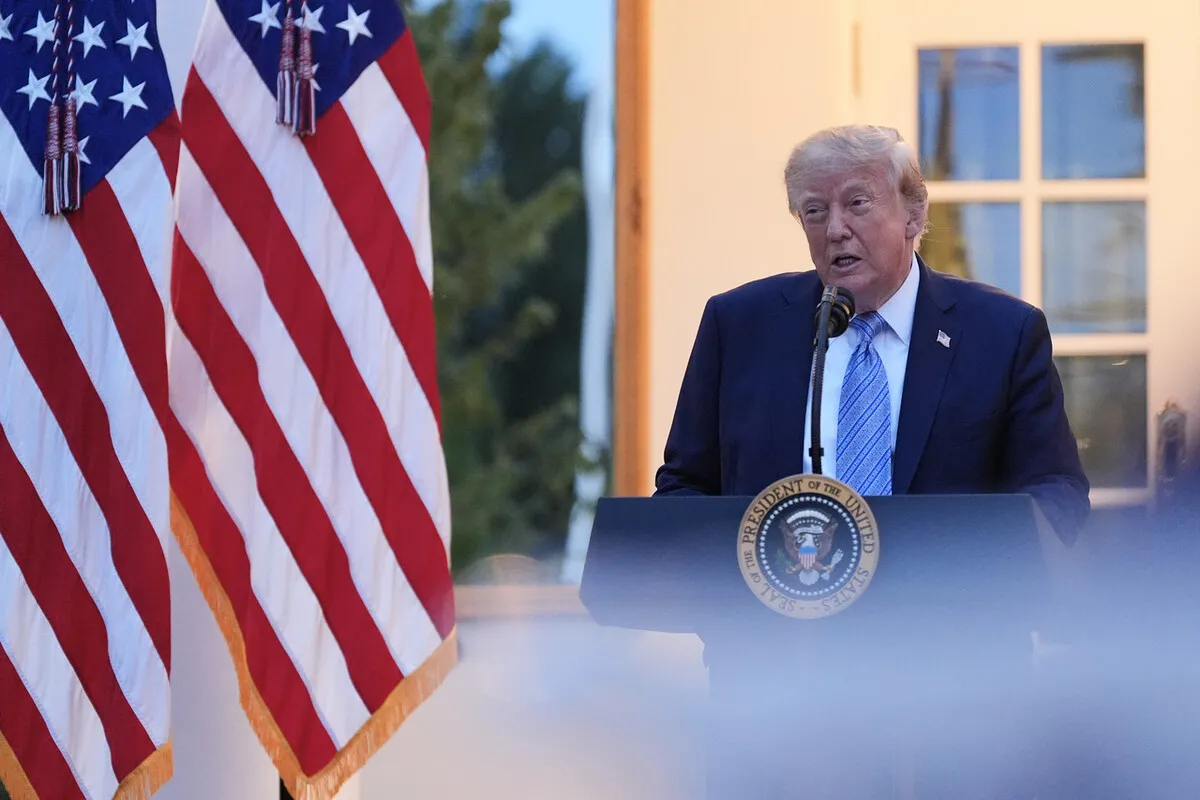
The Calendar Is the Story
Donald Trump did not say when he would decide. But the schedule does the talking for him.
He has convened the leaders of Saudi Arabia, the UAE, Qatar, Bahrain, Kuwait, and Oman in New York on September 22 — one day before the U.N. General Assembly. Iran’s president, Masoud Pezeshkian, and his foreign minister, Abbas Araghchi, are in town. Pezeshkian is set to speak at the U.N. on September 23. The geometry is deliberate: the week of the General Assembly is being used as the pressure chamber in which Washington decides whether to open the floodgates on military action against Iran.
What Trump told Axios on September 17 — that he faces a “big decision” about whether to “go in and completely destroy them” — was not a threat made in isolation. It was a signal fired into a room where the entire Middle Eastern diplomatic corps is already gathered. The timing turns the U.N. session into something it is rarely: the actual stage for a military decision.
“Large-Scale Attack” — What Does That Even Mean?
American officials have been careful not to define the phrase. That vagueness is itself a weapon. In military terms, “large-scale attack” could mean targeted precision strikes on nuclear facilities and IRGC command centers — a campaign similar to what has been discussed publicly for years. It could mean sustained bombing of Iran’s air defenses and military infrastructure across multiple provinces. Or it could signal something far broader: ground operations, regime-change posturing, or actions designed to collapse Iran’s regional proxy architecture entirely.
The absence of definition matters because every interpretation carries a different risk profile for America’s allies.
Precision strikes on nuclear sites might provoke Iranian retaliation against Israel and U.S. bases — but they leave Gulf energy infrastructure largely untouched. A broader campaign, however, almost certainly would. That is the calculation Saudi Arabia and Qatar reportedly made in early August when they intervened to delay Trump’s initial plan for renewed large-scale operations. Their concern, according to Axios, was straightforward: Iranian retaliation would target Saudi oil and gas facilities, and no amount of American protection guarantees could shield them in the opening hours of a war.
The fact that the U.S. has since halted negotiations, imposed new economic sanctions, and maintains a maritime blockade around Iranian ports means the military option is being prepared even as diplomacy is frozen. That is not a contradiction — it is a strategy. Force the对手 to the table by making the cost of defiance unsustainable, then decide whether to strike or negotiate based on what they do next.
The Pressure on Allies Is Asymmetric
Here is what English-language coverage tends to miss: the Gulf states are not just reacting to American decisions. They are actively shaping them, and they are doing it through channels that run parallel to Washington.
Saudi Arabia’s request to China — relayed privately through Iranian channels — to restrain the Houthis is a quiet admission that Riyadh cannot rely solely on American security guarantees. The Houthis have intensified operations around the Red Sea and the Bab el-Mandeb strait, directly threatening Saudi export routes. Beijing’s response, according to three Iranian sources cited by Reuters, was stronger than its public posture suggests. China has been calling for “restraint and dialogue” in public. Privately, it told Iran to rein in its proxies. That gap between public and private messaging is significant — it means China is managing its own relationship with Tehran while shielding its Gulf economic interests.
For the GCC countries, the calculus is brutal. They need America’s security umbrella against Iran. But they also need China as an economic partner and, increasingly, as a diplomatic counterweight. Trump’s decision this week will test whether that balancing act holds.
The U.S. Military Posture Is a Holding Pattern — and Everyone Knows It
American officials instructed that current troop levels in the Middle East be maintained through the end of the year. That is an acknowledgment, dressed in bureaucratic language, that the status quo is untenable. You cannot maintain a high-alert military posture indefinitely. The question is not whether Washington will act — it is when, and with what degree of escalation.
One official told Axios bluntly: “At some point, you have to decide what the end goal is.” That is the core of the decision Trump faces. Destroying Iran’s regime is a goal with no clear exit. Degrading its nuclear program is achievable but risks prolonged insurgency and proxy warfare. Forcing a negotiated settlement requires leverage that sanctions and blockades provide only partially — and only if Iran chooses to respond.
Trump’s claim that Iran is still seeking a deal and maintaining direct contact with the United States suggests he may still believe diplomacy is viable. But the blockade, the sanctions, the public rhetoric about “destroying them” — these are not the moves of someone preparing for a deal. They are the moves of someone preparing for war, with diplomacy kept open as a fallback.
What Happens Next
If Trump decides on large-scale strikes during or immediately after the U.N. session, the first wave of Iranian retaliation will likely target U.S. bases in the region and Gulf energy infrastructure — precisely the assets Saudi Arabia and the UAE feared back in August. The Houthis, already pressing hard in the Red Sea, would almost certainly intensify their campaign. China’s private pressure on Iran to restrain the Houthis will be tested in real time.
If he decides against strikes, the sanctions and blockade will continue to squeeze Iran, but the diplomatic opening at the U.N. — Pezeshkian’s planned speech — becomes the primary signal that Washington is still leaning toward pressure rather than punishment.
Either way, the week of the General Assembly is the inflection point. The question is not whether the decision will matter. It is whether the allies caught in the crossfire will survive the answer.