Trump's $52 Trillion Iran War Bill Is a Coalition Economy Test
Trump is taking a post-Iran war financing plan to Gulf leaders at the UN next week — a move that could redefine Middle East alliance economics and send shockwaves through Washington's other partnerships, especially Seoul's.
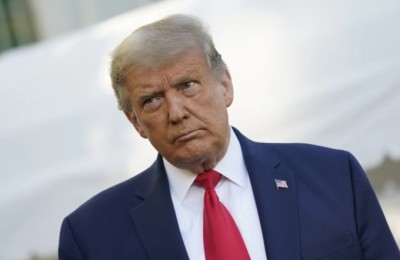
The Meeting No One Saw Coming
Donald Trump is gathering the six Gulf Cooperation Council member states — Saudi Arabia, the UAE, Qatar, Bahrain, Kuwait, and Oman — in New York on September 22, just days before the UN General Assembly convenes. The stated purpose: coordination on a post-Iran war order, with final plans expected to crystallize after the November midterm elections. The State Department has already dispatched invitation letters. There is a possibility, according to sources, that the attendee list will expand to include other Arab and Islamic country leaders.
What makes this moment structurally interesting is not the meeting itself — summits at the UNGA are routine — but the framing behind it. Trump has publicly stated that Iran has communicated directly to the United States its willingness to negotiate an end to the conflict. He described the situation as moving toward an endpoint. If true, this shifts the entire geometry of US diplomacy in the region from wartime crisis management to postwar architecture design.
And who is being asked to pay for it is the real story.
The Monetization of Coalition Building
This is where the $52 trillion figure comes into view. Whether that number is precise or rhetorical, the direction is unambiguous: Trump is signaling that the United States will not foot the entire bill for stabilizing the Middle East after a conflict with Iran. The financial burden is being pushed onto the very Gulf states that have borne the brunt of Iranian retaliation.
The irony is stark. These same countries have suffered direct Iranian attacks during the war and are experiencing severe economic disruption from oil and natural gas export interruptions. They are the ones asking America for protection. Now they are being asked to write the check for the peace that follows.
This is a new form of alliance economics — one where security guarantees are explicitly commodified. The United States is effectively auctioning stability and inviting the Gulf states to bid. Those who commit financially gain proximity to decision-making. Those who hesitate risk being left outside the room when borders, energy routes, and regional power balances are redrawn.
Who Wins, Who Loses
Saudi Arabia and the UAE are the primary targets of this pricing mechanism. Both have deeper strategic anxieties about Iran and both possess the financial capacity to absorb significant costs. If they pay, they secure a seat at the table shaping the postwar order. If they resist, they face the prospect of an American security posture that is simultaneously thinner and more transactional.
Smaller Gulf states — Bahrain, Kuwait, Qatar, Oman — occupy a more vulnerable position. They lack the strategic depth of Riyadh or Abu Dhabi but face the same level of Iranian threat. They may find themselves pressured to contribute disproportionately to a settlement whose rules they did not write.
Israel’s Benjamin Netanyahu is reportedly seeking a side meeting with Trump during the UNGA window, though no formal schedule has been confirmed. The White House declined to comment on whether such a meeting would occur. Netanyahu’s absence from the GCC gathering is telling. Israel is not a GCC member and occupies a uniquely contradictory position — the Gulf states’ greatest security asset against Iran and their most diplomatically sensitive relationship. Trump’s framing of a post-Iran order that centers GCC financiers rather than Israel suggests Washington may be recalibrating its regional architecture away from the Abraham Accords model toward something more state-centric and Gulf-led.
The Seoul Connection
Here is what English-language coverage of this story tends to miss: the Trump-GCC arrangement has direct implications for South Korea, a country the United States is simultaneously pressuring for investment commitments and military deployments it may struggle to deliver on two fronts.
South Korea’s relationship with Washington has deteriorated sharply over the past year. The core dispute traces back to delayed Korean investment commitments in the United States — a fraction of the $55 billion South Korea pledged under a previous administration. Japan, by contrast, has moved aggressively, announcing $360 billion in its first project window and $730 billion in its second, with a third round already under discussion. Trump views this gap not as a bureaucratic delay but as a betrayal of alliance trust.
The escalation has been systematic. Nuclear submarine negotiations and uranium enrichment agreements have stalled. Additional investment demands have multiplied. The latest pressure point: a US request for South Korean troop deployment to secure the Strait of Hormuz — the same waterway through which much of the Gulf’s energy flows and the same route currently disrupted by Iranian retaliation.
All of this arrives as Trump signals openness to direct engagement with North Korea, potentially bypassing Seoul entirely. A South Korean official acknowledged the structural problem bluntly: the US bundles economic and security demands into a single negotiating package, while Korea’s ministries operate in silos, unable to present a unified strategy.
What Comes Next
The post-Iran settlement Trump is discussing with Gulf leaders will establish precedents that extend far beyond the Middle East. If the United States successfully convinces Gulf states to finance their own regional security architecture, it creates a template for other alliance relationships — including the one with South Korea.
The timeline is compressed. Midterm elections in November will reshape the political calculus in Washington. Any post-Iran framework finalized after that vote will carry different constraints than one negotiated now. The fact that Trump is convening these leaders before the midterms suggests he wants to lock in commitments while political leverage is still favorable.
For South Korea, the warning sign is clear. If Trump can extract financial and military commitments from Gulf states that are geographically and politically distant, the argument that Seoul should follow becomes harder to resist. The question is whether Seoul can deliver before the cost of refusal becomes unacceptable to Washington.
The meeting on September 22 may prove to be the opening move in a broader reordering — one where alliance loyalty is measured not in treaties but in invoices.