Turkey's LGBTQ+ Raids Are About Power, Not Families
Turkey arrested 162 people in coordinated raids on LGBTQ+ spaces and associations, wrapped in the rhetoric of protecting children. But the real target is political opposition — and the implications reach far beyond Turkey's borders.
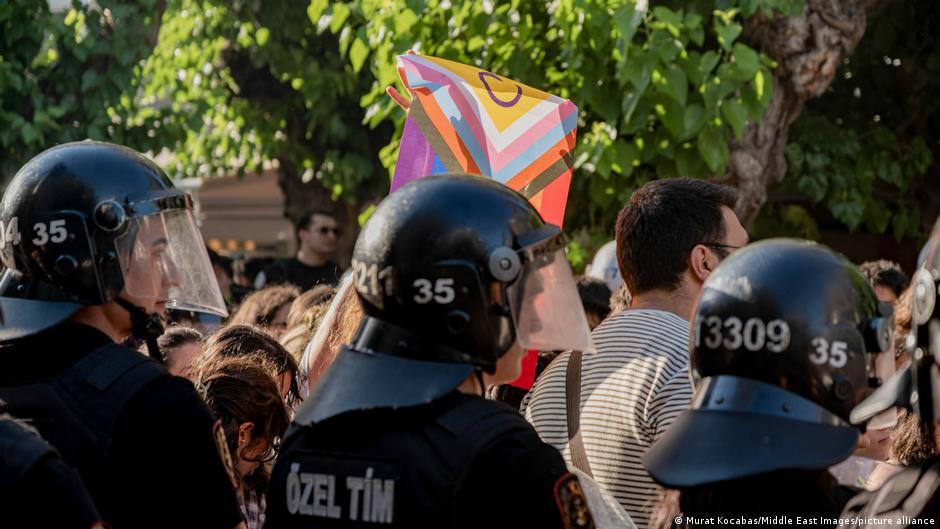
Turkey Arrested 162 People Over the Weekend. What Happened Next Matters More.
The Turkish government called it “My Family is Safe.” Across 15 provinces, on the same weekend, prosecutors in Istanbul, Ankara, Izmir, Aydin, and Mersin coordinated raids targeting gay bars, nightclubs, a hammam, and six LGBTQ+ associations. Justice Minister Akin Gurlek announced that 162 suspects had been detained, nine associations placed under investigation, and 13 businesses shut down. Authorities seized drugs, digital equipment, smuggled alcohol, and a gun.
What they did not announce — because it is harder to frame as a moral crusade — is that same-sex relations have never been illegal in Turkey. The operation was not about criminal law. It was about messaging.
The Birthrate Distraction
President Recep Tayyip Erdogan has spent years framing declining birthrates as a national emergency. His official response, the “Decade of Family and Population” scheme, targets LGBTQ+ communities as the culprit. Gurlek posted that the state has a constitutional duty to protect children from “criminal organizations, abuse networks or illegal activity” — a phrase applied broadly to anything associated with sexual orientation or gender identity advocacy.
The numbers tell a different story than Erdogan’s rhetoric. Turkey’s total fertility rate fell from 2.11 in 2013 to 1.51 in 2023, according to TurkStat. That decline mirrors trends across the developed world and is driven by structural forces: chronic inflation, unaffordable housing, workplace environments hostile to families, limited childcare access, and rising educational and employment rates among women. Erdogan’s diagnosis is not just wrong. It is politically useful.
Scapegoating a visible minority while offering no material solutions is a classic authoritarian playbook. The question is whether the playbook is spreading.
The Digital Component
Kaos GL, the Ankara-based LGBTQ+ rights group, reported that the raids extended beyond physical spaces. Dozens of websites and social media accounts linked to advocacy organizations and rights defenders were blocked. This digital dimension is significant. It means the state is not only punishing presence — it is erasing visibility.
Digital censorship of this scale is rarely accompanied by public legal justification. The Turkish government has not explained which laws authorize the blocking of dozens of independent websites. That silence is itself a signal.
The EU Stalled
Turkey has been a candidate for European Union membership since 1999. Accession negotiations began in 2005 and have barely progressed. The EU has repeatedly cited human rights concerns, including restrictions on freedom of assembly and discrimination against LGBTQ+ people, as obstacles. These concerns are now backed by concrete events — not abstract reports from rights organizations, but 162 arrests in a single weekend.
The EU’s response to Turkey’s democratic backsliding has been characteristically muted. Sanctions have been narrow. Diplomatic pressure has been lukewarm. The bloc’s energy dependence on Turkey and its migration-management interests create structural incentives for restraint.
That may change. If the coalition governing the EU hardens its stance on rule-of-law conditionality — as some member states have advocated following democratic regressions in Hungary and Poland — Turkey’s treatment of LGBTQ+ communities could become a harder lever. But that is not happening now.
The Regional Pattern
Turkey is not alone. Across Eastern Europe and the wider region, governments are deploying similar rhetoric: protecting traditional families, shielding children from harmful content, positioning LGBTQ+ rights as a Western import. The policy toolkit varies — from Russia’s outright bans to Hungary’s school restrictions to Poland’s LGBTQ+-free zones — but the logic is consistent.
Consolidating power through moral panic is cheaper than delivering economic results. When inflation is eating wages and housing is out of reach, blaming marginalized communities is politically efficient. It redirects frustration away from governance failures.
Turkey’s current operation is the most concentrated act of this kind in the region this year. The 162 arrests represent a quantitative escalation, not just a rhetorical one. Previous crackdowns under Erdogan have targeted journalists, academics, and political opponents. This operation expands the circle to include people who are simply gathering in queer spaces.
Who Wins. Who Loses.
The immediate winners are the government and its base. The operation projects strength and moral clarity to voters who want simple answers to complex problems. Erdogan’s narrative of civilizational decline, reversed through family values and tough action, remains intact.
The losers are more concrete. The 162 arrested individuals face charges related to obscenity and prostitution — accusations that rights groups say are pretextual. The six associations targeted lose their offices, their staff, and likely their ability to operate. Dozens of websites and social media accounts are offline, silencing voices that have documented abuses and built community.
Longer term, Turkey’s international reputation suffers. Every raid reinforces the image of a country moving further from its stated aspiration of EU membership. Investors and tourists take note. The diplomatic costs accumulate.
What Comes Next
The EU is unlikely to take dramatic action. The migration deal that keeps refugees out of Europe remains a priority for Brussels. Economic ties with Turkey persist. The association agreement signed decades ago is being renegotiated, but those talks are not driven by human rights performance.
Within Turkey, the crackdown will likely expand. When a government establishes that it can arrest 162 people in a single weekend with minimal domestic or international backlash, the threshold for future operations lowers. The legal framework being built around obscenity and child protection statutes creates precedent that can be applied to other groups — independent media, feminist organizations, Kurdish activists.
The LGBTQ+ community in Turkey will adapt, as it has before. Underground networks will form. Digital spaces will shift. But the cost of visibility has just risen sharply.
The broader lesson for the region is that moral panic operations are self-reinforcing. They work because they are cheap. They escalate because they face little resistance. Turkey’s 162 arrests are not an endpoint. They are a sign of where the drift is heading.