Ubisoft Just Blinked — Rainbow Six Goes Turn-Based and Anti-Microtransaction
Ubisoft's new Rainbow Six Tactics is a single-player, turn-based tactical game with zero microtransactions — a bold pivot for a franchise that once dominated the live-service wars. Here's why it matters.
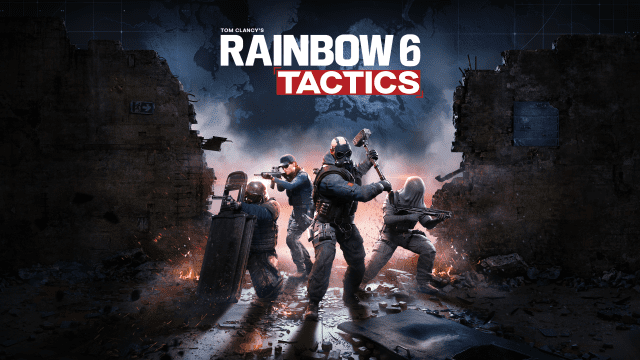
Ubisoft’s Rainbow Six Tactics Isn’t Just a New Game. It’s a Statement.
Ubisoft did something remarkable at Gamescom 2026: it built a Rainbow Six game without multiplayer, without microtransactions, and without the live-service machinery that has defined the franchise’s entire identity for the past decade.
Rainbow Six Tactics, announced during Opening Night Live, is the series’ first turn-based tactical entry — a radical departure for a franchise that spent years perfecting its PvP multiplayer model. It is also, perhaps more significantly, a deliberate rejection of the monetization model that has come to dominate AAA gaming.
The game is being developed by Ubisoft Paris Studio and targets a 2027 release on PC, PlayStation 5, and Xbox Series X|S. It is not a spin-off or a mobile experiment. It is a full-priced, single-player title with a proper campaign and a roster of 15 returning Siege operators.
The Turn-Based Pivot
For years, the Rainbow Six franchise was defined by one thing: Siege. The game’s asymmetrical multiplayer format became the gold standard for tactical shooters, and Ubisoft spent billions building its ecosystem around it. Every new Rainbow Six game was expected to feed that ecosystem.
Tactics breaks that assumption entirely.
The core loop involves deploying operative squads across global locations, using turn-based combat that prioritizes reconnaissance, positioning, line-of-sight management, cover utilization, and Overwatch state control. After each mission, players return to headquarters to manage department development, upgrade operators, and allocate resources — a layer of strategic planning that complements the tactical combat.
This is closer to classic games like XCOM than to Siege, but the DNA is unmistakable. The 15 operators are drawn directly from Siege’s roster, complete with their original gadget designs and special abilities — reimagined for a turn-based environment where synergy and planning matter more than twitch reflexes.
The breaching system, one of Siege’s most distinctive features, has been ported over. Players gather intelligence, map out breach points, assign operators and gadgets, then execute synchronized real-time raids. It’s a clever translation of real-time tactics into a structured, turn-based framework.
No Microtransactions. Really.
Perhaps the most striking detail: Ubisoft confirmed that Rainbow Six Tactics will launch with no in-game store, no premium currency, no battle pass, and no microtransactions of any kind.
This is not a small concession. Ubisoft has spent the last several years aggressively monetizing its franchises — from The Division to Assassin’s Creed to its brief and ill-fated web3 NFT experiment, Champions Tactics, which was announced with fanfare in 2024 and quietly shut down in August 2026 after barely a year of service.
The fact that Ubisoft is publicly committing to a transaction-free experience at launch signals something more than just a different monetization strategy. It signals a recalibration.
“The goal from day one is to deliver a strong campaign experience,” said the development team. “The game is planned as single-player only, with no in-game shop or microtransaction systems introduced.”
That clarity is remarkable for a company that has long been accused of padding games with cosmetic shops and seasonal passes to extend player engagement and revenue streams.
The Story Matters
Rainbow Six Tactics is positioned as the first single-player campaign since the Vegas entries. The narrative picks up in the gap between Siege’s 10th and 11th operational years, following the collapse of Rainbow — an event that shook the franchise to its core.
Paul Bishop, the protagonist of Vegas and Vegas 2, returns as Commander Six, tasked with rebuilding the fractured organization. This isn’t a simple counter-terrorism story; it’s an exploration of what happens when the institution itself falls apart.
“We’re going beyond simple counter-terrorism operations to examine the internal dynamics of an elite unit facing global threats,” the developers said. “The human struggles behind the operatives, the pressure they face, and the impossible choices they must make — that’s the story we want to tell.”
It’s a premise with genuine dramatic weight. The Siege timeline is now a decade old. Players who have invested hundreds of hours in the multiplayer have watched the lore unfold in fragments — operator backstories, briefings, community updates. Tactics offers a chance to see that world treated with the narrative seriousness it deserves.
What This Means for Ubisoft
The timing of Rainbow Six Tactics is not coincidental. Ubisoft has been navigating a period of significant institutional reckoning. Former 2K executive Christophe Halford was brought on in July 2026 to lead a dedicated shooting game division — a signal that the company takes its shooter portfolio seriously again, but possibly with a different approach than before.
Meanwhile, the failure of Champions Tactics and the lukewarm reception of recent live-service efforts have forced a conversation about what Ubisoft actually does well.
The company’s Assassin’s Creed franchise remains a cash cow — its latest entry reportedly hit nearly 100,000 concurrent players at launch. But even that series has been evolving, moving away from strict annual releases toward a more sustainable cycle.
Rainbow Six Tactics represents a similar philosophy applied to a different franchise. It says: we can tell a focused, complete story without committing to years of post-launch content updates and monetization cycles.
What This Means for the Genre
Turn-based tactics is a genre that has carved out a loyal but relatively small audience. Games like XCOM 2, Marvel’s Midnight Suns, and Phoenix Point have kept the form alive, but it has rarely been applied to a live-service-era IP like Rainbow Six.
If Tactics succeeds — and early impressions suggest it has genuine depth — it could open the door for other franchises to consider similar approaches. We may see Splinter Cell, Ghost Recon, or even Tom Clancy’s broader universe explore turn-based interpretations rather than defaulting to real-time multiplayer.
The Korean press, which covered the announcement through ZDNet Korea, noted the strategic importance of the Paris studio taking the lead. Ghost Recon and Mario + Rabbids veterans were brought in to bridge the tactical-shooting and turn-based strategy genres — a deliberate team composition that suggests Ubisoft is treating this as a genuine genre experiment, not a quick cash-in.
The Bigger Picture
The gaming industry is currently caught in a tension between two models: the live-service game designed to extract ongoing revenue, and the premium single-player experience designed to deliver a complete narrative in 15–20 hours.
Rainbow Six Tactics chooses the latter — deliberately, publicly, and with a commitment that goes beyond marketing copy. No microtransactions. No seasonal content roadmap. Just a complete game.
It may be too early to say whether this approach will catch on across the industry. But it is a clear signal that at least one major publisher is willing to bet that players still want a finished product, free from the expectations of perpetual engagement and monetization.
For fans of the Rainbow Six franchise, it is the most hopeful announcement in years.