Ukraine's Biggest Drone Strike Shifts the War's Center of Gravity
Kyiv's record-breaking drone campaign against Russia's Crimean Bridge and energy infrastructure marks a strategic pivot. Here's what the escalation means for Moscow's supply lines and the broader war.
A Record Night That Changes the Calculus
Ukraine has just executed the single largest overnight drone offensive of the entire war. Moscow confirmed it intercepted 1,336 Ukrainian UAVs across sixteen regions on Sunday night into Monday – a figure that eclipses the previous record of 1,254 set on Oct. 29 by only eighty-two drones, but symbolically far more significant than the margin suggests.
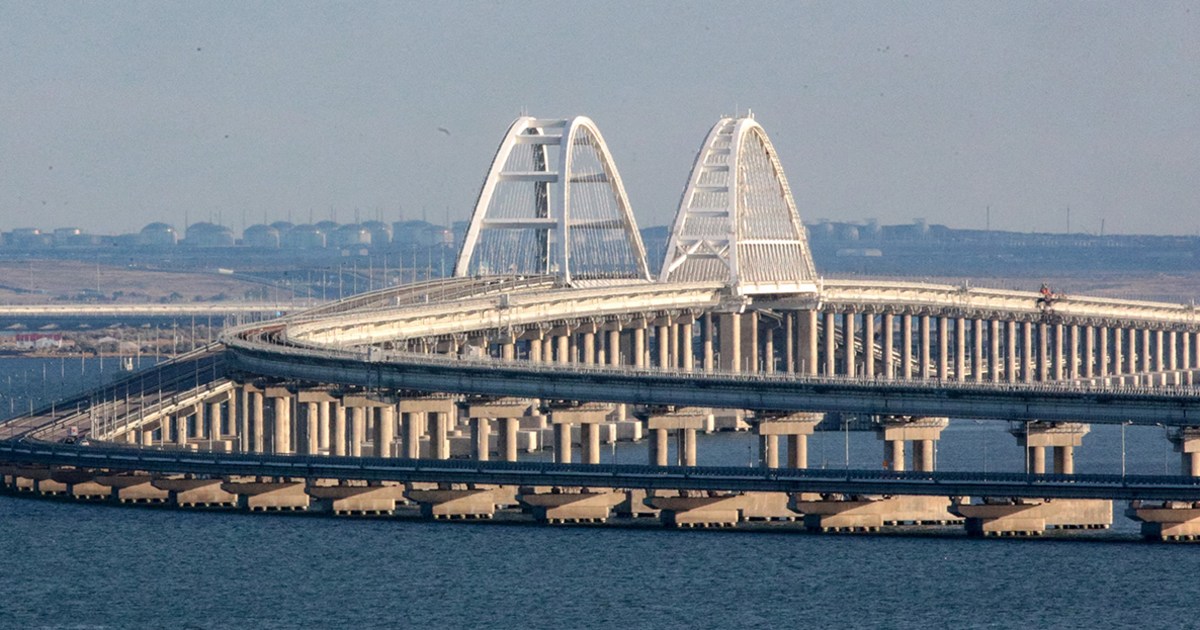
Where those additional eighty-four drones landed mattered as much as the total count. Sergei Aksyonov, Russia’s Kremlin-appointed governor of Crimea, confirmed that the strategically vital road-and-rail bridge linking the occupied peninsula to mainland Russia was struck. The Kremlin immediately downgraded the damage as minor. Road traffic was paused briefly for repairs; rail service continued uninterrupted. The language was familiar: minimize, move on, pretend nothing shifted.
But a strike on the Kerch Bridge – the most heavily guarded piece of Russian logistics infrastructure since the war began – is not an accident or an opportunistic test. It is a signal.
The Double Squeeze on Crimea
The Kerch Bridge is more than asphalt and steel. It is the narrowest physical link between Russia and the territory Moscow annexed in 2014, carrying both troops and supplies into southern Ukraine’s battleground zones. Every time Kyiv hits it, even superficially, it raises the cost of maintaining that connection. Russia has already rebuilt after previous strikes; this time, the message is different.
Ukrainian officials are no longer aiming only to demonstrate they can reach Crimea. They are making a point about endurance: the attacks have accelerated in scale and frequency from summer through autumn, suggesting a industrial and operational tempo that Moscow struggles to match. The 1,336-drone sortie is itself a logistical achievement – coordinating hundreds of overlapping flight paths, timing them against Russian radar coverage, and ensuring enough survive to threaten hardened targets like a bridge.
Moscow’s claim that rail traffic continued may be accurate for the moment, but bridges do not repair themselves in hours. Every day of restricted capacity compounds the strain on Russian rear-echelon movements, particularly as winter approaches and fuel consumption rises.
Choking the Energy Stranglehold
Parallel to the bridge strike, Ukraine’s campaign against Russian refining capacity is deepening. President Volodymyr Zelenskyy claimed late Sunday that more than 55 percent of Russia’s oil refining capacity has been disabled by Ukrainian attacks. He did not provide independent verification, and analysts cannot confirm the figure right now. What is verifiable is that Putin himself acknowledged on Oct. 1 that the drone campaign had cost Russia roughly one percent of GDP – a striking admission from a leader who rarely concedes economic pain from the war.
Here is why the bridge and the refineries belong in the same sentence: both target the twin pillars of Russian wartime morale and military sustainability. Fuel supplies feed the tanks and trucks at the front. Refined products sustain the domestic economy and the ruble-denominated budget. Undermine either, and Moscow faces harder choices about where to allocate scarce resources.
Ukraine knows it cannot win this war solely by striking behind Russian lines. But it can raise the price of occupation for ordinary Russians – the same logic that has driven Kyiv’s targeting of refineries, airfields, and military depots deeper inside Russia proper.
Starshield Constraints and the Preemptive Turn
One detail deserves scrutiny. Ukrainian officials say newly imposed speed limits on SpaceX’s military-grade Starshield satellite internet system have weakened their air defenses. In plain terms: if Patriot batteries and early-warning networks operate on slower data pipelines, reaction windows shrink. You cannot shoot down what you cannot track in real time.
That constraint appears to be reshaping Ukrainian doctrine. Rather than waiting for Russian drones and missiles to enter Ukrainian airspace, Kyiv is shifting toward preemptive strikes on launch sites and production facilities inside Russia. The logic is defensive desperation turned aggressive calculus – if your shield is slowing down, break the hammer before it falls.
This explains part of the geographic spread: sixteen Russian regions targeted simultaneously, not random terror but a coordinated effort to degrade pre-positioned launch assets. It also explains the timing. Winter is coming, and Ukraine wants to enter it with Russia’s strike capacity diminished rather than expanded.
What Comes Next
Three trajectories seem likely.
First, Moscow will attempt to accelerate its own winter offensive while Ukrainian forces are still repositioning. Zelenskyy reported over 2,300 Russian attack drones, nearly 1,600 glide bombs, and fifteen missiles launched in just the past week alone – all aimed at southern and central Ukrainian energy infrastructure. That bombardment strategy – targeting specific areas repeatedly until power grids collapse – aims to make winters uninhabitable across wide swaths of Ukraine, denying Kyiv stable rear areas for mobilization and reconstruction.
Second, Ukraine will likely sustain its deep-strike campaign through the colder months. The record-setting night demonstrates operational maturity; repeating it requires only industrial throughput, which Ukraine has been securing through Western aid, however intermittently. The question is whether allies will replenish stocks fast enough to keep the tempo.
Third, the Kerch Bridge strike reopens a debate that has simmered for months: should Western partners permit Ukraine to use longer-range weapons more aggressively against logistics targets inside Russia? Kyiv is effectively doing this already with domestically produced and allied-supplied drones. But formal restrictions on certain platforms persist, and every enforced limit creates friction between Washington’s risk calculus and Kyiv’s survival calculus.
What is clear is that the war has entered a new phase of mutual attrition – not just along the front line, but in the sky above Russia and in the refineries, bridges, and power plants that sustain both sides. Ukraine’s biggest drone attack yet is not merely a tactical success. It is a statement that Kyiv intends to make the occupation of Crimea untenable and the cost of war unbearable for Moscow, regardless of what happens in the next ceasefire conversation.